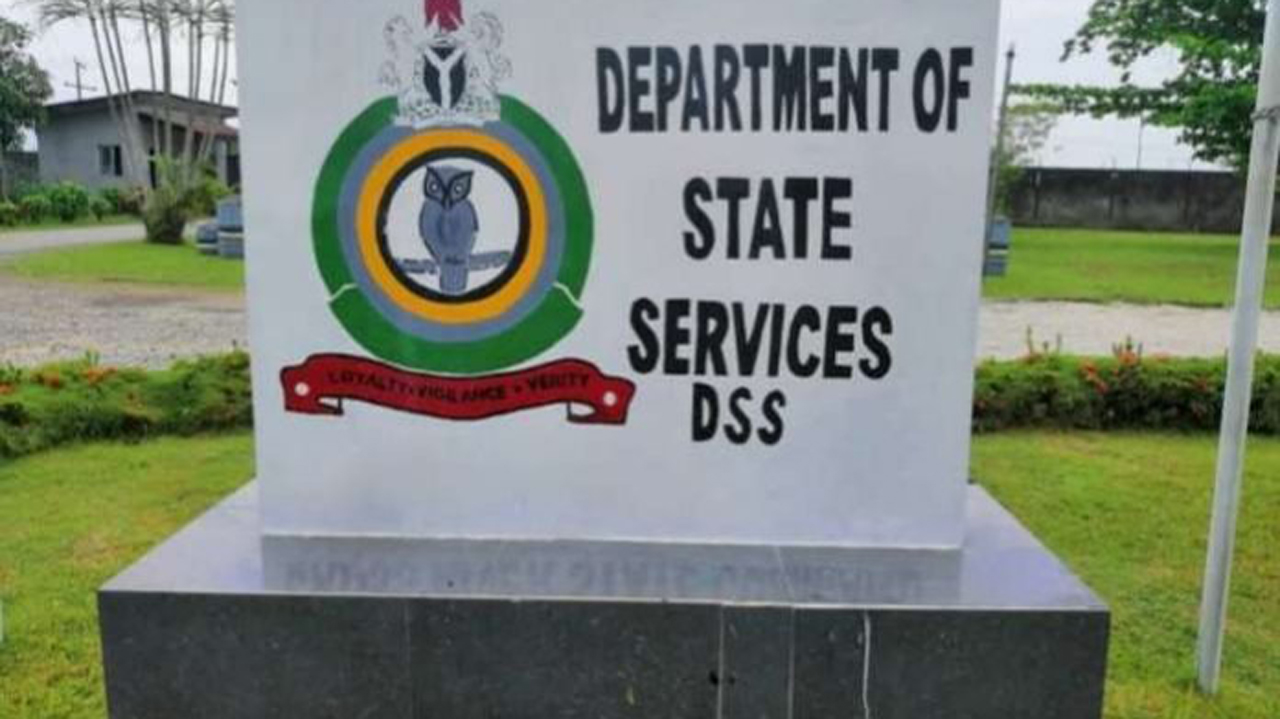

Directors of the Department of State Services (DSS) from North-West states, along with counterparts from the Federal Capital Territory, Niger, and Plateau, convened in Kaduna on Thursday to review security challenges and develop new strategies to combat terrorism and banditry in the region.
The high-level meeting, hosted by the Kaduna DSS Command, focused on strengthening intelligence sharing, enhancing inter-agency collaboration, and refining both kinetic and non-kinetic approaches to tackling insecurity.
Declaring the conference open, Kaduna State Governor, Senator Uba Sani—represented by the Commissioner for Internal Security and Home Affairs, Sule Shuaibu (SAN)—emphasised that intelligence-driven cooperation remains key to overcoming security threats in the North-West.

He praised the DSS for its pivotal role in safeguarding internal stability, supporting democratic institutions, and disrupting violent networks. “This conference offers an opportunity for reflection, coordination, and strategic renewal,” he said, urging security agencies to embrace data-driven analysis, technology-enabled intelligence, and stronger mutual trust.
The governor also encouraged the adoption of peacebuilding tools such as community engagement and preventive diplomacy, noting that justice, inclusion, and development are essential to sustainable peace.
The Emir of Zazzau, Ambassador Ahmed Nuhu Bamalli, commended the DSS for its collaboration with traditional institutions, noting that their partnership has strengthened dispute resolution mechanisms and promoted accountability among local leaders.
Representing the General Officer Commanding 1 Division, Nigerian Army, Major General Mohammed Wase, Brigadier General Mohammed Kana acknowledged the DSS’s crucial intelligence support, which he said has improved the effectiveness of military operations across the North-West.
Kaduna DSS Director, Hakeem Abiola, explained that the zonal meeting was designed to close operational gaps and bolster joint counter-terrorism efforts. He highlighted recent successes achieved under the leadership of the Director-General, Oluwatosin Adeola Ajayi, including peacebuilding initiatives and joint operations that foiled attacks, rescued victims, and intercepted illegal arms.
Abiola also cited the “Kaduna Peace Model,” a community-based security framework, as instrumental in reducing attacks along major corridors such as Kaduna–Abuja, Kaduna–Kachia, and Birnin Gwari. He called for the establishment of a regional security forum involving security chiefs, traditional rulers, and political leaders to enhance coordination against emerging threats.

- SERAP urges Tinubu to probe ₦5.9bn spent on NNPC rebranding - March 15, 2026
- Bandits kill Zamfara college director after family paid ₦25.7m ransom - March 15, 2026
- Death of Zamfara bandit commander Alti triggers turf wars among armed groups - March 15, 2026