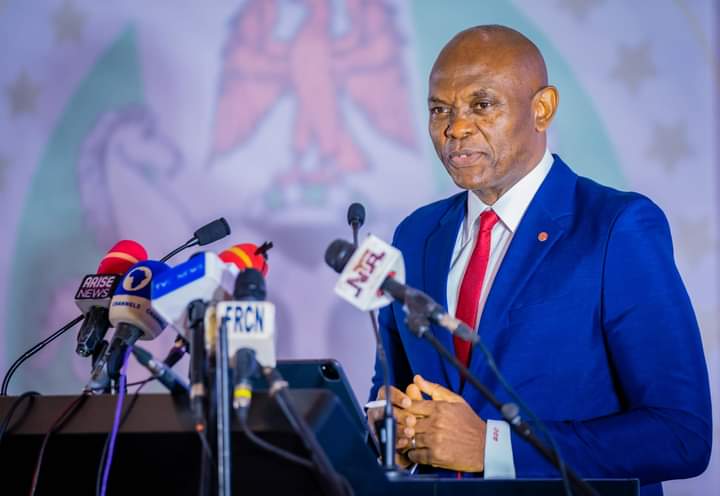
Nigerian businessman and Heirs Holdings Chairman, Tony Elumelu, has called on global leaders and financial institutions to move away from an aid-driven approach to Africa and focus more on long-term investment in the continent.
Elumelu made the call during a series of engagements on the sidelines of the 81st United Nations General Assembly in New York.
He argued that Africa’s growing population, entrepreneurial workforce and expanding domestic capital base provide opportunities for sustainable economic development through investment rather than continued reliance on foreign aid.
“I have never accepted that Africa is just a place for charity, aid, or even well-meaning condescension,” Elumelu said.
“Our continent has so much more to offer. We have the resources. We have our young and entrepreneurial population.”
He pointed to the growing capacity of African financial institutions to fund major projects, citing United Capital’s role in managing the domestic initial public offering for the Dangote Petroleum Refinery.
He also highlighted the expansion of United Bank for Africa, which provides trade finance and corporate banking services across 20 African countries, in addition to its operations in New York, London, Paris and Dubai.
Elumelu also linked Africa’s ability to benefit from emerging technologies, particularly artificial intelligence, to improvements in electricity supply.
During a meeting with International Monetary Fund Managing Director Kristalina Georgieva, he stressed the need for reliable power to support computing infrastructure, manufacturing and other economic activities.
“AI needs electricity. Manufacturing needs electricity. Digital infrastructure, hospitals, schools and SMEs need electricity,” he said.
“Reliable power is no longer simply a development objective; it is fundamental to Africa’s competitiveness.”
Elumelu cited power-generation assets operated by Transcorp Group and Heirs Energies, which are developing capacity to convert Nigeria’s natural gas resources into electricity.
The businessman also advocated stronger integration of African capital markets to enable local pension funds and other domestic savings to finance infrastructure projects across the continent.
During discussions with African Export-Import Bank President and Chairman George Elombi, Elumelu called for greater mobilisation of African capital for projects such as logistics hubs and cross-border electricity infrastructure.
His position is rooted in his advocacy of “Africapitalism”, which emphasises private-sector participation in long-term economic development while creating sustainable commercial returns.
At engagements with the Council on Foreign Relations and the Clinton Global Initiative, Elumelu also linked unemployment and limited economic opportunities to insecurity and instability.
“Where economic hope disappears, instability finds fertile ground,” he said.
He argued that philanthropy should focus on helping individuals and businesses become economically self-sufficient rather than creating permanent dependence.
The Tony Elumelu Foundation released its 15-year impact assessment during the UN General Assembly.
According to the foundation, its $5,000 seed grants have supported entrepreneurs who have created more than 1.5 million direct and indirect jobs and generated $4.2bn in cumulative enterprise revenue across 54 African countries.
The foundation said about 80 per cent of businesses supported since 2015 remain operational, while an independent assessment put the average capital cost at less than $80 per job created.
It also reported that women lead 85 per cent of the more than 7,183 women-owned businesses funded through its programmes.
Elumelu later attended the Appeal of Conscience Awards Dinner after postponing his acceptance of the award the previous year following a fatal fire at Afriland Towers in Lagos that killed several United Capital employees.
He also held discussions with World Bank President Ajay Banga, during which he reiterated his call for international development institutions to work with African businesses and institutions as partners.
“No one but us will develop Africa,” Elumelu said. “Africa needs the world, and the world needs Africa. But we must engage as partners, bringing our markets, resources, capital, and entrepreneurial talent to the table.”

- Lulu-Briggs Foundation spends N3.52bn on humanitarian services, marks 25th anniversary - September 30, 2026
- Ex-Turkish minister faces asset freeze over alleged $26m windfall - September 30, 2026
- South African court orders Cadac pension curators to fix 20-year rules breach - September 30, 2026