


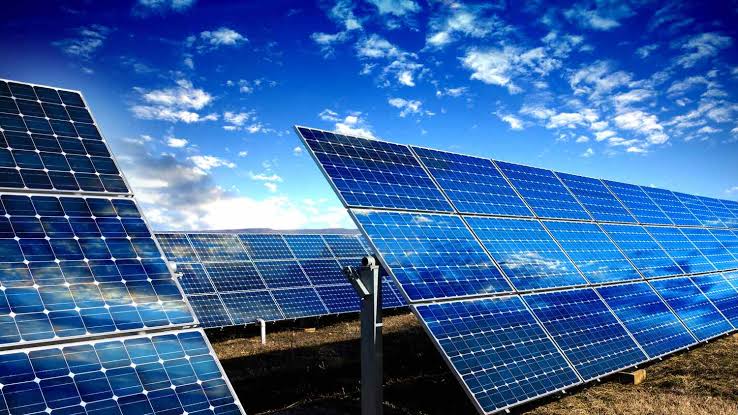
The Federal Government has intensified efforts to sanitise Nigeria’s fast-growing renewable energy sector as the Deutsche Gesellschaft für Internationale Zusammenarbeit strengthened its technical partnership with the Nigerian Electricity Management Services Agency to tighten regulatory standards for solar mini-grids and other clean energy systems.
The German Development Cooperation, implemented by GIZ under the Nigerian Energy Support Programme, paid a courtesy visit to NEMSA’s headquarters in Abuja to reaffirm a collaboration that has played a key role in shaping regulatory frameworks for renewable energy deployment in Nigeria.
In a statement signed by NEMSA’s Head of Public Affairs Unit, Ama Umoren, the agency said the visit was aimed at consolidating joint efforts in renewable energy development, regulatory standards and capacity building within the Nigerian Electricity Supply Industry.
According to the statement, the engagement focused on strengthening ongoing cooperation under the Nigerian Energy Support Programme, particularly in renewable energy regulation and institutional support for the electricity sector.
Leading the delegation, Milot Karid commended NEMSA’s management and reiterated GIZ’s commitment to sustaining what he described as a productive and long-standing institutional partnership.
He highlighted the successful development of the Guidelines for the Inspection and Certification of Solar Mini-Grids in Nigeria as a major milestone of the collaboration, noting that the initiative has helped establish clearer regulatory benchmarks for the fast-expanding off-grid market.
Karid added that beyond drafting regulatory instruments, the partnership has prioritised technical capacity building for NEMSA personnel to enhance enforcement of safety and quality standards in the renewable energy sector.
“Our cooperation has supported targeted capacity-building initiatives for NEMSA personnel. This is critical in ensuring compliance with safety and quality standards as Nigeria’s renewable energy market continues to expand,” he said.
Industry stakeholders say the forthcoming formal launch of the solar mini-grid inspection and certification guidelines is expected to standardise technical requirements for developers, curb substandard installations and boost investor confidence in off-grid power projects.
Responding, NEMSA’s Managing Director and Chief Electrical Inspector of the Federation, Olusegun Adesayo, reaffirmed the agency’s mandate to promote electrical safety and regulatory compliance across the power value chain.
“We remain fully committed to promoting electrical safety, quality assurance, and regulatory compliance in the Nigerian Electricity Supply Industry,” Adesayo stated.
He expressed appreciation to GIZ and the European Union for their sustained technical and institutional support to Nigeria’s power sector reforms, adding that the next phase of the partnership would involve the formal launch of the guidelines and deeper engagement in renewable energy deployment, energy efficiency and rural electrification initiatives.
The Nigerian Energy Support Programme is a technical assistance initiative co-funded by the European Union and the German Federal Ministry for Economic Cooperation and Development. It is implemented by GIZ in collaboration with the Federal Ministry of Power and has supported reforms in renewable energy integration, policy development and institutional strengthening, particularly in off-grid electrification and energy efficiency.
Nigeria’s renewable energy market has expanded rapidly in recent years, driven by persistent grid constraints, rising demand and government policies promoting decentralised power solutions. Solar mini-grids have emerged as a key tool for rural electrification, especially in underserved communities.
However, experts have warned that weak enforcement of technical standards and the proliferation of substandard components could undermine safety and system reliability if not properly regulated.
Both NEMSA and GIZ reaffirmed their commitment to advancing sustainable energy solutions and strengthening regulatory oversight to support Nigeria’s transition to a safer, more efficient and sustainable electricity sector.

- FG approves N9.99bn for HIV drugs, cancer centres upgrade - March 4, 2026
- FG, GIZ move to enforce solar mini-grid standards - March 4, 2026
- Lagos rolls out 2026 land use charge, dangles 15% early bird discount - March 4, 2026