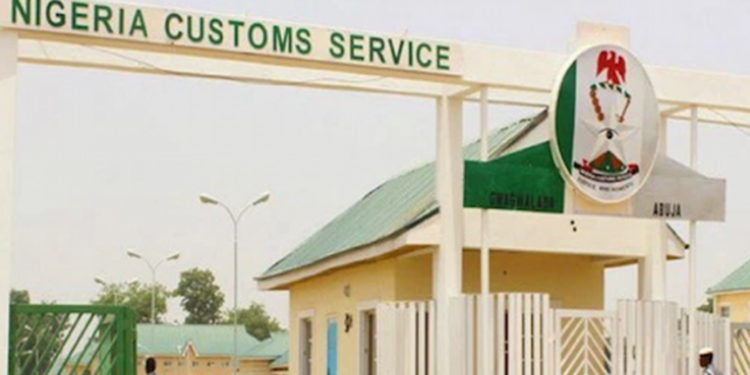
The Federal Government has approved a new set of fiscal policy measures for 2026, introducing sweeping changes to Nigeria’s Customs and Excise Tariff framework, including revised import and export regulations, updated excise duty schedules and a green tax on certain vehicles.
The Nigeria Customs Service (NCS) announced the development in a statement issued on Wednesday by its National Public Relations Officer, Assistant Comptroller Abdullahi Maiwada.
According to the Service, President Bola Tinubu approved the measures as part of broader efforts to modernise Nigeria’s trade and fiscal policies, boost revenue generation and promote economic competitiveness.
The Customs Service said the reforms are intended to strengthen domestic industries, facilitate legitimate trade and improve the administration of tariff and fiscal policies in line with regional and international trade commitments.
Among the key changes are a revised Import Adjustment Tax (IAT) list for implementing the ECOWAS Common External Tariff (2022–2027), an updated National List under the ECOWAS tariff regime, a revised Import Prohibition List, a new schedule of goods subject to excise duty, and an updated Export Prohibition List.
The new policy also introduces a green tax surcharge on motor vehicles with engine capacities of 2,000cc and above as part of the government’s environmental and fiscal initiatives.
The NCS urged importers, exporters, manufacturers, licensed customs agents and other stakeholders to study the revised tariff schedules and ensure compliance with the new regulations.
It noted that the full details of the 2026 Fiscal Policy Measures and Customs Tariff Amendments have been published on the agency’s official website to support smooth implementation and improve transparency.
The Service reaffirmed its commitment to supporting the Federal Government’s economic agenda through efficient revenue collection, trade facilitation and border security, adding that the success of the new policy would depend on the cooperation of stakeholders across the trade and manufacturing sectors.

- Tinubu hails ICC tribunal verdict rejecting $680m Sunrise Power claim against Nigeria - September 17, 2026
- I’ll retire from politics after 2031 — Otti - September 17, 2026
- 2027: Obi-Kwankwaso movement unveils 59-member campaign council - September 17, 2026