Nigeria is witnessing renewed appetite from foreign and domestic investors as rising FX inflows signal growing confidence in the country’s economic reforms.
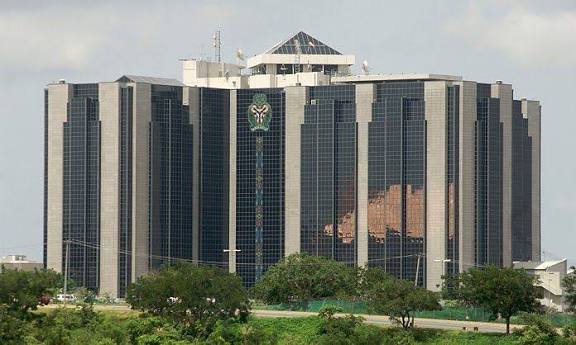
Analysts link the surge to policy actions by the Central Bank of Nigeria (CBN) under Governor Olayemi Cardoso, whose currency reforms, FX backlog clearance, reduced market intervention and unified exchange rate have strengthened market stability and restored investor trust.
The World Bank and other multilateral institutions have described the reforms as bold steps toward long-term sustainability.
Nigeria’s sovereign risk spread has also fallen to its lowest level since January 2020, reversing years of pandemic-era strain and making the market more attractive.
Cordros Securities said total FX inflows rose sharply in October, driven by improved sentiment and global monetary easing. Foreign inflows—64.5% of the total—jumped 89.7% month-on-month to $3.32 billion, buoyed by a 120.7% rebound in Foreign Portfolio Investments and higher receipts from corporates. Domestic inflows also increased by 28.4%, helped by a 370.6% surge in individual contributions.
The National Bureau of Statistics (NBS) reported that capital importation climbed to $5.6 billion in Q1 2025, up 67.1% from $3.37 billion a year earlier and 10.86% above Q4 2024. Portfolio investment accounted for 92.25% of total inflows, followed by other investments at 5.5%, while FDI remained the weakest at $126.29 million.
The banking sector recorded the highest inflow of $3.1 billion, ahead of financing ($2.09 billion) and manufacturing ($129.9 million). The UK was the leading source of inflows, contributing 65.26%.
Afrinvest CEO Ike Chioke said portfolio investment surged 150.8% year-on-year to $5.2 billion, with most of the money moving into money market instruments, bonds and equities.
Economists say Nigeria’s newly rebased GDP—now reflecting updated data on agriculture, services, and emerging sectors—offers a clearer picture of economic structure and strengthens the case for long-term investment.
The rebased nominal GDP rose from N205 trillion in 2019 to N372.8 trillion in 2024.
CBN Governor Cardoso has urged banks to recapitalise to support the government’s ambition of achieving a $1 trillion GDP by 2030, warning that current capital levels are insufficient for the scale of growth ahead.
Market analysts say recent FX stability, improved liquidity, and clearer policy direction have helped Nigeria withstand global uncertainty, even as other emerging markets face pressure from geopolitical tensions and rising US protectionism.
Investor confidence has also been boosted by a recent S&P Ratings upgrade.
Economist Muda Yusuf said the improved outlook will lower borrowing costs, enhance Nigeria’s credit perception and attract more foreign portfolio and direct investments.
DataPro COO Oladele Adeoye added that a better rating means cheaper credit and more resources available for infrastructure and productivity.
Experts agree that while reforms and statistical improvements do not immediately translate to lower living costs, they strengthen macroeconomic fundamentals, enhance Nigeria’s competitiveness and improve prospects for sustained growth in 2025 and beyond.

- No journalist was attacked at Kosofe secretariat — Ogunlewe - March 12, 2026
- EFCC witness details $760,910 school fees payment for Yahaya Bello’s children - March 12, 2026
- UBA hosts ‘Gen.W’ forum to spotlight women leaders - March 12, 2026