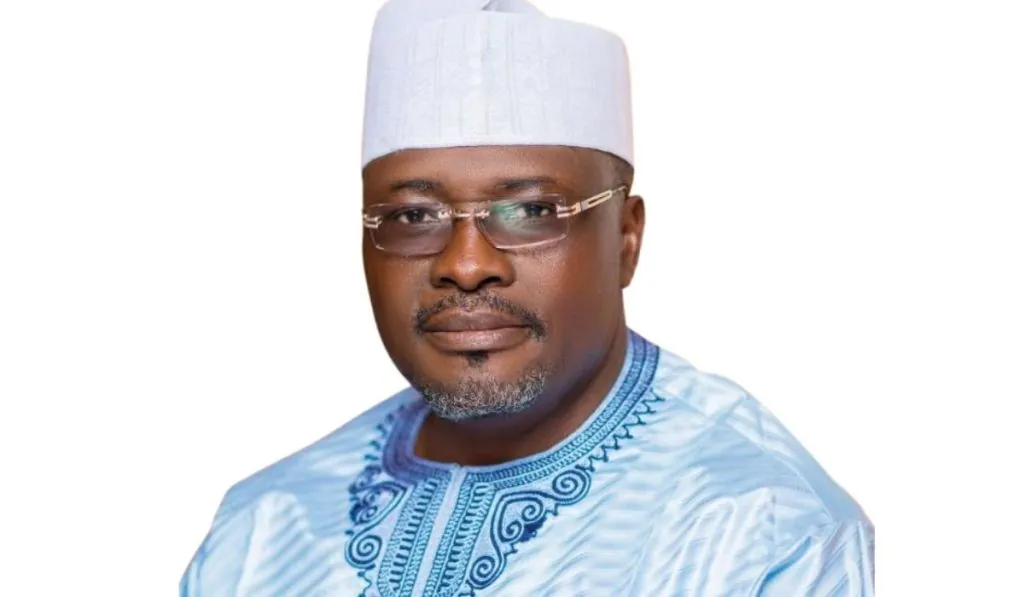
Retired Brigadier General John Sura, a former Peoples Democratic Party (PDP) governorship aspirant in Plateau State, has explained why he resigned from the party and why Nigeria must rethink the profile of its next Independent National Electoral Commission (INEC) chairman.
Sura, who left the PDP recently, said his decision stemmed from a lack of cohesion within the party at both state and national levels.
He lamented that the PDP was losing strength as members continued to defect while its leadership failed to provide direction.

At the state level, he alleged that his concerns were repeatedly ignored by the governor and party leadership, leaving him convinced that the party could no longer serve the interests of Plateau people.
The retired General, who once served as secretary to a state committee on displaced persons, faulted the government’s inaction on the panel’s recommendations.
He revealed that the committee had identified 170 affected communities and proposed resettlement, rehabilitation, and security measures, including strengthening Operation Rainbow—Plateau’s community security outfit.
According to him, the report has been shelved, and no serious steps have been taken.
Sura also criticized the state government’s handling of insecurity, saying that unlike Amotekun in the South-West, Ebube Agu in the South-East, and similar outfits elsewhere, Operation Rainbow has been left to rot without vehicles, manpower, or funding.
He stressed the need for dialogue, stronger local defense mechanisms, and accountability from community leaders.
On Nigeria’s political landscape, he observed that ongoing realignments—such as defections to the African Democratic Congress (ADC)—reflect discontent within both the PDP and APC. He predicted further defections before the 2027 elections but cautioned that new political movements must build structures and synergy to survive.
Turning to INEC, Sura expressed doubts about the commission’s capacity to deliver credible general elections, citing lapses in off-season polls.
He argued that Nigeria has repeatedly tested professors in the role of INEC chairman—with Maurice Iwu, Attahiru Jega, and the current chair, Mahmood Yakubu—and yet electoral credibility remains elusive.
“For me, if we truly want credibility, let us try someone outside academia,” he said.
“It could be a respected judge or even a retired military officer with international experience.
“These are people who are generally apolitical and could restore trust in the process.”
He added that appointing such a figure would not only inspire Nigerians but also gain international approval.
According to him, voter turnout would improve if citizens perceived genuine transparency from INEC’s leadership.
Sura also called on President Bola Tinubu to push through long-awaited electoral reforms, including recommendations from the Uwais panel, as part of his democratic legacy.
On his political future, the retired General said he is currently “on the sidelines,” observing the ongoing realignment of parties.
“While ruling out a return to the PDP, he hinted at joining whichever party emerges as the strongest contender in the coming elections.
“If APC is going to win, why not? I also want to stand up for the champion,” he said.
“And if it is not the APC but another party, why not?”

- DisCos fault FG’s ‘free meter’ directive - January 26, 2026
- Kwankwaso: Kano to consider impeaching dep gov over defection rift - January 26, 2026
- Petrol, diesel, LPG prices to keep falling — FG - January 26, 2026