


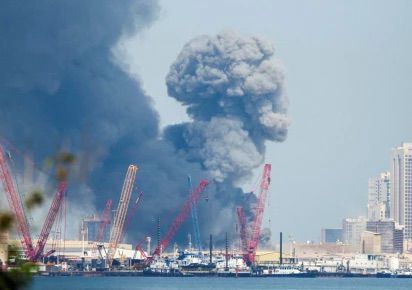

Global oil prices are expected to surge when markets reopen late Sunday following US and Israeli strikes on Iran, with analysts cautioning that a prolonged conflict in the Middle East could weigh heavily on the global economy.
Crude trading resumes at 2300 GMT on Sunday, and market watchers anticipate a sharp jump into Monday. Amena Bakr, head of Middle East and OPEC+ research at Kpler, said she expects prices to range between $85 and $90 per barrel.
Such a rise would represent a significant leap for Brent crude — the international benchmark — which was trading above $72 on Friday after gradually pricing in geopolitical risks. At the start of the year, Brent hovered around $61.
A major concern is the security of maritime transport through the Strait of Hormuz, a critical chokepoint that accounts for roughly 20 percent of global oil consumption. While the waterway has not been fully closed, reports indicate that some vessels, including Chinese and Iranian ships, have passed through. However, analysts say the situation is effectively as disruptive as a shutdown.
Bakr noted that insurance costs for shipping through the route have become prohibitive, with major shipping companies already suspending transit along the corridor.
Jorge Leon of Rystad Energy warned that a complete closure of the strait could remove between 8 million and 10 million barrels per day of crude supply from the market. Although oil-importing nations maintain strategic reserves — with OECD members required to hold stocks equivalent to 90 days of consumption — analysts caution that prices exceeding $100 per barrel cannot be ruled out.
Bakr stressed that even tapping spare capacity or emergency reserves may not be enough to offset such a massive supply disruption.
Another Kpler analyst, Michelle Brouhard, described elevated oil prices as the “Achilles heel” of Donald Trump, noting that the US leader had pledged to keep energy prices low. She suggested Iran may seek to sustain high crude prices to increase political pressure on Washington, especially as the United States approaches mid-term elections later this year.
Beyond oil, natural gas prices are also expected to climb, given Qatar’s significant role as a liquefied natural gas exporter, raising further inflation concerns.
Economists warn that sustained energy price spikes could damage global growth. The last time crude surpassed $100 per barrel was at the onset of the Ukraine war, a period marked by soaring gas prices and persistent inflation.
Eric Dor of the IESEG School of Management in Paris said higher petrol and energy costs, rising shipping expenses, and losses in the aviation sector could have a “harmful effect” on economic expansion.
“If it lasts only a few days, the impact will be limited,” he said. “But if it drags on, it could trigger additional recessionary pressures.”
While defence stocks may benefit from rising geopolitical tensions, broader markets are expected to face declines, particularly in air transport, maritime shipping and tourism sectors.

- Global markets brace for oil shock after US–Israel strikes - March 1, 2026
- Kwara poly set for academic restart after protest - March 1, 2026
- UAE air defences repel 165 ballistic missiles - March 1, 2026