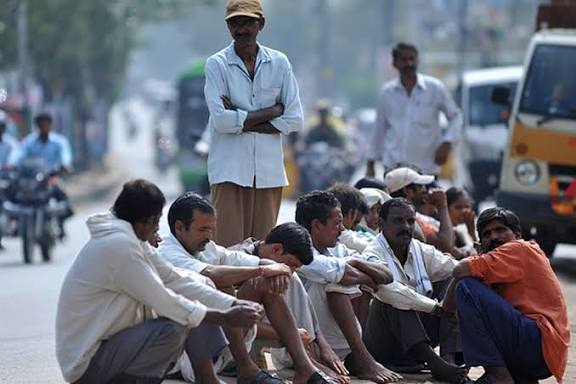

The World Bank Group has warned that Nigeria and other developing economies are facing a looming employment crisis as millions of young people prepare to enter the labour market without sufficient job opportunities to absorb them.
In a blog post published on its official platform, the Washington-based institution described demographic shifts in developing countries as one of the most consequential yet underappreciated forces set to shape the global economy over the next decade.
According to the bank, about 1.2 billion young people in developing nations are expected to reach working age within the next 10 to 15 years. However, current projections suggest that only around 400 million jobs will be created within that period, potentially leaving hundreds of millions without productive employment.

President of the World Bank Group, Ajay Banga, said that while global discourse often focuses on immediate crises such as conflict, technological disruption and market volatility, slower-moving structural forces like demographic change, food and water pressures, and globalisation trends could have deeper and longer-lasting effects.
“This challenge is not only a development issue,” Banga stated. “It is an economic challenge and increasingly a national security concern.”
The bank cautioned that failure to close the widening employment gap could strain public institutions and heighten risks of irregular migration, social unrest and insecurity, particularly in regions with rapidly expanding youth populations.
It noted that the issue received limited attention at recent international gatherings, including the World Economic Forum Annual Meeting in Davos, where geopolitical tensions and economic uncertainty dominated discussions.
The institution urged policymakers to prioritise job creation at upcoming global forums such as the G-7 and G-20 meetings, arguing that early and coordinated intervention could transform demographic growth into an economic dividend rather than a destabilising force.
To tackle the challenge, the World Bank outlined a jobs-focused strategy anchored on three pillars: infrastructure development, regulatory and business climate reforms, and support for private-sector expansion.
First, it stressed the need for sustained investment in physical and human capital, including electricity, transport networks, healthcare and education, to create conditions that attract private investment and enable employment growth.
Second, it called for predictable regulations and clear policy frameworks to encourage entrepreneurship, noting that micro, small and medium-sized enterprises account for the bulk of jobs in developing economies.
The third pillar centres on expanding access to finance through the bank’s private-sector arms, offering equity investments, guarantees and political risk insurance to reduce barriers to investment.
Among sectors identified as having the highest job-creation potential are infrastructure and energy, agribusiness, primary healthcare, tourism and value-added manufacturing.
The bank emphasised that addressing the employment gap is not a zero-sum contest between developed and developing countries. With more than 85 per cent of the global population projected to live in developing nations by 2050, these economies could represent the largest expansion of the global workforce and a significant source of consumer demand.
“If we get this right, demographic change can become an engine of growth and stability,” the bank stated. “If we get it wrong, the world will continue reacting to crises that were visible years in advance.”

- Court jails Ondo couple 14 years for running baby factory - March 4, 2026
- INEC promotes 2,339 staff, elevates 82 to directors - March 4, 2026
- Global security at risk as jobs fall short in developing economies - March 4, 2026