State governments across Nigeria set aside a combined N525.23 billion for security votes and related operations between 2023 and 2025, despite the continued spread of killings, kidnappings, and other violent crimes across the country.
An analysis of approved budget documents obtained from Open States, a budget transparency platform supported by BudgIT, shows a steady and significant rise in security vote allocations over the three-year period.
The large sums, meant to strengthen internal security efforts, have raised serious questions about effectiveness, as many Nigerians continue to face worsening insecurity in their communities.
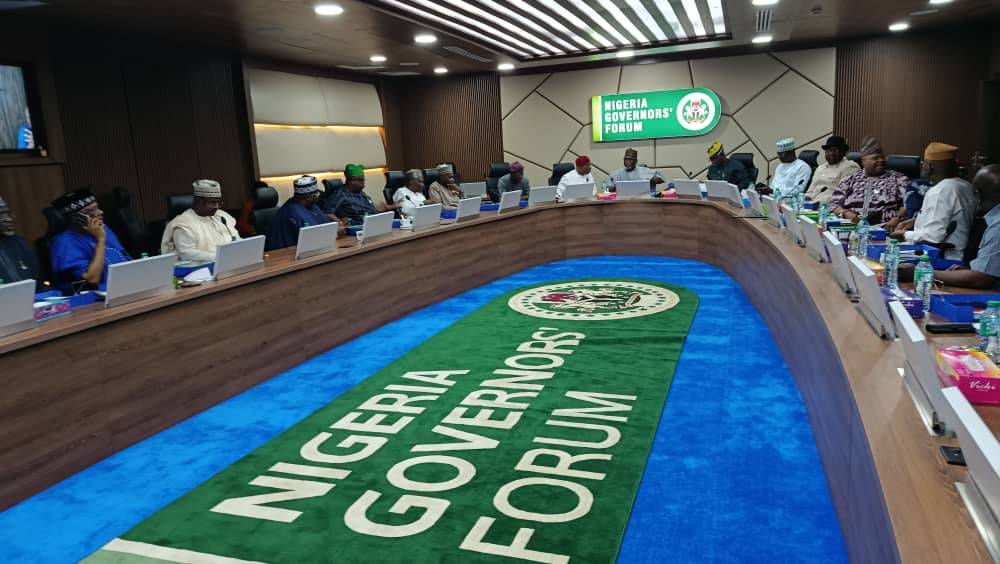
Although the constitutional responsibility for internal security rests with the Federal Government, the escalation of violent crimes has pushed state governors to design and fund independent security initiatives.
However, these interventions appear to have delivered limited results, with criminal groups still operating freely in many parts of the country.
The analysis covered 32 states, excluding Gombe, Kebbi, Niger and Yobe, which did not clearly disclose security vote figures in their budgets.
Ekiti also failed to provide a clear breakdown in its 2025 budget, suggesting that the actual national total may exceed N525.23bn.
Data shows that states budgeted N150.47bn for security votes in 2023.
This rose to N164.07bn in 2024 and surged to N210.68bn in 2025.
The year-on-year increase represented a 9.04 per cent rise between 2023 and 2024, followed by a much steeper 28.4 per cent jump in 2025.
Overall, allocations in 2025 were more than N60bn higher than in 2023, reflecting a sharp expansion in security spending within a short time.
A few states accounted for a significant portion of the total.
Borno State topped the list with N57.40bn over the three years, underscoring the high cost of ongoing counter-insurgency operations in the North East.
Anambra State followed with N42.57bn, driven by a dramatic increase from less than N200m in 2023 to N17.28bn in 2024 and N25.10bn in 2025.
Delta State ranked next with N38.44bn, while Benue State allocated N36.87bn, recording steady increases each year.
Other major spenders included Ondo (N31.72bn), Zamfara (N31.40bn), Edo (N29.21bn), Adamawa (N27bn) and Bauchi (N25.41bn).
At the lower end, Rivers State disclosed just N210m over the three years, Akwa Ibom reported N624m, while Ekiti listed only N3.1m, highlighting wide inconsistencies in reporting and prioritisation.
Year-by-year figures show shifting patterns. In 2023, Bauchi approved the highest allocation at N17.39bn, narrowly ahead of Delta (N17.15bn). Bayelsa, Adamawa and Benue followed.
In 2024, Zamfara emerged as the biggest spender with N17.40bn, followed by Anambra, Borno, and Edo.
By 2025, allocations expanded sharply, with Borno alone approving N32.83bn, far exceeding other states. Anambra, Oyo, Benue, Ondo, and Edo also recorded significant increases.
Some states showed dramatic fluctuations. Bauchi’s allocation plunged in 2024 before rebounding in 2025.
Kano followed a similar pattern, while Oyo recorded a striking jump from tens of millions in previous years to over N20bn in 2025.
A regional breakdown reveals that the North East recorded the highest disclosed spending at N113.78bn, largely driven by Borno. The South East followed with N102.59bn, boosted by Anambra’s sharp rise.
The South South allocated N98.36bn, while the North Central accounted for N76.57bn.
The North West disclosed N70.77bn, excluding Kebbi, while the South West recorded the lowest total at N63.16bn, although spending in the zone surged significantly in 2025.
The findings come amid mounting public concern over the persistence of violent attacks, kidnappings, and destruction of property nationwide.
Security votes are special funds set aside monthly by federal and state governments for sensitive security operations, including intelligence gathering and emergency responses. However, the secrecy surrounding their use has long drawn criticism.
Analysts and civil society groups argue that security votes often lack accountability and may be diverted for political or personal purposes rather than improving public safety.
The National Coordinator of the Coalition of Northern Groups, Jamilu Charanchi, questioned the value of the allocations, noting that insecurity remains rampant despite the billions spent.
He argued that poverty, poor infrastructure, and failing public services continue to fuel violence, while accusing political leaders of benefiting from the system.
Similarly, labour unions have repeatedly urged state and local governments to take greater responsibility for addressing insecurity, stressing that subnational authorities receive security-related funds and are closest to affected communities.
President Bola Tinubu, speaking at a security conference, said effective governance at the state and local levels is critical to tackling insecurity.
He noted that the weakening of local governments has undermined community-level responses to security threats.
Labour leaders also warned that insecurity is increasingly affecting daily life, economic activity, and freedom of movement, calling on governors to invest more in intelligence gathering, surveillance, community engagement, and rapid-response mechanisms.

- FG targets $1trn economy through funding for women-led businesses - March 6, 2026
- Petrol hits N995 as Dangote adjusts prices - March 6, 2026
- EFCC returns N279m to Wole Soyinka Centre - March 6, 2026