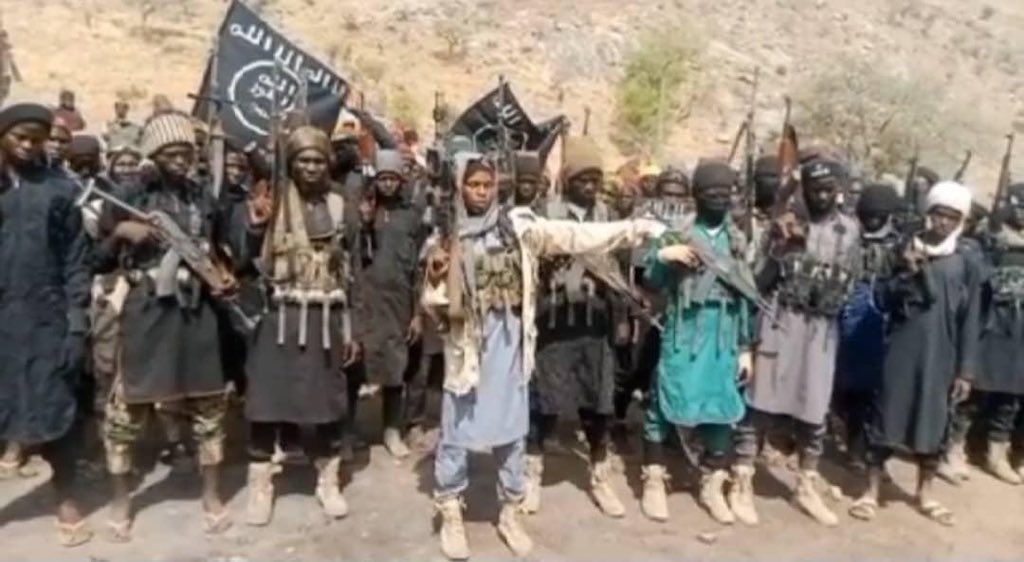
Recent security reports suggest that Boko Haram’s Jama’atu Ahlis Sunna Lidda’awati wal-Jihad (JAS), organised bandit groups, and elements of Jama’at Nasr al-Islam wal-Muslimin (JNIM) are increasingly working together across Nigeria’s North-East, North-West and North-Central regions.
Analysts say this cooperation is forming a loose but dangerous alliance.
At the centre of the threat is a JAS bombing network linked to the Ali Ngulde camp, reportedly guided by veteran explosives expert Munzir Abu Ziyadah.
Intelligence indicates that his team prepared several attacks that moved through the Ngoshe Mountains and other communities before entering different towns in Borno State.
The December 24 incident at Gamboru Market mosque in Maiduguri is viewed as part of this broader plan.

Security briefings later warned that places like Gwoza and Pulka — especially on busy market days — could also be targeted.
Inside Boko Haram’s structure, sources describe a decentralized leadership.
Before his reported death, a commander known as Ustaz served directly under Bakura Doro and helped run the group’s headquarters.
Leadership roles were shared among Ali Ngulde in the Mandara Mountains, Sadikku in the North-West and North-Central, and Ustaz in Barwa.
Tensions between jihadist factions have also triggered clashes, including incidents involving ISWAP.
In the North-West, the threat is evolving.
Intelligence links show that some bandit leaders are hosting former Sambisa-based bomb specialists.
One figure, identified as Alhaji Beti, is said to be facilitating collaboration and providing space in Zamfara’s Gando Forest for the production of roadside explosives aimed at disrupting travel and trade across several states.
Security sources say these tactics appeared in late December when explosives were reportedly planted along key routes, followed by coordinated attacks on convoys — a shift from typical bandit operations toward methods associated with terrorist groups.
Training networks are also believed to be spreading.
Reports claim that Baba Adamu (known as Kachallah Sadikku) has been training fighters linked to Dogo Gide in bomb-making, while cooperation between JNIM, Ansaru, and JAS has been observed across parts of the North-Central zone.
One example cited is the December 22 attack on an NSCDC checkpoint near Wawa in Niger State, where attackers escaped through the Kainji National Park area.
The park has increasingly been referenced as a safe haven used by insurgent groups.
Nearby communities have experienced repeated incidents, fueling fears of larger coordinated plans.
Overall, analysts warn that Nigeria faces a more complex threat: Boko Haram brings bomb-making knowledge, bandits provide routes, terrain access and logistics, JNIM contributes experience and regional links.
This combination is blurring the line between crime and insurgency and could increase risks to highways, markets and communities.
Experts stress that Nigeria’s security agencies must prioritize better intelligence-sharing, route clearance, monitoring of forest hideouts, and stronger community partnerships to prevent attacks rather than respond after they occur.
Zagazola Makama argues that timely, coordinated action is essential — both to protect lives and to safeguard economic activity in affected regions.

- EFCC arraigns Bauchi finance commissioner, three others over alleged $9.7m terrorism financing - December 31, 2025
- Atiku faults Tinubu, urges Nigerians to mobilise ahead of 2027 elections - December 31, 2025
- From FIRS to NRS: Nigeria Revenue Service unveils new identity - December 31, 2025