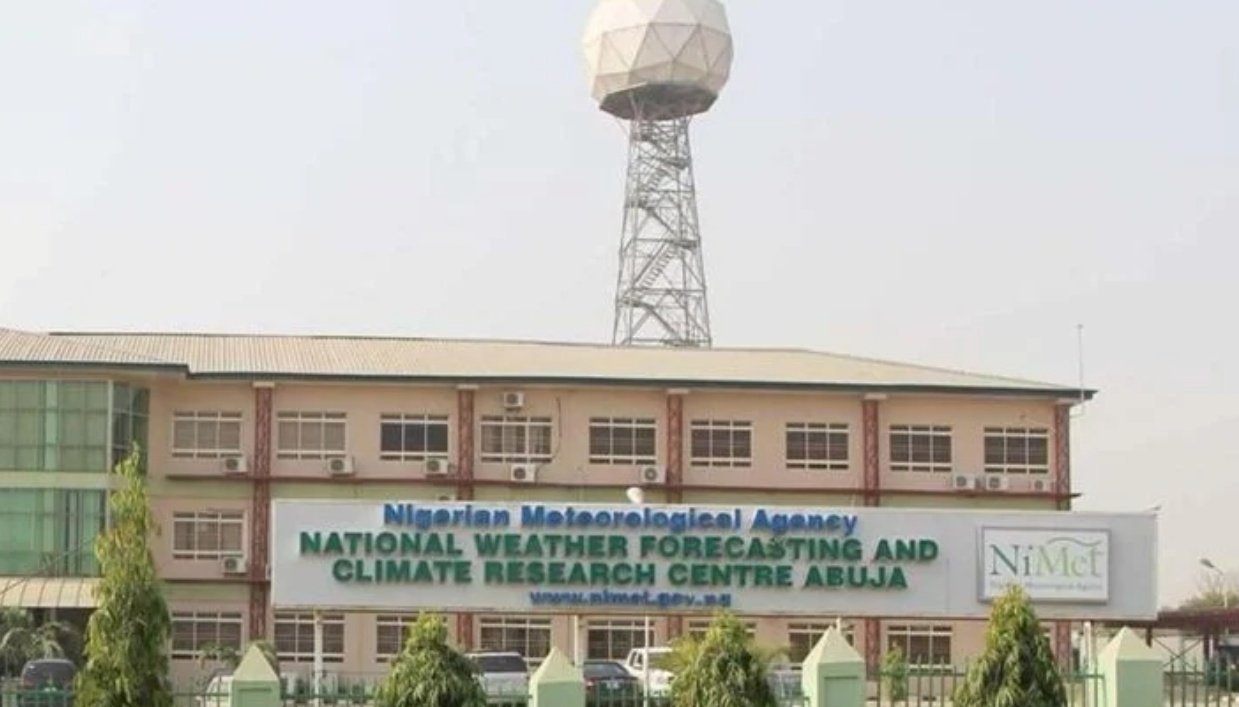
The Nigerian Meteorological Agency (NiMet) has transformed from a relatively obscure institution into one of Nigeria’s most dynamic and globally recognised government agencies, playing a central role in shaping national climate policy and driving sustainable development.
Recently, NiMet received the Best Federal MDA in Open Data Excellence award at the Nigeria GovTech Public Service Awards 2025, while its Director-General/CEO, Prof. Charles Anosike, was honoured with the Distinguished GovTech Trailblazer Award.
These recognitions affirm the agency’s leadership in transparency, innovation, and digital transformation.
Prof. Anosike was also listed among the Top 100 Environmental and Sustainability Professionals by Environment Africa Magazine for his efforts in promoting climate resilience and ensuring that weather data directly supports vulnerable communities and national planning.
Before Anosike’s appointment in December 2023, NiMet faced challenges including poor staff morale, weak leadership, and outdated technologies.
Less than two years later, the agency has recorded groundbreaking achievements through digital modernisation, international partnerships, and staff development.
Over 1,700 staff members have benefited from new training programmes designed to equip them for modern, data-driven meteorological operations.
These reforms align with President Bola Tinubu’s Renewed Hope Agenda and the supervisory oversight of the Minister of Aviation and Aerospace Management, Festus Keyamo (SAN).
NiMet’s resurgence has been anchored on Anosike’s seven “Cs” of leadership — Competence, Courage, Consistency, Commitment, Character, Communication, and Clarity — which have guided the agency’s reforms.
Under Anosike’s leadership, NiMet has implemented several digital tools, including the Electronic Flight Folder (e-Flight Folder) for aviation, providing pilots with real-time weather data to improve flight safety and efficiency.
Many airports have also achieved ISO quality management certification.
The agency has strengthened early warning systems to help Nigerians adapt to the growing threats of climate change.
Through partnerships with the World Meteorological Organization (WMO) and other global institutions, NiMet has improved the communication of climate information and contributed to disaster risk reduction and the Sustainable Development Goals (SDGs).
NiMet now monitors major river basins and ecosystems to combat desertification and restore degraded lands, extending its impact beyond daily weather forecasts to long-term environmental protection.
In August 2025, NiMet signed a Memorandum of Understanding (MoU) with the African Agricultural Technology Foundation (AATF) to promote climate-resilient agriculture across Africa.
The partnership aims to create climate-smart tools, strengthen farmers’ capacity, and protect agricultural value chains from climate shocks.
That same month, NiMet, in collaboration with the Sahel Initiative, International Research Institute (IRI), and the Bill & Melinda Gates Foundation, launched the ENACTS Initiative in Abuja.
The project integrates ground and satellite data to deliver user-friendly, high-resolution climate information through NiMet’s new Maproom portal, which provides over 40 years of data at a 4km grid resolution.
In the aviation sector, NiMet achieved a continental milestone with the launch of the Secure Aviation Data Information Service (SADIS) API, a cutting-edge digital platform offering real-time weather data to enhance flight safety and operational efficiency.
The system, operated under the UK Met Office and supervised by the International Civil Aviation Organization (ICAO), replaces outdated data exchange protocols, positioning Nigeria as a trailblazer in meteorological innovation.
At a stakeholders’ forum in Lagos themed “Early Warnings: Raising Awareness on Climate Risks and Promoting Early Action”, NiMet reaffirmed its role in supporting sectors such as agriculture, aviation, energy, and health through reliable weather data.
Two days later, at a Nigerian Exchange Group roundtable, Anosike called for climate data integration into sustainability reporting, noting that climate-related disasters increase credit, liquidity, and market risks for financial institutions.
He urged regulators to embed climate risk management into corporate reporting frameworks.
NiMet also deepened its international partnerships with the Kingdom of Morocco, focusing on AI-based weather forecasting and early warning systems.
Both countries agreed to collaborate on the WMO Integrated Global Observing System Centre in Abuja, data management, capacity building, and bilingual training to expand outreach across Africa.
In July 2025, Anosike led a NiMet delegation to a public hearing on the proposed NiMet Amendment Bill 2025, aimed at strengthening the agency’s legal framework.
The proposed amendments seek to introduce a cost-recovery mechanism to ensure sustainability and enhance compliance across sectors such as marine, construction, and telecommunications.
Anosike told lawmakers that “weather and climate have far-reaching impacts on every sector of Nigeria’s economy,” stressing the need for flexible laws that can adapt to emerging challenges in a data-driven world.
Following his presentation, members of the National Assembly commended NiMet’s progress and pledged support to accelerate the legislative process needed to further empower the agency.
Through strong leadership, innovation, and strategic collaboration, NiMet has evolved into a critical pillar of Nigeria’s climate adaptation and sustainability strategy — transforming data into actionable policy for a more resilient future.

- Ex-Super Eagles midfielder Henry Nwosu dies at 62 - March 14, 2026
- Viral photo of police recruit with iPhone 12 Pro triggers reactions - March 14, 2026
- Education key to national development — Obasanjo - March 14, 2026