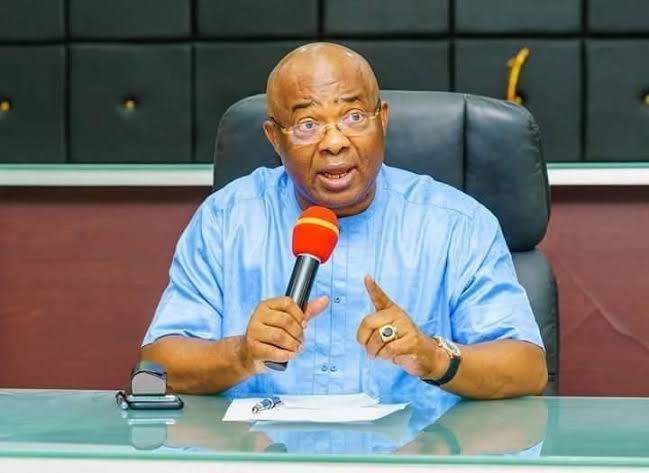

The Imo State Government has rolled out major reforms in the education sector, banning graduation ceremonies for kindergarten, nursery, and Junior Secondary School 3 (JSS3) students, while also prohibiting schools from changing textbooks every academic year.
The directive was contained in a policy memo dated August 15, 2025, signed by the Commissioner for Education, Prof. Bernard Ikegwuoha, with reference number MOEPS/COMMR/2025/VOL.1/155.
Titled “Policy on Education for Public and Private Primary and Secondary Schools in Imo State”, the document was addressed to parents, guardians, school proprietors, and other stakeholders in the education sector.
According to the new policy, graduation ceremonies are now restricted to pupils completing Primary 6 and students finishing Senior Secondary School 3 (SSS3), in line with Nigeria’s 6-3-3-4 education structure.
“This policy seeks to redirect attention to the academic milestones of learners at the completion of primary and secondary education, rather than at interim stages,” the memo stated.
The government also outlawed the yearly change of textbooks, which it described as exploitative and burdensome for parents. Prof. Ikegwuoha directed that all approved textbooks must remain in use for a minimum of four years, enabling families to reuse them for siblings and reducing financial strain.
He further warned proprietors of private and faith-based schools against deviating from the government’s approved booklist, stressing that frequent changes not only disrupt curriculum consistency but also undermine the quality of education.
“Proprietors are warned to desist from frequent change of textbooks every academic year, as this practice can be financially burdensome for parents and detrimental to effective teaching and learning,” the commissioner cautioned.
The new education policy takes effect immediately.

- Troops kill 45 bandits, notorious leader Alti in Katsina - March 7, 2026
- US imposes visa restrictions on Rwanda over M23 backing - March 7, 2026
- Tinubu to military: We will prevail over insecurity - March 7, 2026