

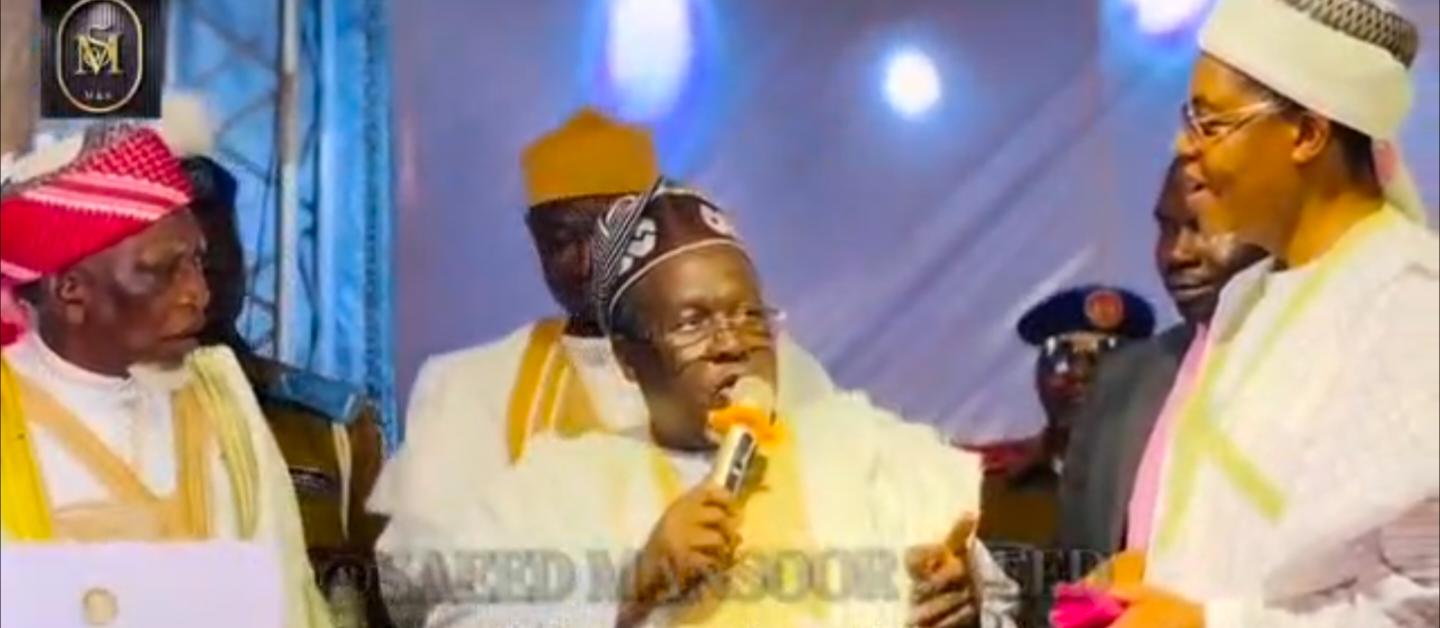
Plateau-based Islamic cleric, Sheikh Yahaya Jingir, has renewed his call for Nigerians to support a Muslim-Muslim presidential ticket ahead of the 2027 general election, shortly after a N600 million donation was announced for a university project linked to him.
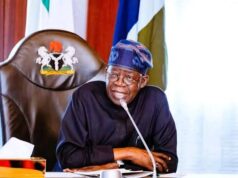
The donation was announced by Ibrahim Masari, Special Adviser to President Bola Tinubu on Political Affairs, during an event attended by the cleric.
Masari said he and Yobe State Governor, Mai Mala Buni, had each donated N300 million to the university project, bringing the total contribution to N600 million.
“I, too, have given N300 million, and my brother, the Governor of Yobe State, has also given N300 million, bringing the total to N600 million. Give us the account details so we can transfer the money right now,” Masari said.
Jingir expressed appreciation for the donations and subsequently reiterated his support for the same-faith ticket.
The cleric clarified that the funds were intended for the university project and not for his personal use, saying the institution was intended to provide education for both Muslims and Christians.
“I want education to be established so that both Muslims and Christians can be successful,” he said.
Jingir later led the gathering in chants of “Muslim-Muslim” as he concluded his remarks, while praying for peace in Nigeria and the Muslim world.
He also criticised those who oppose the same-faith ticket and called for them to embrace Islam.
The development has sparked reactions on social media, with some users questioning the relationship between the donation and Jingir’s political position.
Jingir had, about two weeks earlier, publicly declared his support for President Tinubu’s re-election on the platform of a Muslim-Muslim ticket.
“I am one of those who raise the flag of Islam. I am calling on people to come and let us do Muslim-Muslim again,” he had said.
He also urged Muslims to mobilise their votes for Tinubu in 2027, arguing that the election would provide an opportunity to demonstrate the numerical strength of Muslims in Nigeria.
His comments had attracted criticism, with opponents accusing him of using religion to influence political choices.
The latest development comes amid intensified political mobilisation ahead of the 2027 presidential election and renewed debate over the role of religious leaders in partisan politics.

- Rivers orders evacuation after 60-year-old building injures four - October 11, 2026
- Tinubu defends reforms as World Bank projects 4.4% growth for Nigeria - October 11, 2026
- Ogun 2027: Adebutu vows to challenge omission from INEC’s governorship list - October 11, 2026