Aisha Habib Maigiwa
Halima Basiru, a Primary Six pupil at Jaoji Special Primary School in Kumbotso Local Government Area of Kano State, wipes sweat from her face with the edge of her hijab and shifts on the bare classroom floor, trying to ease the soreness. She cannot remember the last time her class had chairs.
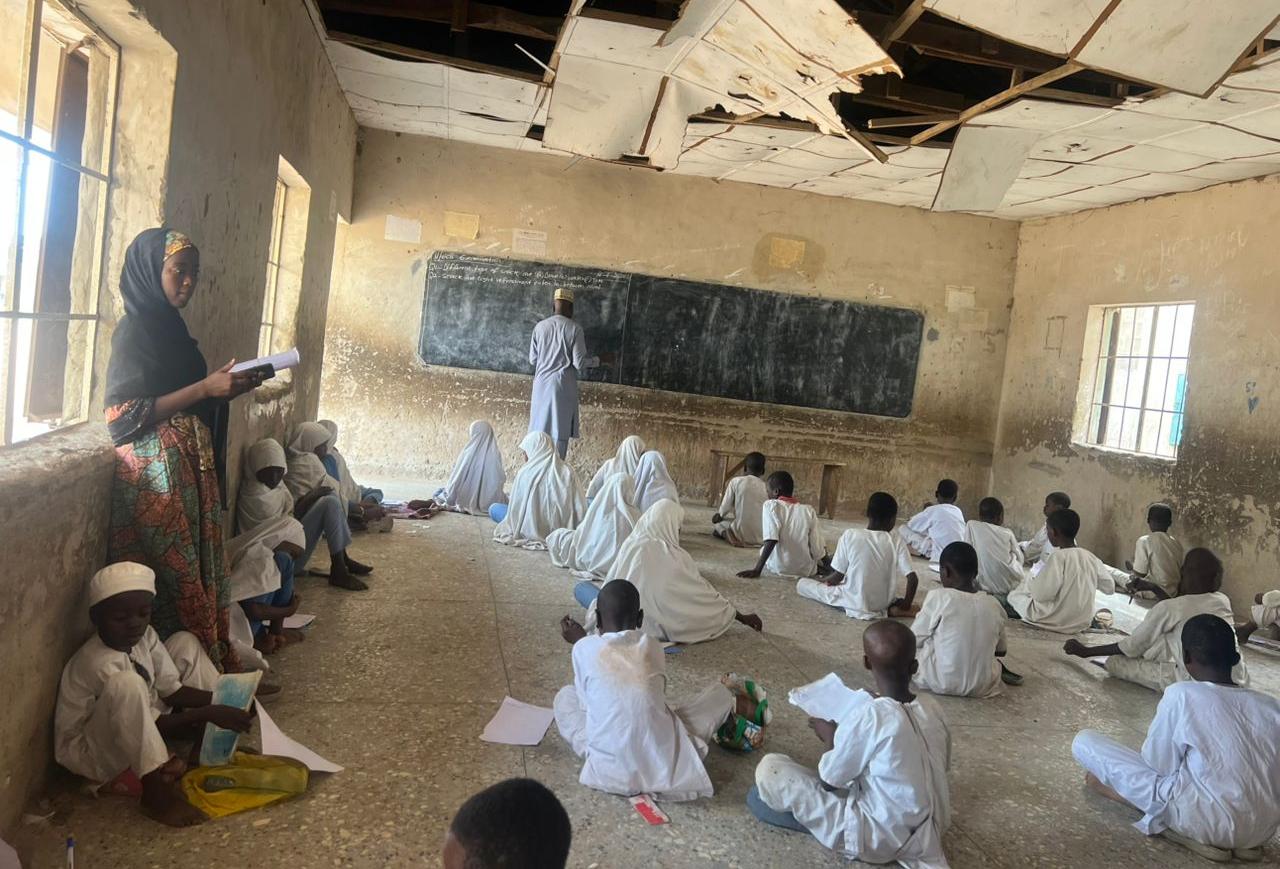
The school, established in 1992, currently enrols about 1,500 pupils across 14 classrooms and four offices, most of them in severe disrepair. Walls are crumbling, ceilings are tattered, and windows are without frames or glass.
“I walk past other schools on my way here every day. I feel sad when I see children sitting on chairs and using tables. Some even have clean whiteboards. I wish we had the same things here,” Halima said.
Headmaster Auwal Adamu said pupils bring prayer mats, empty rice sacks, and cement bags from home to sit on during lessons, while female pupils spread wrappers and scarves on the floor. The classrooms have no windows, leaving children exposed to the harmattan cold.
Adamu said he has written multiple letters to the State Universal Basic Education Board (SUBEB) requesting intervention, none of which received a response.
“The last letter I sent was in December last year. It was a reminder because the previous letters were ignored.
“None of the officials has visited the school to see the situation for themselves,” he said.
Efforts to obtain comments from the SUBEB chairman were unsuccessful as of the time of filing this report.
Kabiru Umar Hassan, a Social Studies and Civic Education teacher at the school, said the psychological toll on pupils is compounded by poverty at home.
“Most of these children leave their houses on empty stomachs and still find no comfort in the classroom. It becomes almost impossible for them to concentrate,” he said.
Research published in 2024 by Helen Ross of the University of Melbourne and Samuel Greene of Monash University found that poor and overcrowded learning environments contribute to anxiety, emotional stress, and low self-esteem among students.
Umar said the absence of teaching materials forces him to spend his own salary on demonstration items for some lessons and to skip others he cannot afford to resource.
The school’s deteriorating infrastructure has also created security and sanitation hazards.
Umar said the retirement of the school’s security guards has left the premises open to petty theft and to members of the public defecating inside classrooms and around the compound.
Female staff members, he said, were forced to abandon their office and relocate to a classroom after human waste accumulated behind the building.
Auwalu Salisu, a Primary Three teacher, said some classes exceed 80 pupils, making the hot season particularly gruelling.
During the rainy season, he said, school is regularly dismissed early over fears that pupils will fall ill from exposure.
“I get discouraged by these challenges sometimes. My colleagues and I are intellectually capable, but the lack of facilities and welfare makes us appear otherwise,” Salisu said.
For Hamisu Musa, a Primary Four pupil who dreams of becoming a businessman, the daily indignity is physical as well as emotional.
“I always sit in front during lessons, but my trousers get torn because I sit on the bare floor,” he said.
The Universal Basic Education Act of 2004 guarantees free, compulsory basic education for every Nigerian child.
The conditions at Jaoji Special Primary School suggest that guarantee has yet to reach Kumbotso.

- Tinubu’s second term will be unity govt — Akpabio - October 14, 2026
- 2027 polls: IG Disu promises Nigerians professional police conduct - October 14, 2026
- Ogun pig farmers lose N5bn to swine fever - October 14, 2026