

The Kano State Government and private investors have inaugurated the Hajaj-ZOEC Digital Market, a landmark commercial project expected to transform electronics trade in Northern Nigeria, create over 100,000 jobs and generate an estimated ₦50 billion in annual revenue.
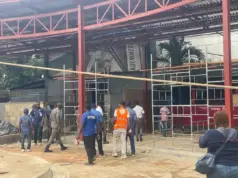
The market, commissioned on Saturday at the former Luxurious Bus Park along New Road in Tudun Wada, Sabon Gari, was developed through a Public-Private Partnership involving the Kano State Government, Hajaj ZOEC Real Estate Limited and ZOEC Construction.
Designed as one of West Africa’s largest dedicated electrical and electronics markets, the facility houses more than 1,500 shops and aims to position Kano as a major distribution hub for electrical and electronic products across Nigeria and the West African sub-region.
Chief Executive Officer of Hajaj ZOEC Real Estate Limited, Alhaji Jamilu Abdussalam, said the project would reduce the need for Nigerian traders to travel abroad to source goods, as manufacturers and suppliers would now have a central marketplace in Kano.
“We believe this market is not only an opportunity for Kano State or Northern Nigeria but for the entire African continent. Instead of travelling all the way to China to purchase goods in bulk, traders will be able to come to Kano and place their orders here,” he said.
Abdussalam revealed that the project, valued at between ₦25 billion and ₦30 billion, had already attracted international investors from countries including Egypt and China, many of whom have established permanent showrooms within the complex.
He added that about 60 to 65 per cent of the shops have already been sold, while the market offers modern facilities including parking space for about 700 vehicles, underground storage capable of handling more than 30 forty-foot containers, a central firefighting system and sprinkler installations.
According to him, the project generated significant employment during construction, with more than 1,000 workers engaged daily and over 8,000 people benefiting across its supply chain.
“When the market is fully operational, we project that more than 100,000 people will benefit directly and indirectly,” he said.
Minister of State for Housing and Urban Development, Yusuf Ata, represented by his Special Assistant (Technical), Kabir Dutse, described the project as evidence of the growing role of Public-Private Partnerships in delivering critical infrastructure.
He said the Federal Government had simplified PPP processes to attract more private investment and described the digital market as a model for technology-driven commercial development.
Ata noted that the facility would strengthen commerce, attract investment and reinforce Kano’s status as one of Nigeria’s leading commercial centres.
Government officials, investors, business leaders and development partners who attended the commissioning expressed confidence that the market would expand regional trade, stimulate economic growth and enhance Kano’s position as a key commercial gateway in West Africa.