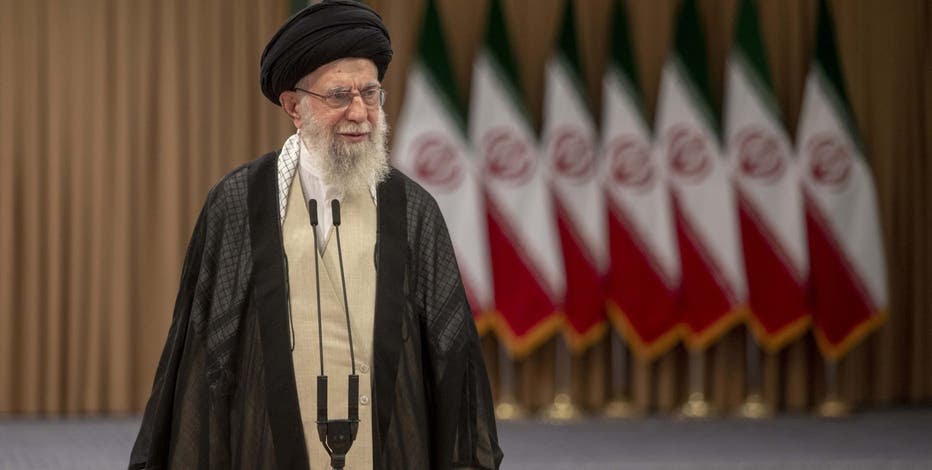
Iran on Sunday announced its president, the head of the judiciary, and one of the jurists of the Guardian Council – a powerful body – will oversee the transition period following the death of Ayatollah Ali Khamenei.
The Assembly of Leadership Experts – a body of clerics – will now turn to appointing Khamenei’s successor, something the constitution says must occur as soon as possible.
But quickly assembling everyone while Iran is under attack by the United States and Israel may prove difficult for safety reasons.

Khamenei himself was appointed the very same day Ruhollah Ayatollah Khomeini died.
Born in the north-eastern city of Mashhad in 1939, the son of a religious scholar, Ali Khamenei joined the religious opposition movement of Ayatollah Khomeini in 1962.
After the Islamic Revolution in 1979, Ali Khamenei became deputy defence minister and helped organise the Islamic Revolution Guard Corps (IRGC).
Trump: I’ll use force never seen before if Iran strikes US, Israel
When Khomeini died in June 1989, the Assembly of Experts – a council of clerics – chose Ali Khamenei to be the new supreme leader, changing the constitution to allow him to take charge even though he had not achieved the required rank among Shia clerics.
Ayatollah Khamenei has maintained a firm grip on Iran’s politics and its armed forces ever since, suppressing challenges to the ruling system, sometimes violently.
He also consistently taken hard-line stances on external matters, including the ongoing confrontation with the United States, of whom he remained suspicious. He had also repeatedly called for the elimination of the State of Israel – publicly questioning whether the Holocaust occurred.
There have been seven presidents of Iran to serve during the rule of Khamenei, who has six children

- BUA Cement profit rises to N356bn as revenue hits N1.179trn - March 1, 2026
- Police nab 7 as one youth dies in Lagos communal clash - March 1, 2026
- Nwifuru suspends 2 Ebonyi commissioners over dereliction of duty - March 1, 2026