The Lagos State Government has dismissed what it described as misleading reports about the number of HIV infections in the state.
The recently released Federal Ministry of Health and Social Welfare’s State of the Health of the Nation Report 2025 said a total of 102,025 new HIV infections were recorded across Nigeria’s 36 states and the Federal Capital Territory in 2025, with Lagos State accounting for the highest number of new cases at 10,430.
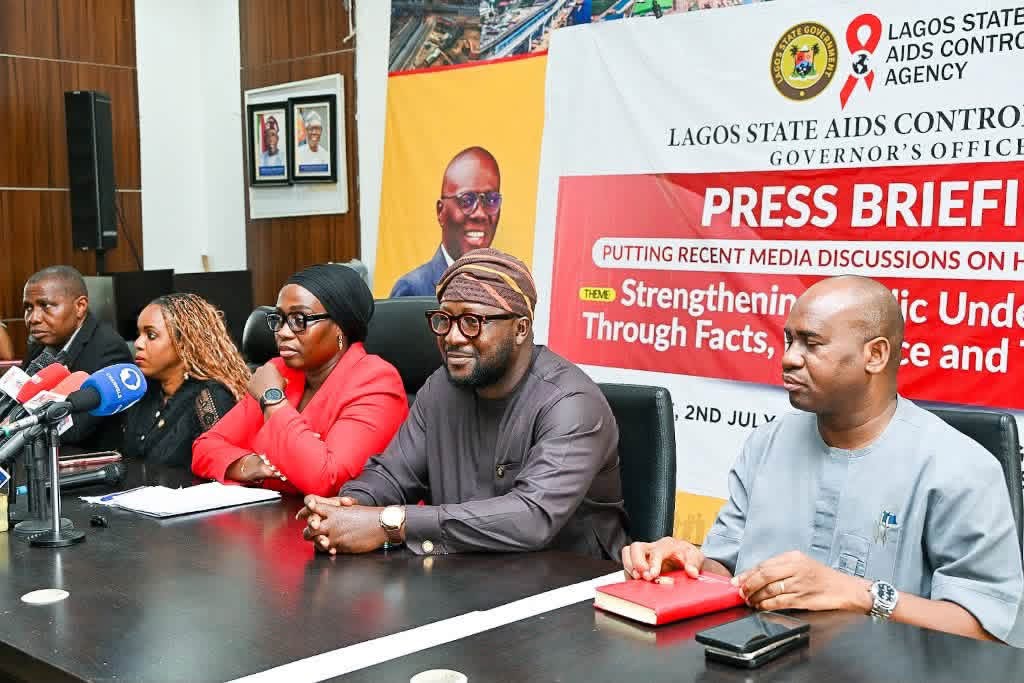
Speaking at a press conference in Lagos on Thursday, July 2, 2026, the Chief Executive Officer of the Lagos State AIDS Control Agency (LSACA), Dr. Folakemi Animashaun, said the report, which is a 2018 survey, does not literally translate to Lagos State recording 10,430 new HIV infections in 2025.
Animashaun said the number that has been widely circulated refers to newly diagnosed HIV-positive cases, not necessarily new HIV infections that occurred within the year.
She said while recent reports have generated understandable public concern, the available programme data does not support panic but underscores the strength of Lagos State’s surveillance system, expanded access to HIV services, and sustained progress towards epidemic control.
Giving detailed clarification on the report, Animashaun said: “A newly diagnosed HIV-positive case simply means an individual was confirmed HIV-positive during the reporting period. These include persons who may have acquired HIV several years earlier but were only recently tested.
“The figure may also include people who travelled to Lagos for testing or treatment, referrals from other states, and individuals identified because the state expanded access to HIV testing services.
“On the other hand, new HIV infections refer to individuals who acquired HIV within a defined period. and are estimated using established epidemiological surveillance methods and scientific modelling. These are two different indicators and should not be interpreted interchangeably.
“This distinction is critical because inaccurate interpretation of public health data can generate unnecessary fear, increase stigma and discrimination, discourage HIV testing, and ultimately undermine public health interventions.”
Speaking on the available programme data, Animashaun stated: “In 2025, Lagos State conducted 504,800 HIV tests, through which 11,940 HIV-positive cases were identified, representing a positivity yield of 2.4 percent.
63.6% of businesses struggle to access govt contracts – Survey
“In the first quarter of 2026, the state conducted 179,229 HIV tests, identifying 3,390 HIV-positive cases, while the positivity yield further declined to 1.9 percent.
“The declining positivity rate, despite expanded testing, is a significant epidemiological indicator that reflects improving epidemic control.
“Furthermore, as of 2025, 147,904 persons were receiving antiretroviral therapy across Lagos State, with 97 percent achieving viral suppression. This represents a major public health milestone and demonstrates the effectiveness of the State’s HIV treatment programme.
“Similarly, Lagos State continues to record significant progress in the prevention of mother-to-child transmission of HIV. The Early Infant Diagnosis positivity rate has declined remarkably from 5.1 percent in 2020 to 1.5 per cent in 2025, reflecting sustained improvements in maternal and child HIV services.
“These indicators collectively demonstrate that Lagos has built one of Nigeria’s strongest HIV surveillance, prevention, treatment, and response systems.”
The LSACA boss assured that the state’s HIV response remains strong, proactive, evidence-based, and firmly on course.
She said: “To ensure complete transparency, Lagos State is engaging relevant stakeholders to understand the methodology, indicator definitions, and reporting assumptions underlying the published figures. This will ensure accurate interpretation and responsible public communication.
“It is equally important to place Lagos State within its proper context. As Nigeria’s most populous state, commercial centre, and one of the country’s largest healthcare referral hubs, Lagos naturally records some of the highest volumes of HIV testing, diagnosis, treatment, and patient referrals.
“Stronger surveillance systems and wider access to healthcare services invariably result in higher case detection and should not be misconstrued as evidence of worsening epidemic control.”
Animashaun, who said HIV remains preventable and manageable, assured that “With early diagnosis and sustained treatment, people living with HIV can live long, healthy, productive, and fulfilling lives.”
“To every resident of Lagos, our message is simple. There is no cause for panic. Know your HIV status, access available prevention, testing, treatment, and care services, rely only on verified public health information, and reject every form of stigma and discrimination,” she said.
Earlier, the Special Adviser to the Governor on Media and Publicity, Gboyega Akosile described the briefing as necessary to correct misinformation circulating in sections of the traditional and digital media regarding HIV statistics in Lagos State.
Akosile said the government had invested heavily in healthcare infrastructure and public health programs, including HIV prevention, treatment, and care, under the administration of Governor Babajide Sanwo-Olu.
Akosile recalled that even after the suspension of HIV-related foreign assistance announced by the administration of Donald Trump in the United States, the Lagos State Government swiftly approved measures to ensure uninterrupted HIV services.
He urged journalists to disseminate only verified information, noting that the state had consistently demonstrated strong political commitment to protecting residents during public health emergencies.

- OAU lecturer wins $5m Gates Foundation grant to tackle maternal deaths in Nigeria - October 9, 2026
- Wike orders demolition of illegal beer parlours in Abuja - October 9, 2026
- FG bars MDAs from buying vehicles from unregistered suppliers - October 9, 2026