
The Federal Government yesterday defended Nigeria’s rising public debt, currently estimated at about N152 trillion, saying the increase largely reflects improved transparency and foreign exchange adjustments rather than indiscriminate new borrowing.
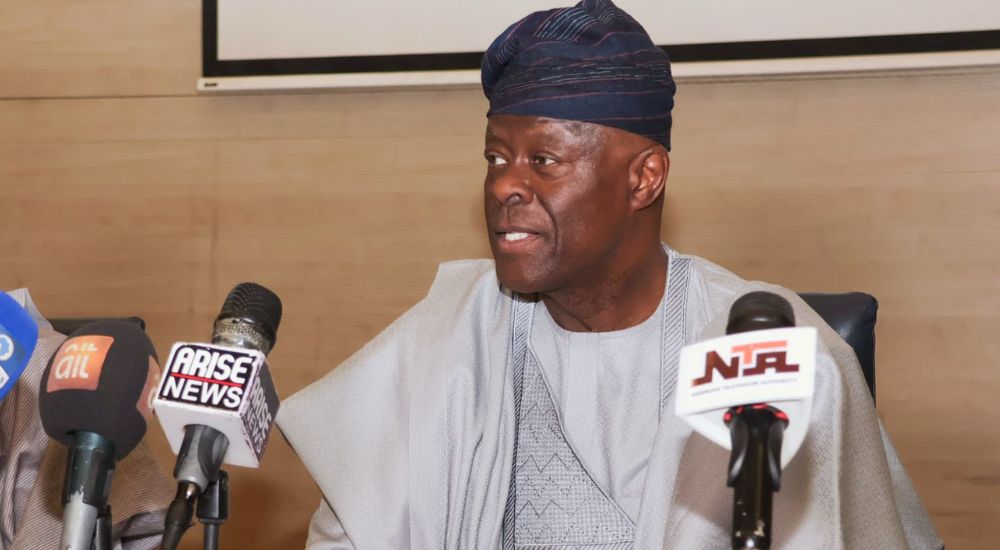
Speaking at the presentation of the Nigerian Economic Summit Group (NESG) 2026 Macroeconomic Outlook in Lagos, Coordinating Minister of the Economy and Finance Minister, Mr. Wale Edun, said the Tinubu administration has prioritized openness and fiscal discipline over opaque accounting practices.
“Nigeria’s total public debt stands at N152 trillion, just over $100 billion,” Edun stated. “Importantly, N30 trillion previously recorded as Ways and Means advances has now been transparently recognised, while exchange rate adjustments account for much of the remaining increase, not new borrowing.”
Edun acknowledged that debt servicing remains a challenge but emphasised that “transparency has improved significantly,” adding that the government has continued to meet all statutory obligations. “Despite fiscal pressures, salaries, pensions, and debt service have been paid. This underscores our commitment to discipline and transparency,” he said.
On the 2025 Budget performance, the minister said Nigeria’s fiscal position remained resilient despite global and domestic headwinds. “The fiscal deficit stood at 3.4 per cent of GDP in 2025, slightly above the Fiscal Responsibility Act threshold, reflecting ongoing adjustment efforts,” he noted. He also highlighted that while oil and gas revenue underperformed, non-oil revenue showed improvement.
Edun said fiscal federalism reforms have strengthened the financial positions of states, many of which now run budget surpluses exceeding three per cent, allowing for increased spending on health, education, and public services.
He added that the administration’s economic reforms have delivered macroeconomic stabilisation and positioned the country for further consolidation. “After more than two years of implementing transformative and politically difficult reforms, Nigeria is now at the threshold of consolidation. But consolidation demands resolve, discipline, and policy consistency. Nigeria cannot afford to retreat or pause,” Edun said.
The minister also highlighted structural reforms, including the removal of preferential access to foreign exchange, fuel subsidies, and other rent-seeking opportunities. “These measures have created a level playing field where success is driven by productivity, innovation, and value creation, not arbitrage,” he said.
Edun noted that Nigeria’s reforms have generated positive signals internationally. “We were well received at the World Bank Annual Meetings. Nigeria has exited the FATF grey list and has been removed from the EU’s list of high-risk third countries. Credit rating agencies have also responded positively,” he said.
On economic performance, he said activity is broadening, with 27 sectors growing above three per cent, though manufacturing and agriculture are “not yet where we want them to be.” Inflation remains a concern, he added, but said the trajectory shows commitment from monetary authorities.
Edun also praised the improving performance of Nigeria’s capital market, which he described as critical for growth financing. “Stock market capitalisation is approaching $500 billion, an important threshold for global market credibility. Capital markets will increasingly mobilise domestic savings and finance growth, enabling Nigerians at all levels to invest productively,” he said.
Looking ahead, Edun projected 2026 economic growth of 4.68 per cent, inflation averaging 16.5 per cent, and an exchange rate of N1,400 to the dollar. He said the 2026 Budget, titled “Budget of Consolidation, Renewed Resilience and Shared Prosperity,” reflects President Bola Tinubu’s commitment to translating macroeconomic gains into tangible benefits such as food availability, electricity, housing, and employment.
Reactions from Analysts
Oluropo Dada, 13th President of the Chartered Institute of Stockbrokers (CIS), noted that while transparency improvements are commendable, fresh borrowing has still played a role in sustaining government operations. “The Federal Government has raised over N7 trillion from FGN bonds alone in the last two years. Given the fiscal deficit, it is clear that new borrowing contributed materially, even if part of the increase is due to exchange-rate revaluation and recognition of previously unrecorded obligations,” he said.
David Adonri, Vice Executive Chairman at High Cap Securities Limited, commended the disclosure of shadow debt but warned that continued borrowing risks worsening Nigeria’s debt challenges.
Olatunde Amolegbe, former CIS President, said while the debt quantum is significant, debt sustainability remains key. “At a debt-to-GDP ratio of about 36 per cent, sustainability is not immediately threatened, but metrics such as debt-to-revenue require caution,” he said.
Clifford Egbomeade, analyst and communications expert, explained that improved transparency explains the headline debt figures but does not remove underlying fiscal pressures. “Of the N152 trillion debt stock, roughly N30 trillion reflects previously unrecognised Ways and Means advances, and about N49 trillion comes from foreign debt revaluation due to exchange rate adjustments. These are accounting and valuation effects, not new cash inflows,” he said.
Egbomeade added that while disclosure enhances credibility and planning, sustainability will ultimately depend on how the government manages debt service costs and revenue growth.

- Port drug seizures hit 2.55mkg, valued at N3trn – NDLEA - March 5, 2026
- Gov Lawal weighs defection to APC amid PDP crisis - March 5, 2026
- FUD expels 20 students, rusticates 15 over exam malpractice - March 5, 2026