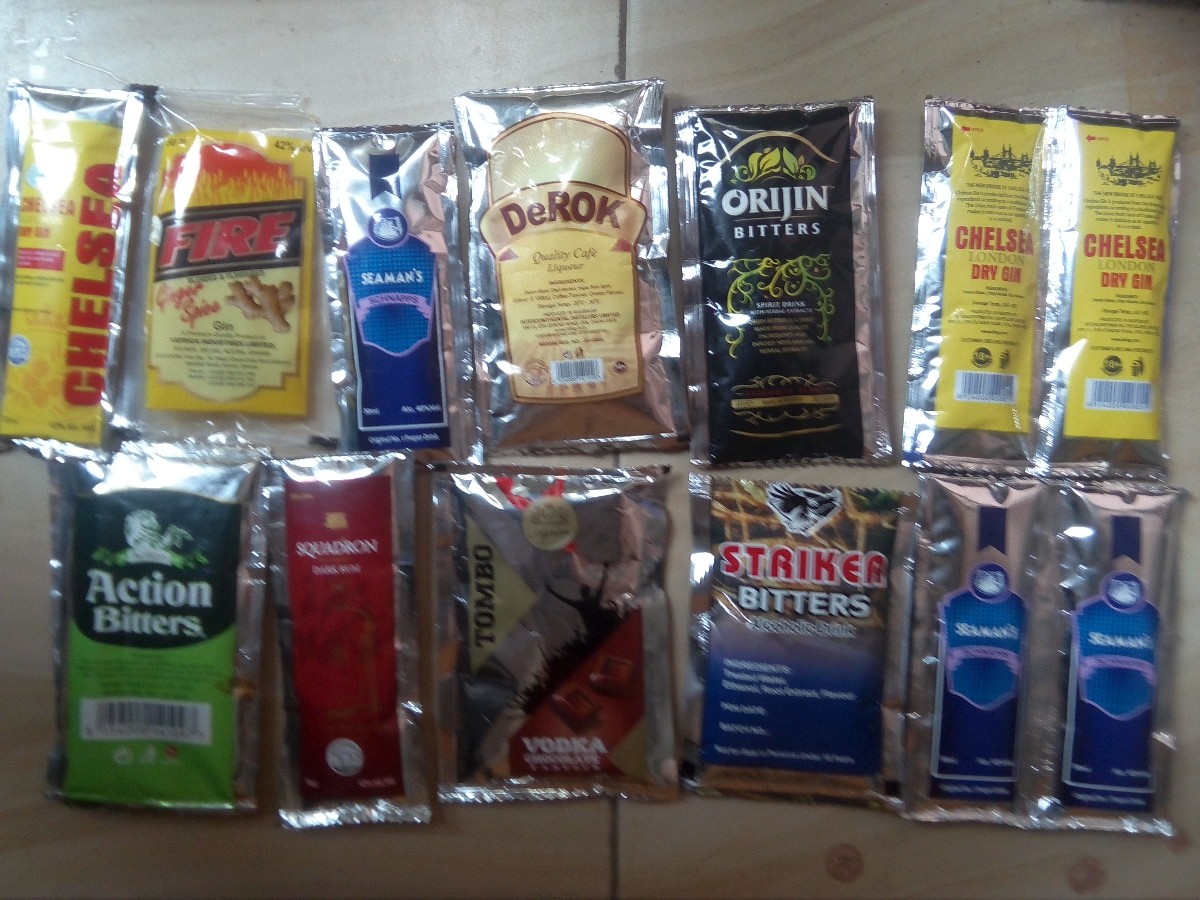
The Nigeria Employers’ Consultative Association has faulted the National Agency for Food and Drug Administration and Control over its renewed enforcement of a ban on the production and sale of alcoholic beverages in sachets and small PET bottles, describing the action as a regulatory misstep with serious economic implications.
NECA said the move contradicts a directive issued by the Office of the Secretary to the Government of the Federation on December 15, 2025, which suspended the ban, as well as a March 14, 2024 resolution of the House of Representatives calling for caution and wider stakeholder consultation.
In a statement released on Sunday, the Director-General of NECA, Adewale-Smatt Oyerinde, argued that regulation must be guided by evidence, proportionality and the rule of law, warning against measures that punish compliant businesses or disrupt lawful operations.
He said it was wrong to criminalise products that had passed NAFDAC’s approval processes while ignoring enforcement gaps at the retail level and the circulation of more dangerous, unregulated substances.
According to him, Nigeria requires smarter, data-driven regulation rather than blanket bans that threaten jobs, discourage investment and fail to address underlying problems.
Oyerinde noted that the alcoholic products under scrutiny were tested, registered and periodically revalidated under NAFDAC’s scientific procedures. He explained that alcohol strength is measured globally using Alcohol by Volume and that the products fall within internationally recognised standards, with their content clearly labelled and approved under existing regulations.
He added that declaring such products unsafe without new and transparent scientific evidence raises concerns about regulatory consistency and fairness.
On the issue of underage drinking, the NECA chief maintained that access control is primarily an enforcement challenge rather than a packaging problem. He said alcoholic beverages already carry warnings restricting sales to persons under 18 and calling for responsible consumption.
Where minors gain access, he argued, the failure lies with weak retail monitoring and enforcement, which should be addressed through stricter licensing, compliance checks and sanctions for erring vendors, instead of eliminating packaging formats used by adult consumers.

- BUK expels 171 students over fake admission credentials - March 23, 2026
- Airlines face pressure as jet fuel price doubles - March 23, 2026
- 2027: Makinde, Kwankwaso hold strategic talks as PDP crisis deepens - March 23, 2026