


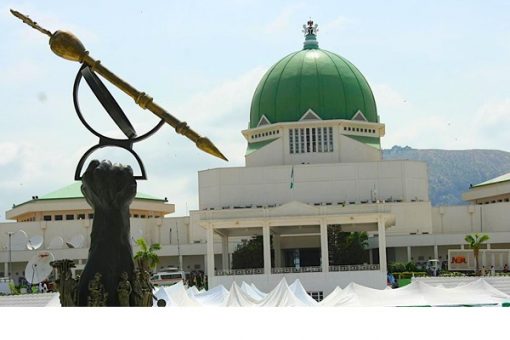
The National Assembly has moved to overhaul Nigeria’s electoral framework ahead of the 2027 general elections with the introduction of the Electoral Act Repeal and Re-enactment Bill 2025, which contains sweeping reforms aimed at enhancing transparency, accountability, and credibility in the electoral process.
One of the most significant provisions in the proposed law is the disqualification of political parties that field ineligible candidates or submit falsified documents. Under the new measure, both the candidate and the sponsoring political party would be disqualified by a court if found guilty of presenting false information. In such cases, the candidate would pay a fine of not less than ₦5 million, while the political party would be fined not less than ₦10 million.

The bill also introduces several key changes to the electoral process, including early voting for certain categories of Nigerians such as security personnel, INEC officials, accredited observers, journalists, and ad hoc staff who may be on duty on election day. It further provides for inmate voting, single-day voting for all elections, and a new system for replacing legislators who die, resign, or become incapacitated before the expiration of their tenure. The replacement, according to the House version of the bill, would be made by the political party that sponsored the original candidate, thereby ending the practice of conducting multiple bye-elections.
The proposed legislation also seeks to reduce the period for litigations in electoral disputes and prevent frivolous applications for reviews of election results, which have in the past led to prolonged uncertainty. However, there are notable differences between the versions passed by the Senate and the House of Representatives. While the House version contains provisions for early voting and the replacement of lawmakers by their parties, the Senate version does not.
In addition, the bill mandates that funds meant for the conduct of general elections must be released to the Independent National Electoral Commission (INEC) not later than one year before the election. This provision aims to address funding delays which, according to sources, affected the commission’s operations during the 2023 general elections.
The new Electoral Act also increases the campaign spending limits for candidates. Presidential candidates are now limited to ₦10 billion in election expenses, up from ₦5 billion, while governorship candidates are restricted to ₦3 billion, up from ₦1 billion. Senate candidates may spend up to ₦500 million, House of Representatives candidates ₦250 million, State Assembly and Chairmanship candidates ₦30 million each, and Councillorship candidates ₦10 million. No individual or organization is permitted to donate more than ₦500 million to a candidate.
To ensure integrity in party primaries, the bill empowers the Federal High Court to disqualify any candidate found to have submitted false information in their nomination papers and the political party that failed to conduct proper verification. It further allows a candidate who contested a party primary and suspects false documentation by another aspirant to seek redress in court.
The bill also introduces a measure to prevent litigation arising from missing logos on ballot papers. INEC will be required to invite political parties to inspect and verify their symbols on sample electoral materials at least 60 days before an election. Any party that fails to raise an objection within two days of inspection will not be allowed to claim exclusion during or after the election.
Although the proposed law is silent on the electronic transmission of election results, it mandates presiding officers to transmit results using the total number of accredited voters to the next level of collation. It also empowers INEC to review results declared under duress and prescribes punishment for returning officers who intentionally collate or announce false results.
Resident Electoral Commissioners (RECs) are now required to make certified true copies of documents available within seven days of request, and failure to do so will attract a two-year prison term without the option of a fine. To control the proliferation of political parties, the bill raises the registration fee to ₦50 million and imposes a ₦20 million fine on associations that provide false information during registration.
Furthermore, all elections are to be held not earlier than 210 days and not later than 30 days before the expiration of the current officeholders’ tenure. Where a vacancy occurs due to death or resignation, the affected political party must hold another primary within 14 days to produce a replacement candidate. The proposed law also bars political appointees from voting or being voted for during party conventions or congresses and requires political parties to submit their membership registers to INEC 30 days before any primary election. Only registered members will be eligible to participate, and parties that fail to submit their registers will not be allowed to field candidates.
The bill criminalizes financial inducement of delegates during primaries, prescribing two years imprisonment without an option of fine for offenders. It also shortens the timeline for resolving election petitions, mandating that they be filed within 21 days after results are declared, with tribunals delivering judgments within 90 days—although the Senate version extends this to 150 days. Appeals must be filed within 14 days and concluded within 60 days. Pre-election matters must be filed within 14 days of the event complained of, with judgments delivered within 90 days and appeals disposed of within 60 days.
In a bid to discourage frivolous petitions, the proposed law allows courts to impose penalties of not less than ₦5 million on the counsel and ₦10 million on the petitioner if an election is challenged on grounds outside those provided in the Act.
According to the bill, an election can only be questioned on two grounds: that it was invalid due to corrupt practices or non-compliance with the Act, or that the declared winner was not duly elected by a majority of lawful votes cast. Acts or omissions that merely contravene INEC’s internal directives but do not violate the law will not be sufficient grounds for nullifying an election.
The joint committee on electoral matters is expected to harmonize both versions of the bill after a public hearing before it is forwarded for final passage, setting the stage for a new legal framework to guide Nigeria’s 2027 general elections.

- Farmers warn of possible onion price surge ahead of Christmas - December 14, 2025
- Flybird private jet crash-lands in Kano - December 14, 2025
- ICPC recovers ₦37.44bn, $2.35m in 2025, records 55.7% conviction rate - December 14, 2025