


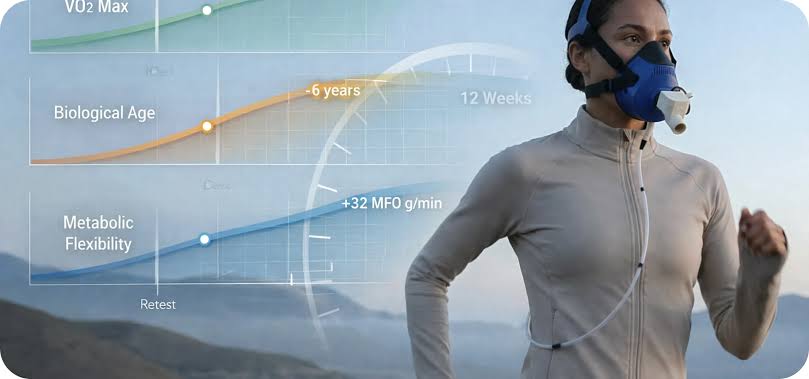
A new wearable device from health technology company PNOĒ is designed to allow people to conduct metabolic breath tests without the need for a trained operator, potentially bringing a form of laboratory testing to gyms, wellness centres and other consumer settings.
The Massachusetts-based company, which also operates from Athens, Greece, plans to launch the PNOĒ 2.0 on October 1.
The mask covers the user’s nose and mouth and measures oxygen consumption and carbon dioxide output during an eight-minute test. The resulting data is processed by software to provide information that PNOĒ says can help users understand their metabolism and fitness.

The company’s co-founder and CEO, Apostolos Atsalakis, said the new system is designed to be simple enough for users to operate without assistance.
According to him, a customer could enter a gym, put on the mask, press a button and complete the test while sitting down.
The self-service capability represents a major change from PNOĒ’s existing device, which requires a trained operator. The company believes the new model could allow more gyms and wellness businesses to offer metabolic testing without employing specialist staff.
PNOĒ’s technology is based on metabolic testing, a method that analyses gases in exhaled breath to assess how the body uses energy. The approach has been used for decades in sports science and clinical settings and is widely associated with measuring VO₂ max, the maximum amount of oxygen the body can use during exercise.
Traditional metabolic testing typically relies on large and expensive equipment, limiting its use largely to hospitals, research facilities and specialist sports laboratories.
PNOĒ says it has sought to make the technology more portable and accessible, while using software to turn the measurements into practical fitness and wellness information.
The company says its system measures 23 biomarkers, including VO₂ max, resting metabolic rate and metabolic flexibility.
Resting metabolic rate indicates how much energy the body uses while at rest, while metabolic flexibility refers to the body’s ability to switch between using fat and carbohydrates for energy.
Atsalakis said such measurements could provide information that conventional blood tests do not, including estimates related to energy requirements and exercise.
The company is entering a market where interest in VO₂ max has grown alongside the wider longevity and wellness industry. Research has linked higher cardiorespiratory fitness with lower mortality risk, although PNOĒ’s claims about what its measurements can predict are the company’s own interpretation of the available science.
The PNOĒ 2.0 is smaller than the company’s previous device and contains fewer components. The electronics can also be detached from the silicone mask and straps, allowing the hardware to be shared while individual users have separate masks.
Despite its health-related applications, PNOĒ does not currently market the device as a diagnostic medical product in the United States.
Atsalakis said the company does not provide medical recommendations and considers PNOĒ a wellness device rather than a tool that doctors can use to prescribe treatment.
The company hopes its technology could eventually contribute to disease detection through analysis of compounds found in human breath. Research into breath-based disease detection has explored potential signals associated with conditions including cancer.
However, Atsalakis acknowledged that using the technology for diagnosis remains several years away and would require additional research and regulatory approval.
PNOĒ was founded by Atsalakis and Panos Papadiamantis, with the company tracing its origins to Atsalakis’ doctoral research into sensing technologies at the University of Cambridge.
The startup participated in Y Combinator’s Winter 2019 programme and has raised about $22m from investors, including 50 Years and Google Maps co-founder Lars Rasmussen.
PNOĒ operates a business-to-business model, supplying its technology to gyms, hotels, healthcare and wellness companies that then offer testing to their customers.
Its reported clients include Equinox, Four Seasons hotels, Red Bull, the NBA, Mount Sinai Health System and Restore Hyper Wellness.
The company says about 85 per cent of its business comes from the United States, while it is expanding across Europe and through partners in Latin America and Asia.
Businesses pay monthly subscriptions ranging from about $400 to more than $1,000, depending on the package. The subscription covers the hardware, software, training and marketing materials.
PNOĒ also connects test results to services offered by participating businesses, allowing gyms and wellness centres to use the results as part of customer onboarding and personalised fitness programmes.
The company faces competition from consumer technology firms that already estimate VO₂ max using wearable heart-rate data, as well as products designed to analyse breathing patterns and metabolism.
PNOĒ says it now employs about 110 people and has recently become profitable while recording annual growth of more than 100 per cent.
The company plans to seek a Series B funding round within the next six to 12 months as it expands the use of self-administered metabolic testing.

- Zidane bans hairdressers from France camp - September 27, 2026
- Oyedepo@72: Your commitment to human development is remarkable — Tinubu - September 27, 2026
- Borno council chair fires shotgun at ex-governor’s residence - September 27, 2026