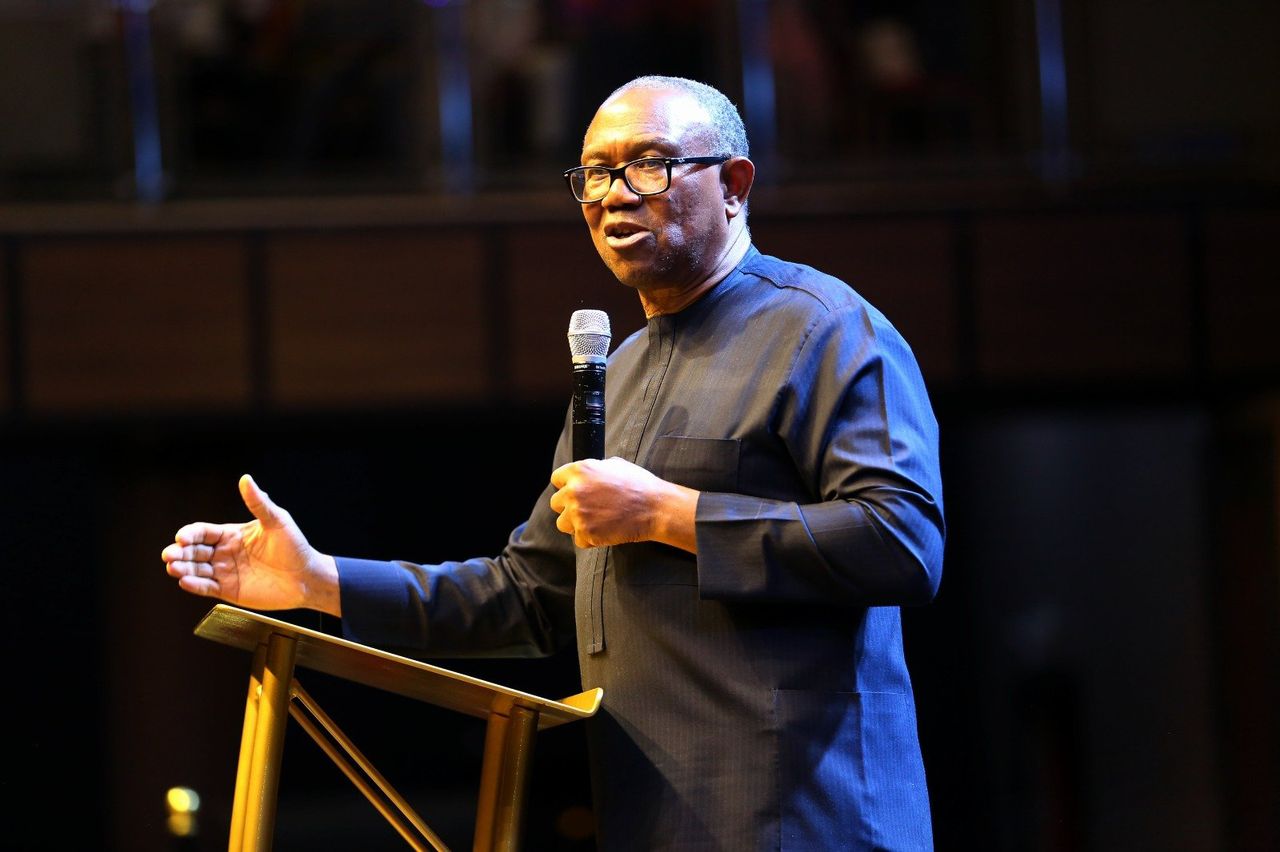
The presidential candidate of the Nigeria Democratic Congress (NDC), Peter Obi, has said Nigeria must urgently shift from a consumption-driven economy to one focused on production, warning that the country cannot import its way to prosperity.
Obi stated this on Friday while addressing journalists at a press conference in Onitsha, Anambra State, where he outlined the issues expected to dominate his campaign ahead of the 2027 presidential election.
The former Anambra State governor said his campaign would focus on a national conversation about rebuilding Nigeria and improving the living conditions of citizens.
According to him, although he and his running mate, Rabiu Kwankwaso, come from different backgrounds and experiences, they share a common objective of improving the lives of Nigerians, particularly those living in poverty.
“Our experiences differ, but our conclusion is clear: Nigeria must invest in its people and manage its public resources responsibly,” Obi said.
He argued that Nigeria needed more than reactive economic reforms, urging Nigerians to assess the impact of government policies on their daily lives.
“The real questions are: Are Nigerians better off than they were four years ago? Can they afford food, education, and healthcare? Can businesses grow, produce, and generate jobs? Can young people secure productive employment? Can farmers work safely and get their produce to market?” he asked.
Obi urged voters to demand direct answers from political leaders rather than relying on statements made by their representatives or surrogates.
He said the 2027 election provided Nigerians with an opportunity to scrutinise the records, ideas and plans of presidential candidates amid the country’s economic and security challenges.
“I enter this contest with one firm belief: Nigeria can work, and Nigeria must work,” he said.
Obi cited poverty, food insecurity, unemployment and internal displacement among the major challenges confronting the country.
According to him, the International Monetary Fund estimates that 63 per cent of Nigerians, representing more than 140 million people, live at or below the national poverty line, while humanitarian agencies estimate that 35 million people will require food assistance during the 2026 lean season.
He also said about 3.6 million Nigerians remained internally displaced largely as a result of conflict and insecurity, while millions of young people enter the labour market annually without adequate employment opportunities.
On his proposed shift from consumption to production, Obi said Nigeria’s growing population and large domestic market should be treated as economic assets rather than liabilities.
“Nigeria cannot import its way to prosperity. We will produce more of what we consume, process more of what we produce, and compete more effectively in global markets,” he said.
He identified agriculture, manufacturing, technology, construction, energy, creative industries and services as sectors capable of driving production, employment and investment.
Obi said his administration, if elected, would seek to combine experience in public finance management, the private sector and civil service to transform Nigeria’s population into productive human capital and its natural resources into value-added industries.
On insecurity, he said the crisis had displaced millions and disrupted agriculture, education, trade and investment.
He proposed improved intelligence gathering and coordination among security agencies, stronger policing and border management, as well as greater use of technology to tackle insecurity.
The NDC candidate also addressed healthcare, unemployment and the state of democracy, urging Nigerians to scrutinise candidates before giving them their mandate.
“Any presidential candidate who lacks the resolve to travel across the country, meet the people, and respond to their questions lacks the capacity to govern it,” Obi said.
He said the task before Nigerians in 2027 was to choose leaders capable of addressing the country’s structural challenges rather than relying solely on short-term or reactive measures.

- INEC omits PDP’s Adebutu, Pantami from final 2027 governorship lists - October 10, 2026
- US inmate who survived failed execution returns to prison - October 10, 2026
- South African great-grandmother jailed for 20 years over deaths of three children - October 10, 2026