

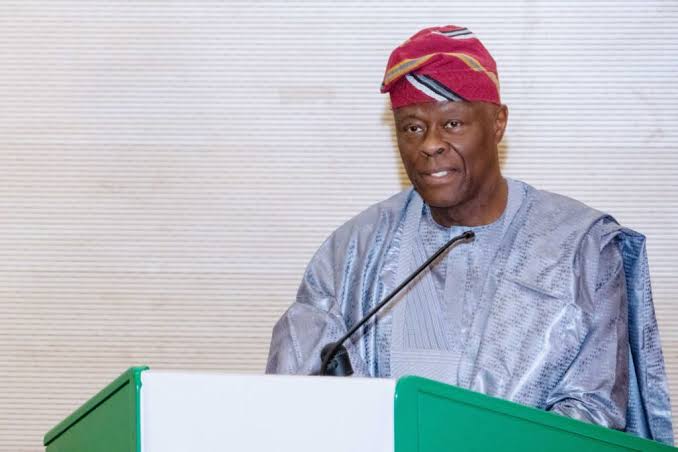

The Minister of Finance and Coordinating Minister of the Economy, Wale Edun, has urged Nigeria to cut its dependence on borrowing and strengthen domestic revenue generation to achieve fiscal stability and sustainable development.
Edun made the call on Tuesday at the management retreat of the Nigerian Revenue Service (NRS) in Abuja, warning that the global financial climate had become increasingly unfavourable for developing countries, making debt financing more expensive and less reliable.
He stressed that revenue mobilisation was now a developmental necessity, noting that Nigeria could no longer rely heavily on loans in an era of high interest rates and tighter global financial conditions.

“We need to reduce our dependence on debt. Revenue mobilisation within this context is a developmental imperative,” Edun said, adding that Nigeria’s fiscal sustainability must be anchored on its ability to generate savings from its own resources.
The minister said the decline in multilateral cooperation and reduced cross-border support had left poorer nations paying more in debt servicing than they receive in external funding. Citing 2024 figures, he noted that developing countries paid about $163 billion in debt service compared with $42 billion in overseas development assistance and $97 billion in foreign direct investment.
According to him, global shocks such as the COVID-19 pandemic, geopolitical tensions and trade conflicts have further strained developing economies, forcing them to borrow more while limiting fiscal space for critical services.
Edun said building sustainable revenues would enable Nigeria to invest more meaningfully in infrastructure, education, healthcare and social protection for vulnerable citizens.
He identified ongoing tax reforms as central to the shift away from debt, saying they aim to improve fairness, efficiency and compliance while increasing government resources. However, he cautioned that reforms would only succeed with strong implementation and public trust.
“No fiscal reform can deliver results if compliance is weak or uneven. Yet compliance cannot be achieved through enforcement alone. It is carrot and stick,” he said, emphasising the need for taxpayers to see tangible benefits from their contributions.
Meanwhile, the Senate signalled that fresh borrowing may remain unavoidable. At a public hearing on the 2026 Appropriation Bill, Chairman of the Senate Committee on Appropriations, Olamilekan Adeola, said weak revenues and large infrastructure gaps left the government with limited options.
“Nigeria cannot help but keep borrowing because revenue inflows are unpredictable and development needs are enormous. What matters is how we borrow and how we fund our deficits,” Adeola said.
Earlier, Executive Chairman of the Nigerian Revenue Service, Zacch Adedeji, described the newly established agency as a turning point in Nigeria’s fiscal reform drive. He urged its leadership to prioritise accountability, discipline and performance, stressing that results, not rhetoric, would determine public confidence in the country’s revenue system.
Both officials agreed that stronger, more predictable revenues and reduced fiscal vulnerability were critical to improving service delivery and supporting long-term economic growth.

- Military arrests 53 terror aides in one week - March 29, 2026
- Pastor weds autistic man to older woman after public backlash - March 29, 2026
- Senior ISWAP commander Al-Muhajir killed in Malam Fatori - March 29, 2026