


The Federal Government has disclosed that Nigeria needs an annual investment of $345m to reintegrate and equip the country’s estimated 15 million out-of-school children with essential skills.
Minister of Education, Dr Tunji Alausa, revealed this on Tuesday at the inaugural Federal Ministry of Education Private Sector Breakfast Convening in Lagos. He explained that the estimated funding requirement was calculated from the current per capita spending needed to support children outside the formal school system.
Alausa noted that 25 per cent of Nigerian children aged 5–14 are out of school, with the figure climbing to 41 per cent in the North-East and North-West. He stressed that although government interventions under the Nigeria Education Sector Renewal Initiative had yielded progress, far more investment was needed from both public and private sectors.
He said education remains a key component of the “Renewed Hope” agenda aimed at growing the economy to $1tn by 2030. To tackle skilled labour shortages, he disclosed that the government had disbursed N10.6bn to Technical and Vocational Education and Training centres and paid N3.4bn to trainees. Out of 1.3 million applicants for the programme, 160,000 candidates were matched with training centres and 72,000 are currently enrolled with biometrics verified.
Alausa added that the Federal Government had spent over N156bn rehabilitating 18 medical and several engineering schools. Another N70bn went into upgrading laboratories and workshops, while N100bn was used to construct new hostels in 50 institutions.
He also announced the establishment of the Student Venture Capital Grant to support innovation among STEMM students. According to him, N50m in equity-free funding has been earmarked, and 65 students have been shortlisted.
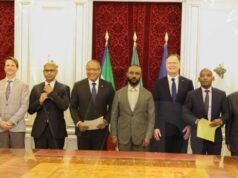
The minister further disclosed that Nigeria, in partnership with the Italian government, will host an education conference aimed at raising $15bn to support foundational learning initiatives in 90 countries.
Alausa urged private sector leaders to align their investments with national priorities through the upcoming Education Sector Wide Approach, which he said would ensure strong governance and transparent reporting.
Minister of State for Education, Prof Suwaiba Ahmad, described the event as an important platform to deepen private sector collaboration. She emphasised that government alone cannot deliver the scale of reforms required in the sector.
Under the NESRI framework, the ministry reported several achievements, including the integration of one million children into formal schooling, the training of 1,400 Tsangaya teachers for Almajiri education, mapping 32 million students and 221,000 schools across 21 states for better data management, and the disbursement of N128bn in fees through the Nigeria Education Loan Fund to over 1.1 million beneficiaries.
To attract more funding, the government is promoting the Global Partnership for Education Multiplier, a scheme that matches private sector contributions on a 1-to-1 basis.
Data presented at the meeting indicated that each additional year of schooling increases individual earnings by 5.7 per cent and productivity by 6 per cent, strengthening the case for greater investment in education.

- Tinubu hails Tunde Rahman at 60 - March 25, 2026
- Chevron, Equatorial Guinea sign agreement for Aseng Gas Monetization Project - March 25, 2026
- EFCC evicts Malami, family from Abuja residence - March 25, 2026