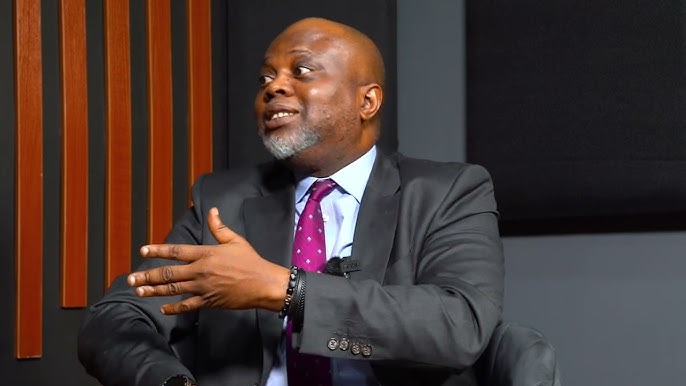
Nigeria is not a poor country but one grappling with deep inequality and structural economic challenges, the Presidency said Friday, calling for a shift away from poverty-centred narratives.
Dr. Tope Fasua, Special Adviser to the President on Economic Affairs, made the remarks on Channels Television, arguing that framing Nigeria as poor distracts from actionable solutions.
“Nigeria is not a poor country, but we have inequality challenges. We must focus on bridging that gap,” Fasua said.
“The real question is how to solve poverty — constant emphasis on poverty will not allow us to focus on what matters.”
He cited the banking sector’s recent recapitalisation drive, in which about N4.6 trillion was raised — roughly 80 percent sourced domestically — as evidence of latent wealth within the economy.
He also noted that MTN consistently generates about 40 percent of its global profits from Nigeria.
“This shows there is money in the system,” he said.
Fasua identified informality as a key structural obstacle, noting that approximately 70 percent of Nigeria’s economy operates outside the formal sector.
He said ongoing tax reforms are designed to bring that segment into the revenue net.
“Let people pay their taxes so that we can even out the income inequality in this country,” he said.
The presidential aide also defended the Federal Government’s N68.32 trillion 2026 budget, describing it as ambitious and forward-looking.
He said it marks the first time capital expenditure is projected to account for about 50 percent of total spending.
On concerns over the country’s debt profile, Fasua said Nigeria is not over-borrowed and that its debt remains sustainably managed.
“This country has potential for so long, but this is the time,” he said. “It is not going to be a walk in the park — but it is doable.”

- Nigerians with BVN can own stake in refinery through IPO — Dangote - September 9, 2026
- Dangote refinery: NMDPRA weighs legal action over free-zone powers - September 9, 2026
- FG, NYSC plan digital link to curb certificate fraud - September 9, 2026