

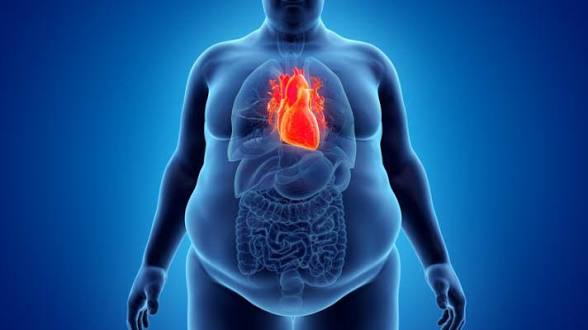
Nigeria has ranked last among 20 countries assessed in a new global evaluation of national responses to obesity, scoring 13.1 out of 100 in the Obesity Response Index: Country Profiles.
The report, published by Economist Impact and supported by Eli Lilly and Company, assessed how countries are addressing the obesity epidemic across four key areas: policy and governance, obesity management, food quality and access, and physical activity.
Among the countries evaluated, Nigeria was the only one to record a score of zero in two categories—obesity management and physical activity—indicating the absence of functioning national systems in both areas.
The 20 countries covered in the assessment include Australia, Brazil, Canada, China, Finland, France, Germany, India, Italy, Japan, Mexico, Nigeria, Rwanda, Saudi Arabia, Serbia, South Africa, South Korea, Spain, the United Arab Emirates and the United Kingdom.
According to the report, Nigeria currently has no national guidelines for diagnosing or treating obesity and lacks a clinical pathway that connects patients to appropriate care. In addition, there is no public insurance coverage for obesity-related treatments such as nutrition counselling, behavioural therapy, weight-loss medications or surgery.
By contrast, all other countries in the index provide at least some level of publicly funded obesity care. For example, the National Health Service in the United Kingdom covers all four forms of treatment.
The report noted that while Nigeria’s Clinical Practice Guidelines for diabetes management recommend weight loss for patients at risk of diabetes, they do not provide a specific diagnostic or referral pathway for obesity itself.
According to the World Health Organization, obesity and overweight are defined as abnormal or excessive fat accumulation that poses a health risk and contributes to about five million deaths globally each year. A body mass index above 25 is considered overweight, while a BMI above 30 is classified as obese.
Data from the Global Obesity Observatory shows that about 9.9 per cent of women and 6.5 per cent of men in Nigeria are obese. Among children and adolescents, obesity affects 10.3 per cent of girls and 8.3 per cent of boys.
The country profile estimates Nigeria’s adult obesity prevalence at 14 per cent, while childhood obesity stands at 3.8 per cent. Nigeria also recorded the lowest healthcare spending per capita among the countries assessed, at $62, with a GDP per capita of $807.
Health experts warn that obesity is a major risk factor for several non-communicable diseases, including type 2 diabetes, hypertension, cardiovascular disease and certain cancers—conditions that already place significant pressure on the nation’s health system.
Although Nigeria has some policy commitments addressing obesity, the report noted that these initiatives lack dedicated funding for implementation.
One such framework, the National Multi-Sectoral Action Plan for the Prevention and Control of Non-Communicable Diseases 2019–2025, identifies obesity as a major metabolic risk factor and aims to reduce its prevalence by 25 per cent by the end of the plan period.
Similarly, the National Strategic Plan of Action on Nutrition 2021–2025 recognises the rise in obesity and sets targets to halve obesity rates among adolescents and adults.
The report highlighted these targets as a strength, noting that Nigeria is the only country among those assessed with both short-term and long-term obesity reduction targets simultaneously.
However, it warned that the absence of dedicated funding may hinder the achievement of these goals.
Nigeria also scored poorly on food quality and access, with 29.7 out of 100—the lowest in that category. While the country has introduced a sugar tax on non-alcoholic carbonated and sweetened drinks and operates the National Social Investment Programme to support school feeding and cash transfers, other measures remain limited.
For instance, front-of-package nutrition labelling and menu labelling are not mandatory, and there are no restrictions on marketing unhealthy foods to children.
In addition, Nigeria recorded a zero score for physical activity policies, as there is currently no national requirement for daily physical activity in schools.
The World Health Organization recommends that children engage in at least 60 minutes of physical activity each day, a standard that Nigeria has not adopted through national policy.
The report also found little evidence of broader government programmes promoting physical activity among the general population.
To improve its response to obesity, the report recommended that Nigeria develop national clinical guidelines for obesity care and integrate obesity management into existing treatment pathways for conditions such as diabetes and hypertension.
It also urged the government to expand public health insurance to cover services like nutrition counselling and behavioural therapy.
Additional recommendations include restricting junk-food marketing to children, introducing front-of-package nutrition labels, expanding food access programmes for low-income households, and mandating daily physical activity in schools.
Health officials have also emphasised the role of primary healthcare in addressing the problem.
A Deputy Director of Nursing Services at the Federal Ministry of Health and Social Welfare, Oluwayomi Ale, recently urged policymakers to incorporate routine weight monitoring, dietary guidance and physical activity promotion into services offered at Primary Healthcare Centres.
She noted that early prevention through community-based healthcare would be crucial in reversing Nigeria’s rising obesity trend and improving long-term public health outcomes.

- Kaduna emerges model for land administration in Nigeria - March 17, 2026
- Nigeria, UAE seal $200m defence deal - March 17, 2026
- Nigeria ranks lowest in global obesity response index - March 17, 2026