

Nigeria’s drive toward a sustainable energy future has received a significant boost with a €21 million funding commitment from the German government to advance renewable energy, energy efficiency, and private sector participation.
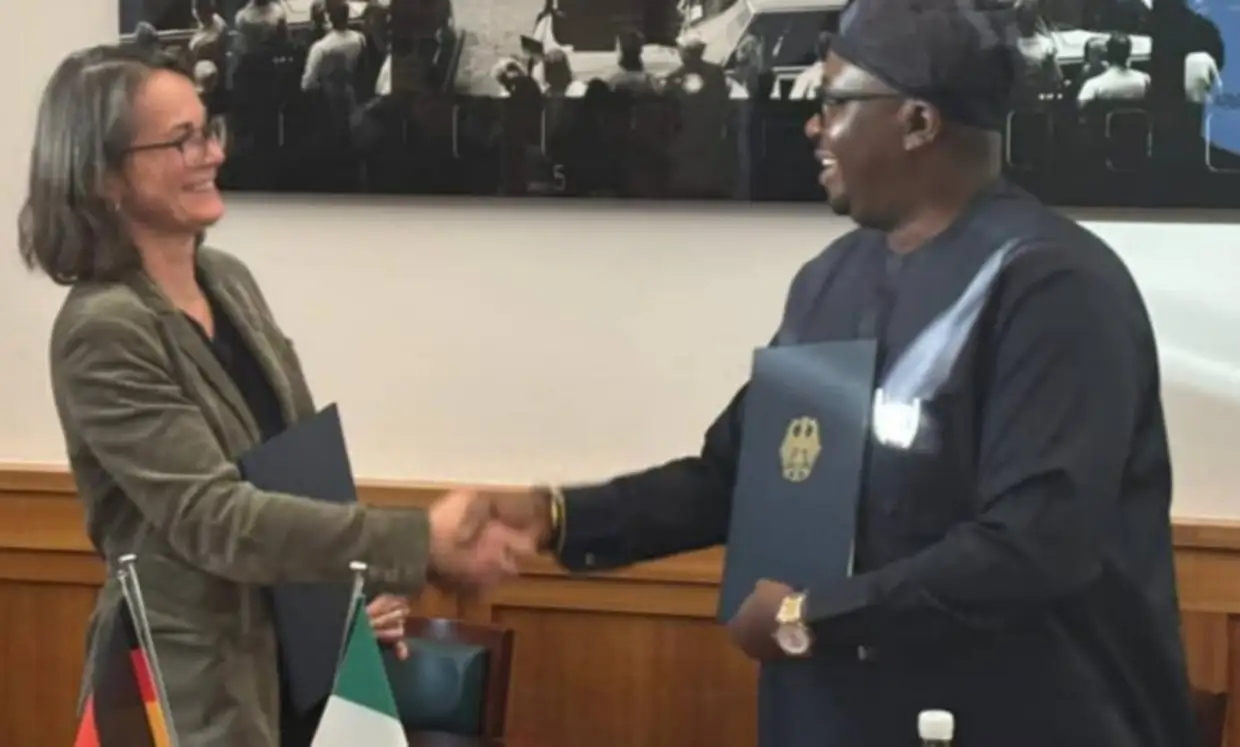
The announcement was made at the Working Group on Power, Energy and Climate meeting held in Germany on November 3, 2025, where both nations signed a Joint Declaration of Intent on Bilateral Energy Transition Dialogue and Cooperation.
Under the new arrangement, Germany’s Federal Ministry for Economic Cooperation and Development (BMZ) will provide €9 million to the Nigeria Energy Support Programme (NESP) in 2024, along with an additional €12 million to establish the newly launched Energy Transition Challenge Fund (ETCF).
Nigeria’s Minister of Power, Adebayo Adelabu, who represented the country at the signing, described the agreement as a “major step toward building a sustainable and secure energy system capable of accelerating Nigeria’s socio-economic transformation.”
“The financial mechanisms, including the ‘Green Line of Credit’ for our SMEs and the mobilisation of private investment through GET.invest, are critical enablers,” Adelabu noted.
“Together with the technical expertise formalised in our Joint Declaration, we are creating a comprehensive ecosystem for energy success.”
The Nigeria Energy Support Programme (NESP), jointly implemented by Nigeria and Germany, focuses on expanding access to clean energy, improving energy efficiency, and supporting key policy reforms in the power sector.
The latest round of funding aims to scale up renewable energy deployment in underserved communities and drive private sector investment in off-grid and mini-grid projects.
The newly established Energy Transition Challenge Fund (ETCF) will back innovative projects aligned with Nigeria’s long-term decarbonisation and green growth goals.
It will serve as a platform for co-financing clean energy ventures and strengthening local capacity for climate-resilient energy development.
Both countries reaffirmed their commitment to sustaining the partnership’s momentum and ensuring that the energy transition delivers tangible socio-economic benefits to Nigerians.
The meeting also reviewed progress on the Presidential Power Initiative and underscored the need for stronger private sector involvement in achieving Nigeria’s energy objectives.
Germany further proposed institutionalising the Nigeria-Germany Energy Partnership (NGEP) meetings, to be held annually at the undersecretary level from 2026, to enhance coordination and accountability.

- UK silence fueled Nigeria persecution debate — Presidency - March 16, 2026
- Trump warns NATO of ‘very bad’ future if allies fail to help reopen Hormuz - March 16, 2026
- Police arrest two customs officers over killing of driver in Osun - March 16, 2026