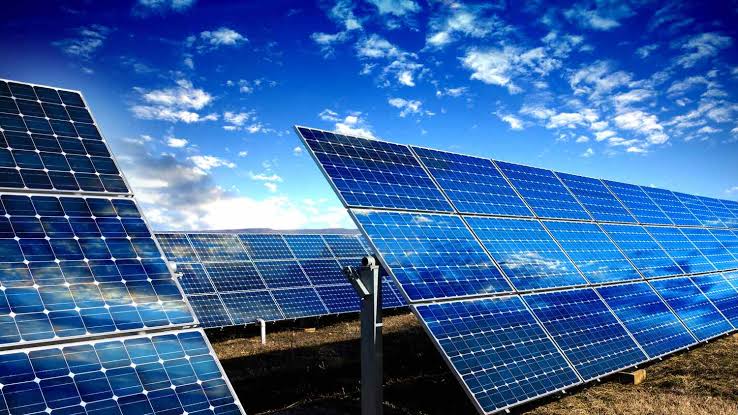

The Federal Government, through the Rural Electrification Agency (REA), has entered into a strategic partnership with global off-grid solar company Sun King to expand renewable energy access, promote local manufacturing, and save Nigeria up to $150 million in solar equipment imports over the next five years.
The Memorandum of Understanding (MoU) was signed during the Nigeria Renewable Energy Innovation Forum in Abuja, in the presence of Vice President Kashim Shettima and Sun King’s Co-founder and CEO, Patrick Walsh.
The agreement marks a major step in Nigeria’s efforts to industrialise its clean energy sector through a strong public–private collaboration.
According to the statement, Sun King projects that with the right government support, its planned local manufacturing facilities could replace $150 million worth of solar imports within five years, while fostering structured dialogue between public and private players to build a robust renewable manufacturing ecosystem.
Vice President Shettima said the Tinubu administration is committed to attracting private investment into renewable energy by improving incentives and cutting regulatory red tape.
“To unlock Nigeria’s full energy transition potential, we need our private sector, industrialists, and innovators to take bold steps forward,” he said.
“We are enhancing incentives for local manufacturing, streamlining regulatory frameworks, and collaborating with state governments and development partners to de-risk private capital and accelerate a self-sustaining renewable energy market.”
The partnership will centre on three key areas: local manufacturing and value addition, data-driven collaboration, and joint advocacy for off-grid solar as a core part of Nigeria’s energy transition.
Under the local production component, REA and Sun King will work together to assemble solar panels, home systems, and energy-efficient appliances—including freezers and televisions—within Nigeria.
This initiative aligns with the government’s Nigeria First Policy, aimed at job creation and reducing reliance on imported products.
Sun King projects that with the right incentives and regulatory environment, local production could replace $150 million in imports while generating thousands of direct and indirect jobs in manufacturing, logistics, and after-sales services.
REA Managing Director Abba Abubakar Aliyu described the deal as a convergence of “energy access, industrial growth, and supportive policy into one unified push for Nigeria’s clean-energy future.”
He added, “Sun King was our largest partner under the Nigeria Electrification Programme.
This new phase goes beyond energy access—it integrates industrialisation and policy alignment into our shared renewable energy vision.”
The second component of the partnership will focus on data sharing and technical collaboration, enabling both parties to leverage market intelligence, consumer insights, and performance metrics to enhance national initiatives like the Nigeria Electrification Project and the Distributed Access through Renewable Energy Scale-up (DARES) programme.
These data-driven insights will also feed into Mission 300, a global initiative to connect 300 million Africans to electricity by 2030—with Nigeria expected to play a leading role.
The third pillar targets public awareness and policy advocacy to position standalone solar systems as a cornerstone of Nigeria’s energy mix.
REA and Sun King will promote policies that improve access to financing and showcase how solar power is transforming lives across rural and peri-urban communities.
Sun King currently sells more than 330,000 solar kits monthly across Africa, with Nigerian sales rising sharply—from 3,000 units per month in 2020 to about 75,000 units monthly today.
The company plans to triple its Nigerian sales in the coming years as demand for affordable and reliable electricity grows.
Sun King’s Co-founder Patrick Walsh said the agreement represents a shared vision between the government and private sector.
“This partnership unites two powerful goals—Mission 300 and Nigeria’s industrialisation drive,” Walsh said.
“It’s about making clean energy affordable, unlocking manufacturing opportunities, and using shared data to strengthen Nigeria’s renewable energy and electronics industries.”
Sun King has already created over 12,000 jobs in Nigeria across engineering, sales, analytics, and customer service, with expectations that local assembly and component production will further expand employment opportunities.
Experts say the collaboration could serve as a model for other African nations seeking to link renewable energy growth with industrial policy.
Nigeria, Sun King Seal Deal to Save $150m in Solar Imports, Boost Local Manufacturing
The Federal Government, through the Rural Electrification Agency (REA), has entered into a strategic partnership with global off-grid solar company Sun King to expand renewable energy access, promote local manufacturing, and save Nigeria up to $150 million in solar equipment imports over the next five years.
The Memorandum of Understanding (MoU) was signed during the Nigeria Renewable Energy Innovation Forum in Abuja, in the presence of Vice President Kashim Shettima and Sun King’s Co-founder and CEO, Patrick Walsh.
The agreement marks a major step in Nigeria’s efforts to industrialise its clean energy sector through a strong public–private collaboration.
According to the statement, Sun King projects that with the right government support, its planned local manufacturing facilities could replace $150 million worth of solar imports within five years, while fostering structured dialogue between public and private players to build a robust renewable manufacturing ecosystem.
Vice President Shettima said the Tinubu administration is committed to attracting private investment into renewable energy by improving incentives and cutting regulatory red tape.
> “To unlock Nigeria’s full energy transition potential, we need our private sector, industrialists, and innovators to take bold steps forward,” he said.
“We are enhancing incentives for local manufacturing, streamlining regulatory frameworks, and collaborating with state governments and development partners to de-risk private capital and accelerate a self-sustaining renewable energy market.”
The partnership will centre on three key areas: local manufacturing and value addition, data-driven collaboration, and joint advocacy for off-grid solar as a core part of Nigeria’s energy transition.
Under the local production component, REA and Sun King will work together to assemble solar panels, home systems, and energy-efficient appliances—including freezers and televisions—within Nigeria. This initiative aligns with the government’s Nigeria First Policy, aimed at job creation and reducing reliance on imported products.
Sun King projects that with the right incentives and regulatory environment, local production could replace $150 million in imports while generating thousands of direct and indirect jobs in manufacturing, logistics, and after-sales services.
REA Managing Director Abba Abubakar Aliyu described the deal as a convergence of “energy access, industrial growth, and supportive policy into one unified push for Nigeria’s clean-energy future.”
He added, “Sun King was our largest partner under the Nigeria Electrification Programme. This new phase goes beyond energy access—it integrates industrialisation and policy alignment into our shared renewable energy vision.”
The second component of the partnership will focus on data sharing and technical collaboration, enabling both parties to leverage market intelligence, consumer insights, and performance metrics to enhance national initiatives like the Nigeria Electrification Project and the Distributed Access through Renewable Energy Scale-up (DARES) programme.
These data-driven insights will also feed into Mission 300, a global initiative to connect 300 million Africans to electricity by 2030—with Nigeria expected to play a leading role.
The third pillar targets public awareness and policy advocacy to position standalone solar systems as a cornerstone of Nigeria’s energy mix. REA and Sun King will promote policies that improve access to financing and showcase how solar power is transforming lives across rural and peri-urban communities.
Sun King currently sells more than 330,000 solar kits monthly across Africa, with Nigerian sales rising sharply—from 3,000 units per month in 2020 to about 75,000 units monthly today. The company plans to triple its Nigerian sales in the coming years as demand for affordable and reliable electricity grows.
Sun King’s Co-founder Patrick Walsh said the agreement represents a shared vision between the government and private sector.
> “This partnership unites two powerful goals—Mission 300 and Nigeria’s industrialisation drive,” Walsh said. “It’s about making clean energy affordable, unlocking manufacturing opportunities, and using shared data to strengthen Nigeria’s renewable energy and electronics industries.”
Sun King has already created over 12,000 jobs in Nigeria across engineering, sales, analytics, and customer service, with expectations that local assembly and component production will further expand employment opportunities.
Experts say the collaboration could serve as a model for other African nations seeking to link renewable energy growth with industrial policy. It also reflects the alignment between President Tinubu’s Renewed Hope Agenda and global sustainability goals.
With about 85 million Nigerians still lacking access to electricity, the World Bank estimates that scaling off-grid and hybrid solar systems—alongside local production—could significantly expand access while cutting foreign exchange losses from imports.
It also reflects the alignment between President Tinubu’s Renewed Hope Agenda and global sustainability goals.
With about 85 million Nigerians still lacking access to electricity, the World Bank estimates that scaling off-grid and hybrid solar systems—alongside local production—could significantly expand access while cutting foreign exchange losses from imports.

- Kaduna’s 36km Bagoma–Gagumi road to surpass Uba Sani’s previous record — KADRA MD - March 15, 2026
- SERAP urges Tinubu to probe ₦5.9bn spent on NNPC rebranding - March 15, 2026
- Bandits kill Zamfara college director after family paid ₦25.7m ransom - March 15, 2026