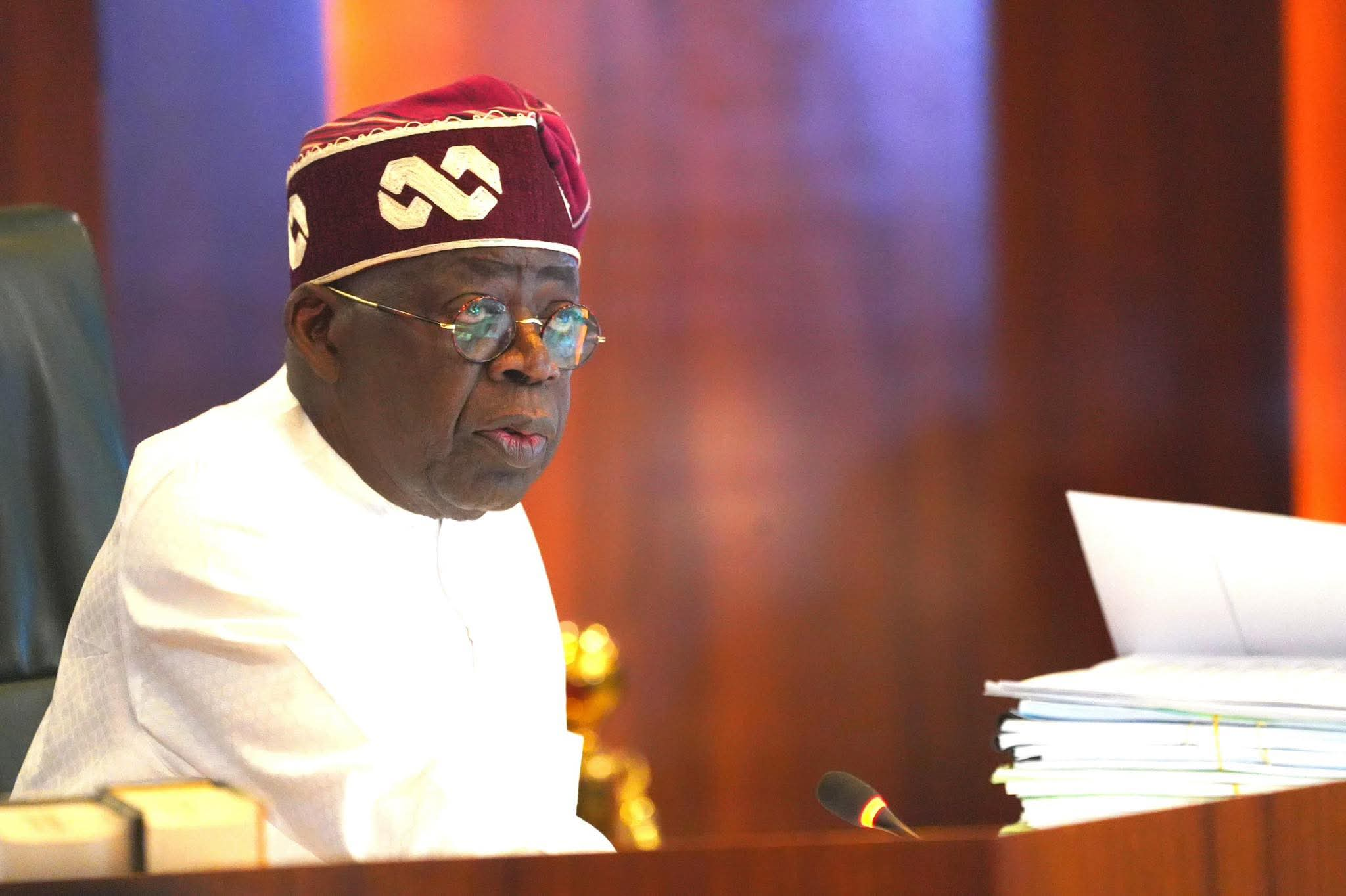
President Bola Tinubu has said Nigeria is positioning itself to generate between $2.5 billion and $3 billion annually from the global carbon market over the next decade through a newly activated carbon market framework.
Tinubu made this known on Tuesday while addressing world leaders at the 2026 Abu Dhabi Sustainability Week, themed “The Nexus of Next: All Systems Go.” He said Nigeria is strengthening its climate governance through decisive regulatory reforms aimed at mobilising climate finance and driving sustainable development.
According to the President, key steps include the adoption of the National Carbon Market Activation Policy and the launch of the National Carbon Registry, which will enhance emissions reporting, transparency and verification.
“Nigeria feels at the heart of development opportunity,” Tinubu said. “In this spirit, Nigeria has launched a climate and green industrialisation investment drive to unlock between $20 billion and $30 billion annually in climate finance.”
He highlighted the 2023 Electricity Act as a major reform that enables decentralised and inclusive energy access for rural communities, off-grid health centres, schools, markets and other underserved areas. Tinubu said the government is modernising the country’s energy architecture to ensure the deployment of sustainable power nationwide.
“Nigeria recognises the urgent need to deploy advanced technologies to improve green efficiency, modernise infrastructure and accelerate access to sustainable energy for underserved communities,” he added.
The President announced several financing initiatives, including a climate investment platform targeting $500 million for climate-resilient infrastructure, a national climate platform expected to support $2 billion in capital investments, and a $50 billion sub-regional green bond, which he said was oversubscribed by 97.7 per cent.
Tinubu also referenced support from the World Bank, noting that the institution is implementing a $750 million programme to expand clean electricity access to more than 17.5 million Nigerians.
He said Nigeria’s Energy Transition Plan integrates climate mitigation, industrial expansion and social development into a single framework, with the goal of achieving net-zero emissions by 2060 while ensuring universal access to energy.
The President called on developed countries to deepen partnerships with Nigeria through technology transfer, innovation and knowledge sharing, stressing that the use of artificial intelligence to improve efficiency is now a present necessity, not a future option.
Nigeria approved its National Carbon Market Framework in October 2025.
The framework sets out guidelines for the registration, issuance and verification of carbon credits. In November, the federal government also operationalised the Climate Change Fund and restored funding for the National Council on Climate Change.
The carbon market initiative is expected to drive emissions reduction projects across sectors such as forestry, renewable energy, clean cooking and agriculture.
Nigeria submitted its updated climate commitments to the United Nations in September 2025.

- Why Nigeria, Cameroon seal air safety pact — Keyamo - February 28, 2026
- TCN announces 10-hour daily outages in Benin - February 28, 2026
- Otti confirms kidnap attempts in Abia - February 28, 2026