


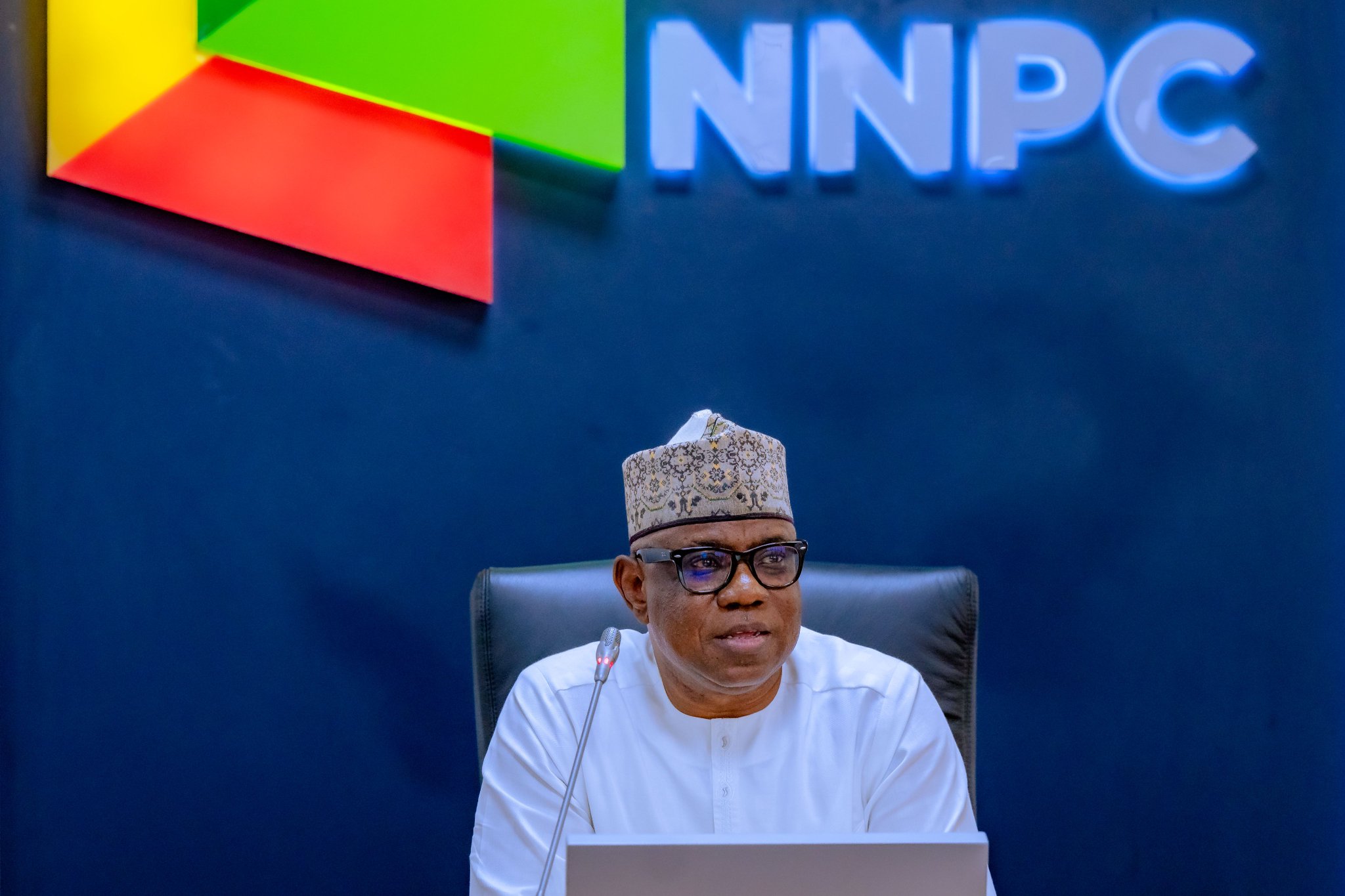
The Nigerian National Petroleum Company Limited has reported N11.2trn in receivables from the Federal Government for costs and advances incurred on its behalf, including expenses linked to securing Nigeria’s oil and gas infrastructure.
An analysis of NNPC’s 2025 audited financial statements showed that the figure was made up largely of energy security costs and other receivables from the Federation.
The N11.2trn claim represents an increase of N4.07trn, or about 57 per cent, from the N7.13trn energy security expense reported in 2024.
However, the accounts clarified that the N11.2trn should not be interpreted as fresh expenditure incurred entirely in 2025.
According to the financial statements, NNPC recognised no energy security expense in 2025, compared with N7.13trn in 2024, after the company reconciled outstanding energy security costs with royalties, taxes and dividends owed by the government as of December 2024.
The reconciliation exercise was completed in September 2025.
The company’s accounts showed that energy security cost receivables stood at N8.67trn at the end of 2025, while other receivables from the Federation, including advances and security-related costs, brought the total to N11.2trn.
NNPC said the receivables arose from an approved arrangement with the Federal Government under which the company incurs costs associated with protecting oil and gas assets and subsequently charges the expenses to the Federation.
The financial statements said the costs were incurred amid efforts to protect petroleum infrastructure from crude oil theft, pipeline vandalism and other disruptions.
NNPC’s 2024 accounts had put energy security expenses at N7.13trn, compared with N4.8trn in 2023.
The latest disclosure comes as the company reported improved oil and gas production in 2025, with crude oil and condensate output averaging 1.77 million barrels per day.
NNPC said total crude oil and condensate production reached 565.8 million barrels during the year, representing a five per cent increase, while its equity share rose by 11 per cent to 223.7 million barrels.
Natural gas production also increased by nine per cent to 2,606.2 billion standard cubic feet, with NNPC’s equity share rising by 11 per cent to 1,154.9 billion standard cubic feet.
The company also reported a sharp reduction in pipeline maintenance costs, which fell from N149.48bn in 2024 to N13.81bn in 2025.
Speaking at a media briefing on the company’s financial results, NNPC Group Chief Executive Officer, Bayo Ojulari, attributed improvements in crude evacuation to community-based surveillance, government intervention and the activities of security agencies.
Ojulari said major crude oil pipelines had recorded improved availability, although theft remained a challenge around smaller pipelines and wellheads in difficult terrains.
He said NNPC was deploying technologies, including fibre optics and intruder-detection systems, as well as high-technology wellhead cages, to strengthen the protection of oil infrastructure.
Despite the costs associated with securing its assets, NNPC reported a 33 per cent increase in profit after tax, from N5.4tn in 2024 to N7.2tn in 2025.
Revenue stood at N34.5tn, while earnings before interest, taxes, depreciation and amortisation rose by 22 per cent to N18tn.
Operating cash flow increased by 16 per cent to N12.8tn, while the company declared N5.8tn in dividends.
NNPC said it also made progress on major infrastructure projects during the year, including the Ajaokuta-Kaduna-Kano gas pipeline and the ANOH-OB3 Custody Transfer Metering Station.
The company said it was targeting crude oil production of two million barrels per day by 2027 and three million barrels per day by 2030.
It also plans to increase gas production to 12 billion standard cubic feet per day by 2030 and mobilise $60bn in upstream, midstream and downstream investments.
The 2025 financial statements did not provide a separate quantified figure for petrol subsidy payments. Consequently, the N11.2tn receivables cannot be directly treated as subsidy-related expenditure or savings from the removal of the petrol subsidy.

- Lagos drives states’ N114bn road tax haul as collections rebound - October 2, 2026
- Northern states lag as road tax collections hit N114bn nationwide - October 2, 2026
- Phyna floors Nkechi Blessing, wins brand-new EV in celebrity boxing bout - October 2, 2026