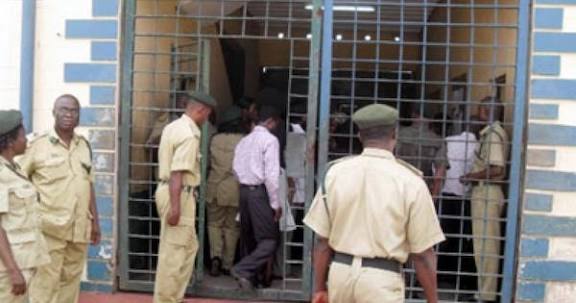

The Nigerian Correctional Service (NCoS) has dismissed reports claiming that custodial centres nationwide have become breeding grounds for tuberculosis (TB), describing such claims as misleading, sensational, and unsupported by verified data.
In a statement on Tuesday, the Service’s Public Relations Officer, J.N. Osuji, said while it welcomes responsible media coverage on public health and inmate welfare, it will not tolerate narratives that distort facts or portray the Service negatively.
NCoS explained that it had provided detailed, verifiable information to a reporter about TB treatment protocols and control measures in custodial centres, but the eventual publication adopted a sensational tone, creating a false impression of systemic neglect.
The Service stressed that TB remains a global public health challenge affecting both custodial and non-custodial populations.
Nigeria’s national response, coordinated by the Federal Ministry of Health through the National Tuberculosis, Leprosy and Buruli Ulcer Control Programme (NTBLCP) in line with WHO guidelines, includes active collaboration with NCoS.
Health clinics in custodial centres conduct routine TB screening, laboratory diagnosis, treatment initiation, adherence monitoring, and referrals where necessary, with treatment provided at no cost to inmates.
NCoS said some of the specific cases cited in the report could not be verified in its records and that some names mentioned do not exist in any recognised custodial facility.
The Service emphasised that custodial centres implement medical screening on admission, periodic health assessments, infection prevention and control measures, isolation of infectious cases when needed, and structured referral systems to external hospitals.
These measures are continually reviewed and strengthened despite challenges such as ageing infrastructure and rising inmate populations.
The Service recalled that during the COVID-19 pandemic, Nigeria’s custodial centres, classified globally as high-risk environments, successfully prevented the spread of the virus through proactive screening, isolation protocols, and inter-agency collaboration, recording no active cases in the facilities.
While acknowledging congestion in some urban prisons, NCoS reiterated its commitment to inmate welfare through decongestion exercises, judicial collaboration, and non-custodial measures.
The Service also noted that the Federal Government has approved the recruitment of additional medical professionals to strengthen healthcare delivery.
NCoS concluded by reaffirming its commitment to safeguarding the health, dignity, and human rights of all persons in custody, stressing that custodial health is inseparable from public health.

- Tinubu to military: We will prevail over insecurity - March 7, 2026
- Banking sector recapitalisation on track as deadline nears — CBN - March 7, 2026
- Court jails businesswoman nine months for N20m mortgage fraud - March 7, 2026