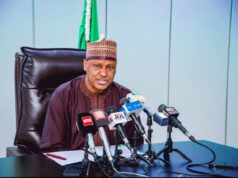

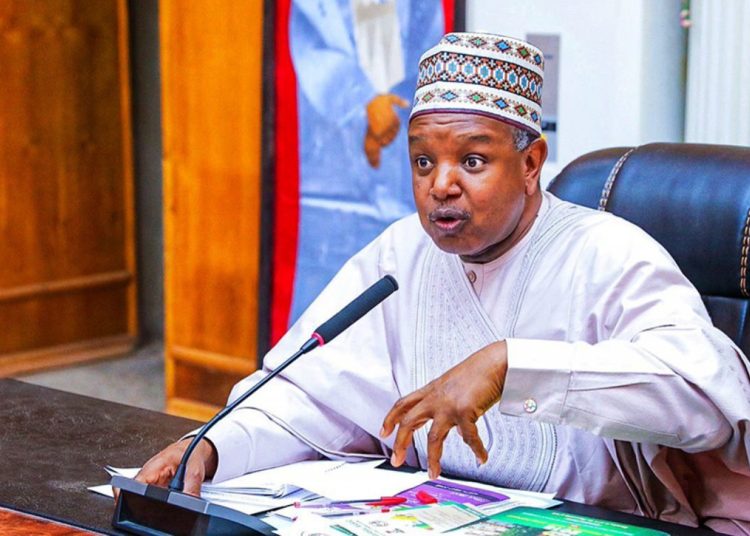

Minister of National Planning, Senator Atiku Bagudu, has affirmed that the North has no reason to regret supporting President Bola Tinubu, stressing that the region remains well-represented and actively involved in national governance.
Speaking during a technical session at the Government-Citizen Engagement forum organised by the Sir Ahmadu Bello Memorial Foundation at Arewa House in Kaduna, Bagudu dismissed claims of marginalisation. He described Tinubu’s administration as inclusive, competent, and guided by national unity.
“Those of us privileged to serve in President Tinubu’s administration are vigilant in defending Northern interests. There is no exclusion, and absolutely no reason for regret,” he said.
Bagudu hailed Tinubu as a true nationalist, noting that appointments and policies under his leadership are based on merit and national interest, not ethnicity or regionalism. He urged Northern leaders and citizens to reject divisive narratives and emphasised that the North is fully engaged at every level of governance.
Addressing the nation’s economic challenges, Bagudu said the Tinubu administration inherited a crisis marked by unsustainable fuel subsidies and dependency on imports. He said bold reforms under the Renewed Hope Agenda — including fuel subsidy removal, foreign exchange liberalisation, and revenue restructuring — are stabilising the economy.
“As an example, Adamawa State’s federal allocation grew from N9.76 billion in May 2023 to N22.73 billion by June 2025. That’s a clear result of these reforms,” he noted.
He also highlighted key structural shifts like the return of the Budget Office to the Ministry of National Planning, and the creation of new ministries such as Livestock Development, Arts and Culture, and the Blue Economy — all aimed at inclusive growth and economic diversification.
Bagudu stated that the government is now shifting from economic stabilisation to inclusive growth, with a strong focus on poverty reduction and long-term development. He urged Northern stakeholders to strategically engage democratic institutions to influence budget priorities and secure regional development goals.
Also speaking at the event, Minister of State for Agriculture and Food Security, Senator Aliyu Sabi Abdullahi, said the Tinubu administration inherited a food security crisis but responded with targeted, data-driven solutions.
Abdullahi revealed that through the Agro-Pocket initiative, over 133,000 hectares of wheat were cultivated across 15 Northern states — surpassing the original 130,000-hectare target. He also announced the rollout of a farmer data audit and registry aimed at eliminating fictitious beneficiaries and ensuring genuine farmers receive support.
The minister added that Tinubu’s agricultural reforms include mechanisation, value chain development, irrigation and dam projects, and institutional restructuring — all geared toward achieving food security and improving rural livelihoods.

- FG defends Borno airstrike, promises probe into civilian deaths - April 14, 2026
- Opposition will defeat Tinubu in 2027 no matter what — Galadima - April 14, 2026
- El-Rufai disowns comments on political aspirations attributed to associate - April 14, 2026