
Oil prices rose on Monday, March 16, 2026, as investor focus returned to threats facing Middle East oil facilities.
Brent crude futures climbed $2.73, or 2.7%, to $105.87 a barrel by 0730 GMT, after settling up $2.68 on Friday.
U.S. West Texas Intermediate crude gained $1.65, or 1.7%, to $100.36 a barrel, after finishing up nearly $3 in the previous session.

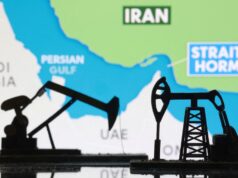
Both contracts have surged more than 40% this month to their highest since 2022, after the United States-Israeli attacks on Iran prompted Tehran to halt shipping through the Strait of Hormuz, choking off a fifth of global oil supply in the biggest disruption ever.
“U.S. strikes over the weekend on Kharg Island raised supply concerns, as most of Iran’s oil exports pass through it,” ING commodity strategists said on Monday.
ING added that while the strikes appear to have targeted military, rather than energy, infrastructure, they still pose supply risks since Iranian oil is about the only oil moving through the Strait of Hormuz for now.
Trump warns NATO of ‘very bad’ future if allies fail to help reopen Hormuz
On Sunday, the International Energy Agency (IEA) said more than 400 million barrels of oil reserves will begin flowing to the market soon, a record draw aimed at combating price spikes caused by the Middle East war.
The agency said stocks from countries in Asia and Oceania will be released immediately while those from Europe and the Americas will be available at the end of March.
“As the conflict enters its third week, the lack of a clear denouement has left global markets increasingly worried about an uncontrollable escalatory spiral,” SEB’s Meyersson told Reuters.
U.S. Energy Secretary Chris Wright said on Sunday he expected an end to the war within “the next few weeks”, with oil supplies rebounding and energy costs falling afterwards.

- Dubai airport resumes flights: Latest developments in Middle East war - March 16, 2026
- Laporta re-elected Barcelona president for five years - March 16, 2026
- Oil price rises to $105/barrel - March 16, 2026