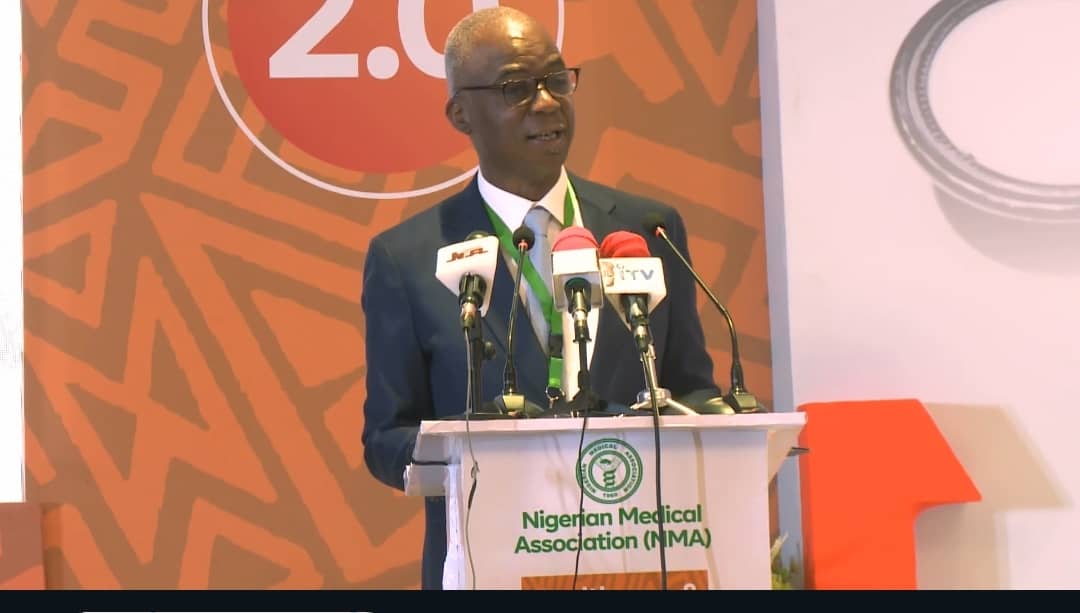
Chancellor of Ekiti State University, Dr. Tunji Olowolafe, has outlined a strategic plan to end medical tourism and turn Nigeria’s healthcare system into one of the best globally.
Speaking at the Nigerian Medical Association (NMA) Conference in Abuja, themed “Reversing Medical Tourism: Africans Investing in Africa,” Olowolafe said Africa loses $7 billion annually to medical tourism, with Nigeria accounting for about $2 billion.
He said Nigeria has the talent and capacity to compete globally if stakeholders replace “lamentation with investment and innovation.”
Olowolafe proposed a four-point agenda—action-driven leadership, enterprise investment, technological leapfrogging, and rebuilding trust—as the foundation for transforming the health sector.
He urged the NMA to lead reforms by coordinating government, private sector, and diaspora partnerships, supported by a well-resourced secretariat.
Citing existing reforms such as the NHIA Act 2022, tariff waivers on medical machinery, and the training of 120,000 new health workers, he said government efforts are laying the right groundwork.
Describing Nigeria as “bankable,” Olowolafe called for large-scale private investments, noting that $30 billion in expected oil and gas FDI by 2030 could support world-class trauma centers in cities like Warri and Port Harcourt.
He highlighted hospitals such as Bridge Clinic, Nordica Fertility Center, Cedar Crest, and NA M Hospital as examples already attracting medical tourists from other countries.
Olowolafe emphasized technology as the “great equalizer,” urging investment in AI diagnostics, blockchain medical records, and health-tech platforms to drive transparency and innovation.
He also called for renewed investment in research, medical education, and local partnerships to curb brain drain and rebuild public confidence.
“Every day a strike persists delays care and erodes trust,” he said.
“When Africans invest in Africa, medical tourism will become irrelevant.”

- Troops, DSS arrest female gunrunner with 884 rounds of ammunition in Kano - March 14, 2026
- Troops arrest cable vandals in Kaduna - March 14, 2026
- Opposition urges EU to respect Niger’s internal dialogue on Bazoum release - March 14, 2026