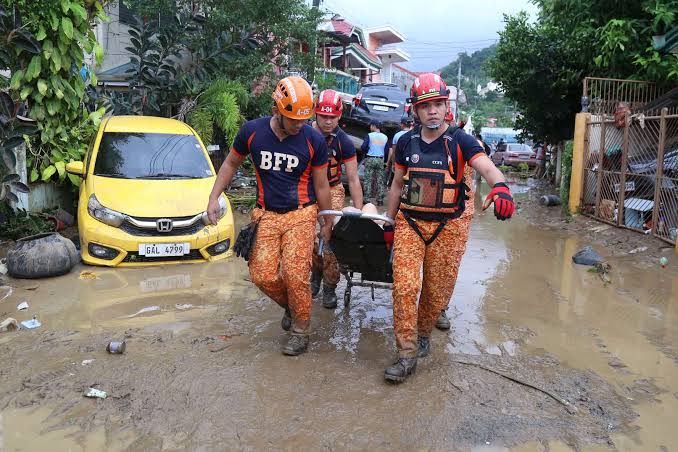

Philippine President Ferdinand Marcos Jr. declared a state of emergency on Thursday, November 6, 2025, after Typhoon Kalmaegi left more than 140 people dead in the country.
More than 127 people are still missing in central provinces in the deadliest natural disaster to hit Philippines this year.
The deaths were mostly caused by drowning in flash floods, as the tropical cyclone blew out of the archipelago on Wednesday into the South China Sea.
The Office of Civil Defence said the typhoon’s onslaught affected nearly two million people and displaced more than 560,000 villagers, including nearly 450,000 who were evacuated to emergency shelters.
Marcos’s “state of national calamity” declaration, made during a meeting with disaster-response officials to assess the typhoon’s aftermath, will allow the government to disburse emergency funds more quickly and prevent food hoarding and overpricing.
Argentine ex-president Kirchner faces 10-year jail term over corruption
While still dealing with the deadly and disastrous impact of Kalmaegi in the country’s central region, disaster-response officials warned that another tropical cyclone forming over the Pacific could strengthen into a super typhoon and strike the northern Philippines early next week.
“We did everything we can for the typhoon but, you know, there are really some unexpected things like flash floods,” Cebu Governor Pamela Baricuatro told AP by telephone.
Philippines is struck by about 20 typhoons and storms each year. The country is also frequently hit by earthquakes and has more than a dozen active volcanoes, making it one of the world’s most disaster-prone nations.