

The Presidency has dismissed the World Bank’s claim that the number of Nigerians living in poverty has risen to 139 million, describing the figure as a modelled estimate that does not reflect the current economic reality.
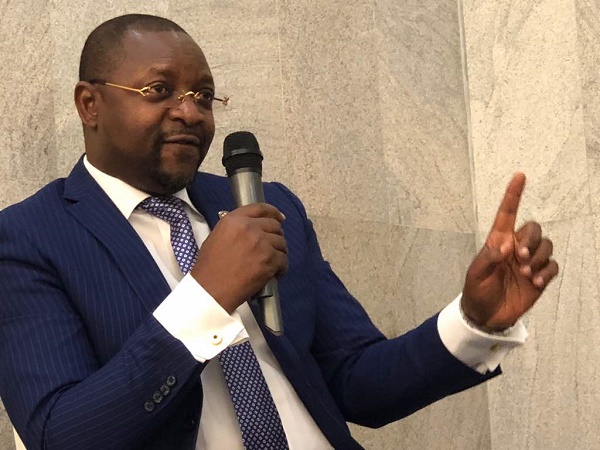
Reacting to the report on Thursday, the Special Adviser to the President on Media and Publicity, Sunday Dare, said while Nigeria values its long-standing partnership with the World Bank, the poverty estimate must be properly contextualised and not taken as a real-time headcount.
According to him, the figure is based on the global poverty line of $2.15 per person per day, calculated using 2017 Purchasing Power Parity (PPP) terms. He noted that, when converted to current exchange rates, this would amount to nearly ₦100,000 per month — far above Nigeria’s new minimum wage of ₦70,000 — underscoring that the figure is an analytical model rather than a reflection of local living conditions.
“The measure is a statistical construct, not a direct representation of Nigerians’ income or consumption patterns,” the statement said. “Moreover, it relies on historical data, as Nigeria’s last major household survey was conducted in 2018/2019, and does not capture the informal and subsistence economies that sustain millions of households.”
The Presidency added that the government views the World Bank’s figure as a global estimate, not an empirical measure of poverty in 2025, stressing that Nigeria’s economic trajectory is one of recovery, resilience, and inclusive reform.
Dare outlined several government interventions aimed at cushioning the impact of economic reforms and improving household welfare.
He cited the Conditional Cash Transfer (CCT) programme, which has been expanded to reach up to 15 million households nationwide through verified digital enrolment under the National Social Register. According to him, over ₦297 billion has been disbursed to poor and vulnerable families since 2023.
Other initiatives include the Renewed Hope Ward Development Programme (RH-WDEP), designed to deliver micro-infrastructure and livelihood projects across all 8,809 electoral wards, and the National Social Investment Programmes (NSIPs), which encompass N-Power, GEEP micro-loans (TraderMoni, MarketMoni, FarmerMoni), and the Home-Grown School Feeding Programme.
“These interventions are targeted at job protection, small business growth, and ensuring that children remain in school,” he said.
The Presidency also pointed to measures to combat food inflation, such as the distribution of subsidised grains and fertilisers, agricultural mechanisation partnerships, and the revival of strategic food reserves.
Additionally, the government is financing major projects under the Renewed Hope Infrastructure Fund (RHIF) to expand energy, roads, and housing access, while the National Credit Guarantee Company (NCGC) is providing affordable credit to small businesses, women, and youth entrepreneurs through risk-sharing arrangements with commercial banks.
Dare said the administration is focused on tackling the structural distortions that have perpetuated poverty, including overreliance on imports, low productivity, and regional inequalities.
He maintained that reforms such as fuel subsidy removal, exchange rate unification, and fiscal redirection toward productive sectors are necessary to address the root causes of poverty.
“Even the World Bank itself has acknowledged that these reforms are restoring macroeconomic stability and strengthening growth momentum,” he noted.
According to him, President Bola Tinubu’s medium-term priority is ensuring that macroeconomic gains translate into real benefits for citizens through affordable food, better jobs, and reliable infrastructure.
Dare concluded that as government programmes mature, Nigerians would begin to experience tangible improvements in living standards, including lower food prices, higher incomes, and greater purchasing power.

- I lost over $500,000 on failed restaurant venture in Ghana —Dele Momodu - March 5, 2026
- CAN praises Uba Sani, commends pilgrimage restoration, road projects - March 5, 2026
- Iran missile strikes on US oil tanker in Persian Gulf - March 5, 2026