
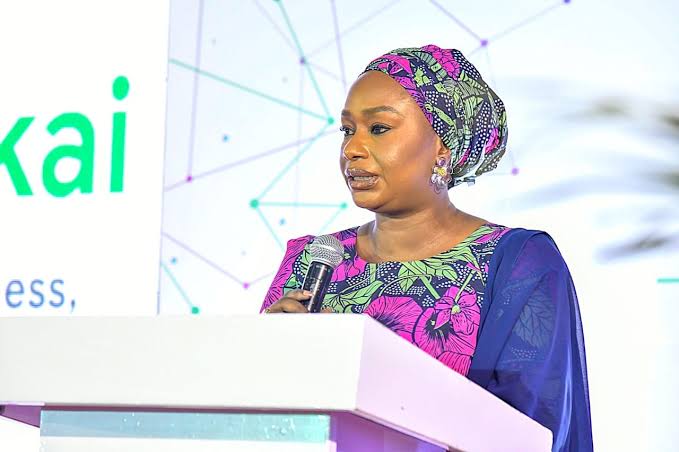

Kaduna State’s impressive performance in the latest Ease of Doing Business ranking is the result of Governor Uba Sani’s investments in infrastructure and reforms in land administration, according to the Commissioner for Business Innovation and Technology, Mrs. Patience Fakai.
Speaking at a press briefing on Friday, Mrs. Fakai said the reforms have strengthened Kaduna’s position as one of Nigeria’s leading investment destinations and expressed confidence that the state could take the top spot in the next assessment.
Kaduna State recently placed second nationwide in the Presidential Enabling Business Environment Council (PEBEC) Subnational Ease of Doing Business ranking.
In 2023, the state was ranked 8th with a score of 6.18, but in the latest report, Kaduna climbed to second place with a 65.1 percent score across 16 indicators.
Mrs. Fakai attributed the progress to Governor Sani’s reform-driven leadership and focus on private-sector growth, which she said has helped reposition Kaduna as a competitive and investor-friendly state.
She explained that the PEBEC assessment covered key areas such as infrastructure, digital connectivity, taxation, and land administration.
According to her, Kaduna’s continued progress suggests it could achieve first place by 2027, based on the governor’s development agenda.
The commissioner also highlighted the restructuring of the Kaduna Investment Promotion Agency (KADIPA), describing it as a revitalized one-stop investment hub designed to reduce bureaucratic delays, improve licensing processes, and support the digitization of business services.
Beyond attracting investors, she noted that KADIPA now provides stronger after-care services, helping investors engage with government agencies and ensuring projects are successfully implemented.
Mrs. Fakai added that these reforms have helped Kaduna become the second-ranked subnational economy in Nigeria and the leading state in the North.
She further disclosed that the state’s Internally Generated Revenue (IGR) rose from ₦62 billion in 2023 to over ₦71 billion in 2025, with expectations of further growth under the ongoing national tax reforms.
According to her, the Ease of Doing Business ranking — conducted every two years — measures how states cut regulatory bottlenecks, improve service delivery, enhance transparency, and lower business costs, ultimately encouraging healthy competition, job creation, and inclusive economic growth.

- US hails Nigeria over conviction of 386 militants - April 13, 2026
- 15-year-old ISWAP courier confesses to Ngamdu attack, exposes Jilli logistics network - April 13, 2026
- Military defends Borno-Yobe strike as death toll hits over 100 - April 13, 2026