
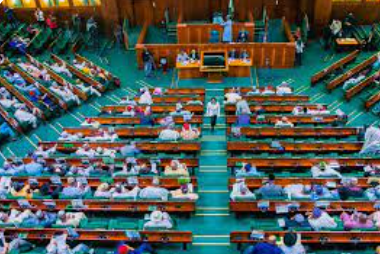
The House of Representatives Ad-hoc Committee investigating concession agreements in Nigeria’s air and seaport sectors has granted government agencies and private operators an additional seven days to submit operational and financial documents covering activities from 2006 to 2025.
The extension was announced on Friday during a public hearing in Abuja by the committee chairman, Kolawole Akinlayo, following appeals from stakeholders who said the initial 72-hour deadline was too short.
Regulatory bodies at the session included the Nigeria Customs Service, Nigerian Ports Authority, Infrastructure Concession Regulatory Commission, Nigerian Shippers’ Council, Nigerian Upstream Petroleum Regulatory Commission, and the Nigerian Maritime Administration and Safety Agency.

Major concessionaires and terminal operators such as the Dangote Group, Julius Berger Nigeria, APM Terminals, West Africa Container Terminal, Tincan Terminal, ECM Terminal and Ibeto Terminal were also represented.
Akinlayo said the committee already holds extensive records from government agencies but requires corresponding submissions from concessionaires to ensure accuracy and fairness in its review.
“We cannot rely on one-sided information. You must also present your records for proper comparison,” he said, warning that organisations that fail to comply risk referral to relevant authorities.
He further directed that chief executives of affected agencies and firms must appear before the panel after the deadline to address discrepancies and defend their documents, stressing that the exercise is part of the legislature’s constitutional oversight and not a witch-hunt.
Deputy Chairman Harrison Anozie added that the probe would be strictly evidence-based and guided by the terms of the concession agreements. He urged operators to back their claims with written proof, noting that the contracts were voluntarily entered into and carry clearly defined obligations.
Nigeria began concessioning major port terminals in 2006 to modernise the maritime sector, improve efficiency and reduce congestion, with private firms managing operations while the government, through the Nigerian Ports Authority, retained ownership. Similar public-private partnerships have since been introduced in parts of the aviation sector.
Nearly two decades later, concerns over revenue remittances, infrastructure commitments and compliance with contract terms have prompted the National Assembly to launch a comprehensive review. Lawmakers say the investigation will assess whether the agreements have delivered value to the Federal Government and strengthened operations across the country’s ports and airports.

- Reps grant 7-day extension in probe of port, airport concession deals - February 13, 2026
- Wike inspects FCT Magistrate Court projects, sets June deadline for completion - February 13, 2026
- Naira mutilation: Kannywood actress Samha Inuwa bags six months imprisonment - February 13, 2026