


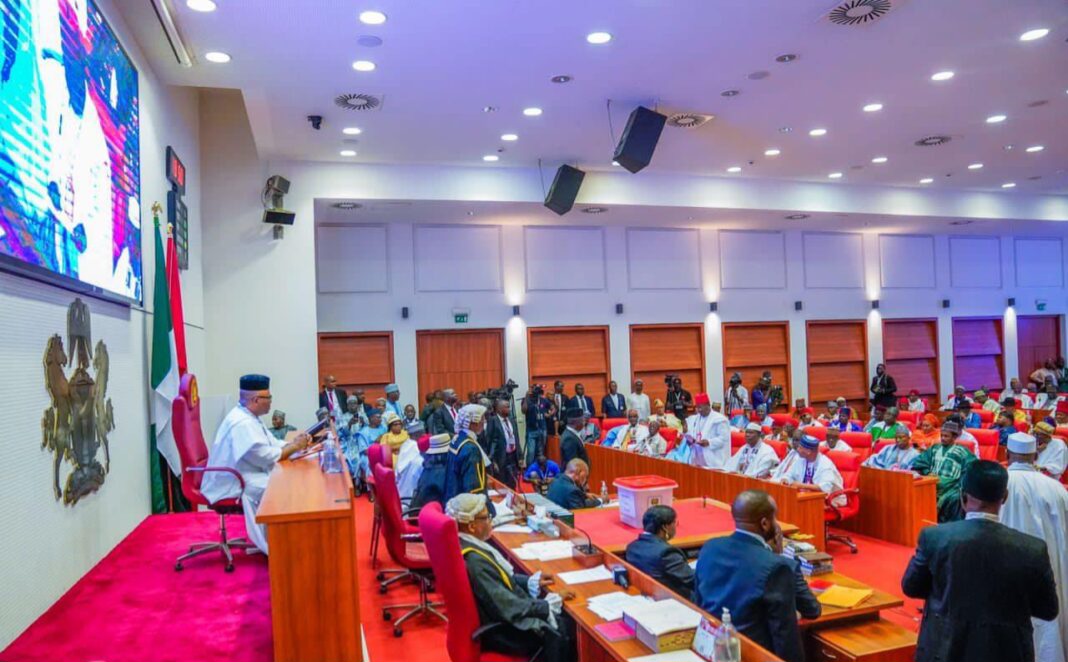

The Nigerian Senate has urged the Federal Government to integrate mental health education into the national school curriculum to tackle the growing psychological and emotional challenges affecting students and teachers across the country.
Chairman of the Senate Committee on Health, Senator Dr. Ipalibo Harry Banigo, made the call on Monday during a mental health programme organised by the Mandate Health Empowerment Initiative (MHEI) in Abuja.
Delivering the keynote address, Banigo — who also serves as Grand Patron of MHEI and the Association of Mental Health Reform Organisations in Africa (AMHROA) — highlighted the strong link between mental health, discipline, and academic performance.

“Education is not just about grades; it’s about building character, values, and vision. But we cannot expect excellence from minds weighed down by anxiety, depression, or hopelessness,” she said.
The senator decried the rising cases of academic burnout, drug abuse, and emotional distress among students and teachers, noting that these issues are often ignored, stigmatized, or misinterpreted.
“We must shift from silence to action — from stigma to support. Schools must become safe spaces for both intellectual and emotional development,” Banigo stressed.
She reaffirmed the Senate’s commitment to advancing mental health reform and outlined plans to work with the Ministries of Education and Health to integrate mental health education into the curriculum, train teachers in emotional intelligence, and establish mental health desks in schools and tertiary institutions.
Banigo also called for greater parental engagement, community-based awareness campaigns, and investment in local research to guide evidence-based policies that promote education and well-being.
The event featured two key MHEI programmes — a National Students–Parents–Teachers Roundtable in Abuja and a continental webinar under AMHROA — both aimed at linking education and mental health reforms.
Over 120 participants, including students, parents, teachers, and education officials, attended the Abuja roundtable, while the webinar attracted 54 participants from 14 African countries, including Nigeria, Kenya, Ghana, South Africa, and Uganda.
In his remarks, Dr. Ameh Abba, Founder and President of MHEI, emphasized that mental health should be treated as a developmental priority, not just a medical issue.
“For too long, mental health has been confined to hospitals.
“Today, we recognize it as key to academic success, national productivity, and community well-being,” he said.
He added that creating emotionally safe learning environments and promoting mental health awareness in schools are vital steps toward building resilient and productive young people.
“This marks the beginning of a continental movement to embed mental well-being at the core of Africa’s education systems,” Dr. Abba concluded.

- Abia to sign $200m MoU with Presco Plc for palm oil investment - March 13, 2026
- NEMA receives 147 Nigerian returnees from Niger Republic in Kano - March 13, 2026
- Navy destroys illegal crude oil storage site in Rivers - March 13, 2026