The Senate is expected to deliberate on the controversy surrounding the ₦1.3 billion allocation to the alleged Presidential Foreign Intervention Promotion Council (PFIPC) when lawmakers reconvene for plenary on Tuesday, amid fresh revelations over how the body reportedly gained official recognition within government circles.
New findings indicate that a forged appointment letter, allegedly bearing the falsified signature of the President’s Chief of Staff, Femi Gbajabiamila, was accepted by officials at the Federal Civil Service headquarters without proper verification, enabling the council’s alleged Director-General, Prince Adeniyi Adeyemi Matthew, to secure office space at the Federal Secretariat in Abuja.
Senior officials familiar with the matter said the document escaped scrutiny at several government institutions, allowing the purported agency to function for months while interacting with ministries, diplomatic missions and lawmakers.
According to sources, the controversial ₦1.3 billion allocation was inserted into the 2026 Appropriation Act without representatives of the council appearing before the Senate Committee on Establishment and Public Service to defend its budget proposal.
A National Assembly insider alleged that the provision was included alongside other submissions originating from the Presidency, thereby avoiding the normal budget defence process.
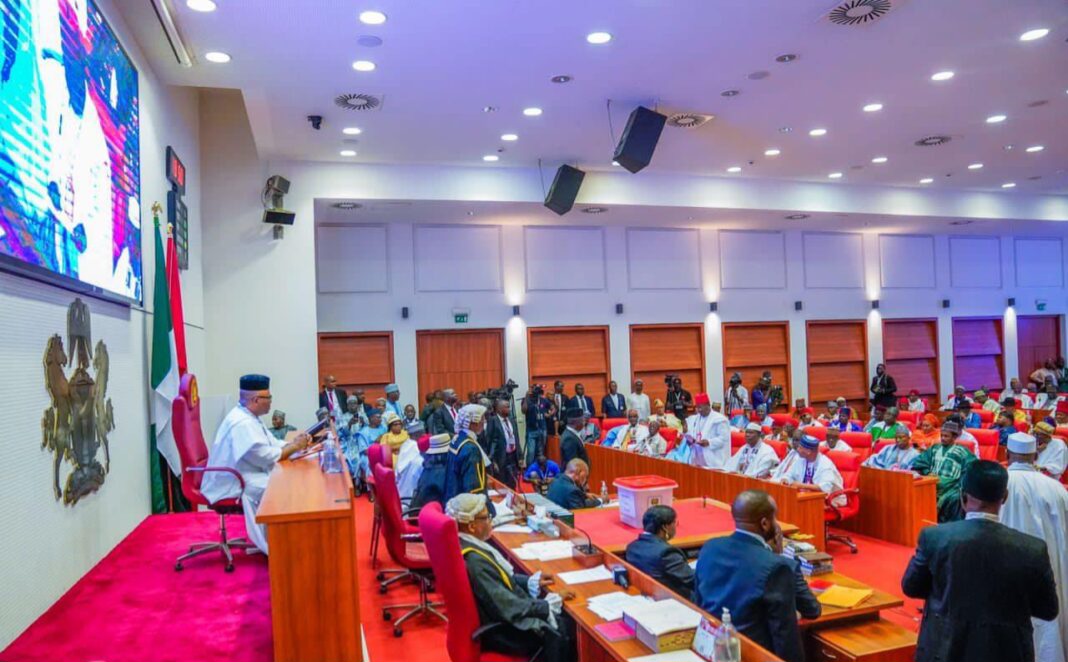
The source disclosed that Senate leaders are expected to clarify the chamber’s position when plenary resumes in an effort to address public concerns over the controversy.
Officials within the Presidency also insisted that the alleged appointment letter violated established procedures for appointing heads of government agencies.
According to them, appointments of directors-general are made by the President through the office of the Secretary to the Government of the Federation, not by the Chief of Staff.
One official explained that Matthew allegedly exploited this procedural gap by presenting the forged appointment letter while requesting office accommodation, a request that was reportedly granted without confirming whether the Chief of Staff had the constitutional authority to make such appointments.
The allocation of office space at the Federal Secretariat allegedly gave the council credibility, enabling it to operate with official stationery, host meetings and project itself as a recognised government institution.
Another Presidency source said concerns about the agency first surfaced after officials of the Nigerian Investment Promotion Commission noticed that its activities overlapped with the commission’s statutory responsibilities.
The matter was subsequently escalated to the Chief of Staff, who reportedly denied any knowledge of Matthew and referred the case to the Department of State Services for investigation.
Although Matthew was later arrested and arraigned, officials said the investigation slowed after his initial court appearance before the controversy resurfaced following the disclosure of the council’s budget allocation.
Sources also claimed Matthew may have secured the budget provision through contacts within the National Assembly, arguing that the council’s apparent legitimacy made it easier for the allocation to pass unnoticed.
The controversy has continued to attract reactions from civil society organisations, opposition figures and political groups.
The Socio-Economic Rights and Accountability Project has requested certified documents relating to the approval of the ₦1.3 billion allocation, including records of committee proceedings and details of officials who defended the proposal before lawmakers.
The organisation warned that it would commence legal action if the requested information is not released within seven days.
Similarly, the Human and Environmental Development Agenda called for a public investigation into how an agency the Presidency now describes as non-existent secured a budgetary allocation.
Former Vice President Atiku Abubakar also criticised the Federal Government over the controversy, urging President Bola Tinubu to order an independent investigation and identify those responsible for creating and funding the alleged agency.
The Committee for the Defence of Human Rights also called on Gbajabiamila to temporarily step aside while an independent probe is conducted, arguing that such a move would enhance public confidence in the investigation.
Meanwhile, the Kwankwasiyya Movement questioned how the council allegedly secured budgetary recognition, asking relevant government agencies to explain whether any public funds had already been released.
Responding to the controversy, Deputy House spokesman Philip Agbese urged Nigerians to allow ongoing legal proceedings to run their course.
Legal experts also weighed in on the matter, with Senior Advocate of Nigeria Bankole Akomolafe arguing that criminal charges should only be based on credible evidence rather than allegations.
Another senior lawyer, Sampson Erugo, maintained that investigators should also examine the roles played by other public officials who may have facilitated the alleged scheme.
Matthew is expected to appear before the Federal High Court in Abuja on July 27 alongside two other suspects, identified as Femi and Anu, who remain at large.

- Kano tailor begins bid for Guinness World Record in non-stop sewing - October 11, 2026
- Rivers orders evacuation after 60-year-old building injures four - October 11, 2026
- Tinubu defends reforms as World Bank projects 4.4% growth for Nigeria - October 11, 2026