

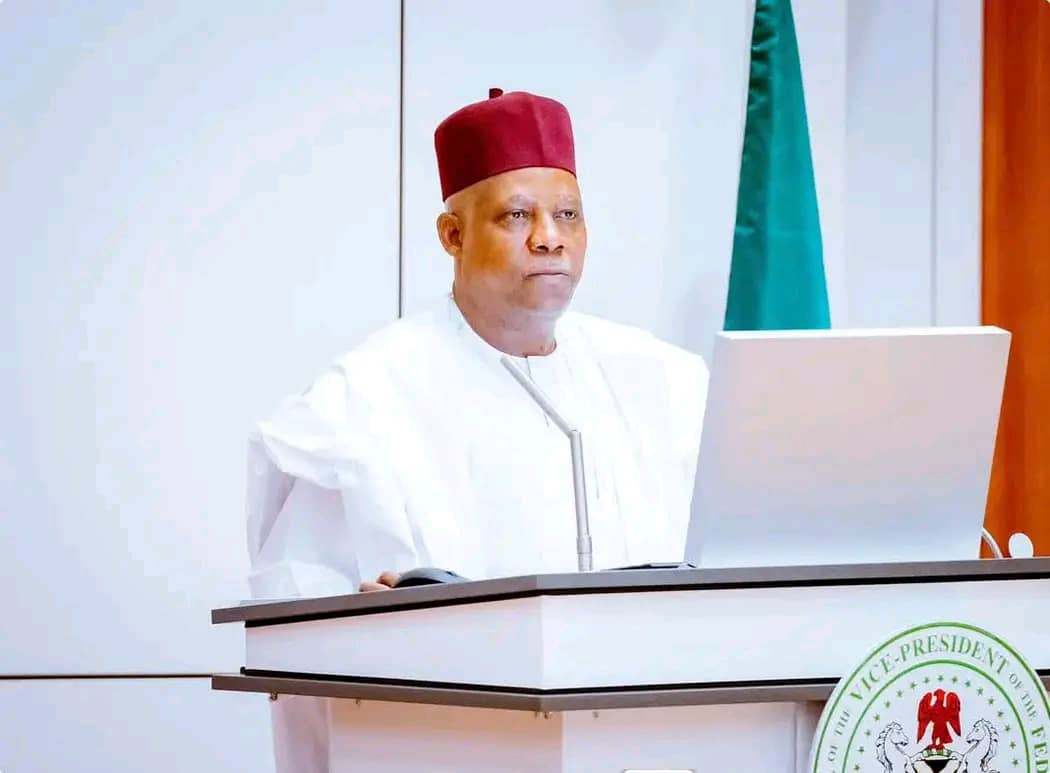
Vice-President Kashim Shettima and Minister of Finance and Coordinating Minister of the Economy, Taiwo Oyedele, have highlighted Lagos State’s central role in driving Nigeria’s economic growth, investment and innovation.
Speaking on Monday at the Invest Lagos 3.0 Summit in Lagos, Shettima, who represented President Bola Tinubu, described the state as a critical pillar of the nation’s economy and a gateway for investors seeking opportunities in Africa.
He said Lagos contributes about 30 per cent of Nigeria’s Gross Domestic Product (GDP) and has emerged as one of Africa’s leading economic and commercial centres through sustained policy consistency and enterprise.
“Lagos is Nigeria. Lagos is Nigeria,” the vice-president said.
According to him, the state offers investors access to markets, capital, talent, infrastructure and business opportunities, making it an attractive destination for local and foreign investments.
Shettima noted that Lagos is home to five of Africa’s nine technology unicorns, underscoring its growing reputation as a hub for innovation and technology-driven enterprises.
He also said economic reforms introduced by the Federal Government were improving investor confidence and strengthening the country’s fiscal position.
The vice-president added that Nigeria’s foreign reserves had risen significantly, reflecting growing economic stability and renewed investor interest.
“Nigeria is ready and open for business,” he said.
Shettima stressed the need for stronger collaboration between the Federal Government and state governments to sustain economic growth and praised Lagos for setting standards that encourage other states to improve their investment environments.
Also speaking at the summit, Oyedele said subnational governments are increasingly becoming major drivers of Nigeria’s economic transformation.
“The future of Nigeria’s growth story is being written in Lagos, Kano, Enugu, Uyo and other cities,” he said.
The finance minister observed that investors now focus more on viable projects, industrial clusters and logistics corridors than on countries alone.
He cited the recently commissioned hyperscale data centre in Lagos as an example of successful collaboration between the public and private sectors.
According to Oyedele, ongoing reforms by the Federal Government have improved predictability, competitiveness and profitability for businesses and investors.
He identified exchange-rate reforms, stronger external reserves and fiscal restructuring as key measures supporting economic stability.
Oyedele said Nigeria’s economy expanded by 3.89 per cent in the first quarter of 2026 and recorded 11.2 per cent growth in dollar terms in 2025.
He also highlighted efforts to reform the tax system, saying the goal is to simplify compliance and encourage business growth.
“Our goal is not to tax more; it is to tax smarter,” he said.
The minister further announced plans to establish a Nigerian Deal Room to connect investors with viable projects and unlock investment opportunities across key sectors.
He encouraged investors to explore opportunities in infrastructure, agriculture, energy, manufacturing, technology, tourism and housing, describing Nigeria as one of the world’s most attractive long-term investment destinations.

- INEC confirms Yahaya Bello as APC Kogi Central candidate - September 12, 2026
- FULL LIST: INEC releases final list of 18 presidential candidates for 2027 - September 12, 2026
- Uganda’s former youngest king buried amid family feud - September 12, 2026