

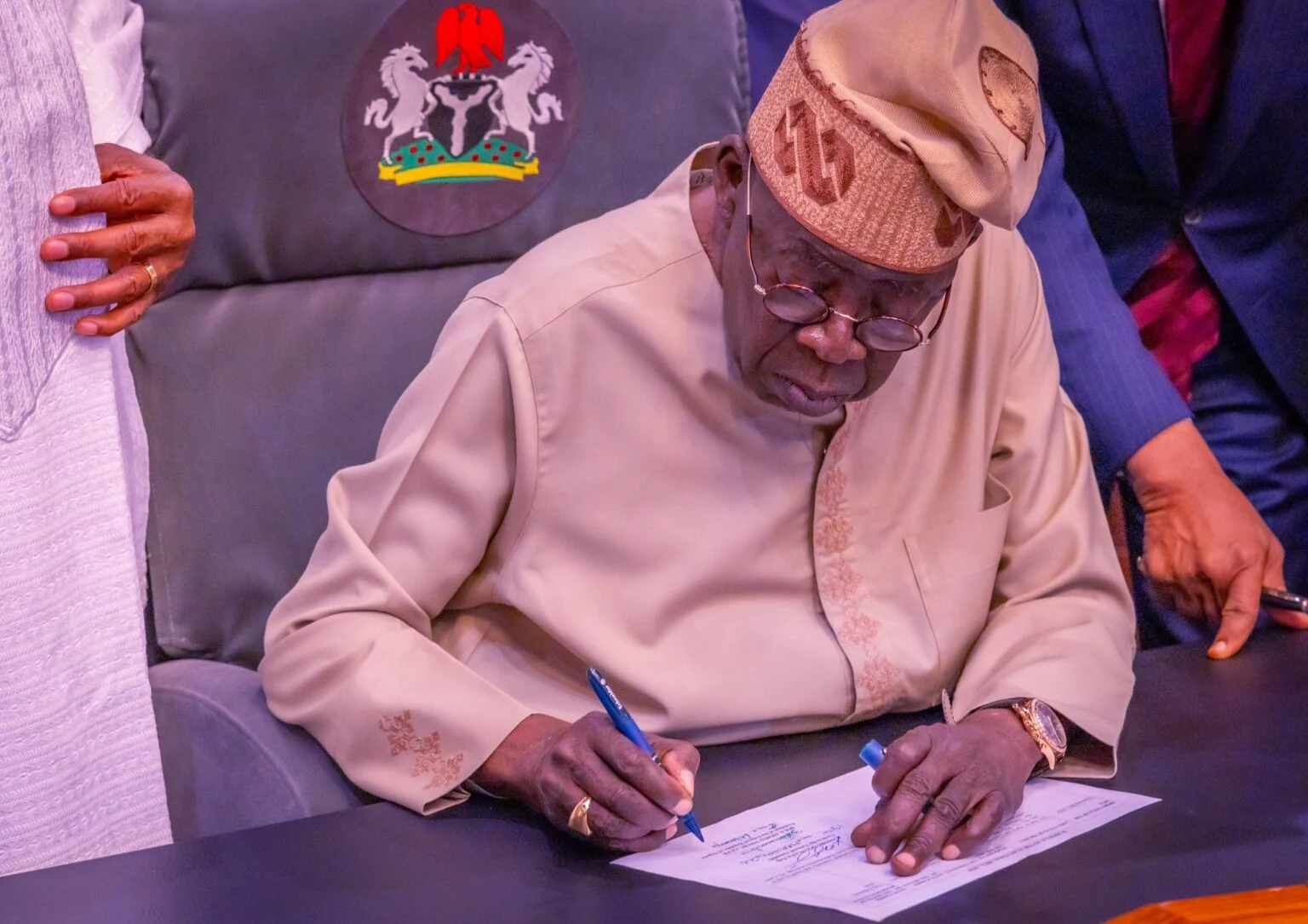

President Bola Tinubu has refused to sign into law two bills passed by the National Assembly, citing constitutional and legal deficiencies that must be addressed before they can receive presidential assent.
The decision was conveyed to the Senate on Thursday through two separate letters read during plenary by Senate President Godswill Akpabio.
The affected legislations are the Raw Materials Research and Development Council (Amendment) Bill, 2026, and the Chartered Institute of Purchasing and Supply Management of Nigeria Bill.
Invoking Section 58(4) of the 1999 Constitution (as amended), Tinubu said he was returning both bills to the National Assembly for reconsideration after identifying provisions that require legislative review.
On the Raw Materials Research and Development Council (Amendment) Bill, the President said the proposed law contained drafting inconsistencies and structural defects that undermine its clarity.
He noted that the bill’s title failed to adequately reflect its core objective of promoting the development, protection and processing of Nigeria’s raw materials to support local manufacturing.
Tinubu also observed that some provisions wrongly presented the council’s statutory functions as legislative objectives, while others were inserted in sections unrelated to their subject matter, making the bill disjointed and difficult to interpret.
According to him, the identified flaws must be corrected before the legislation can be considered for assent.
The President also rejected the Chartered Institute of Purchasing and Supply Management of Nigeria Bill, arguing that some of its provisions sought to confer regulatory powers on the institute beyond its legal mandate.
He specifically objected to clauses requiring companies and other organisations to notify the institute whenever they appoint procurement or supply chain heads, saying the body lacks statutory authority to impose such obligations on independent entities.
Tinubu further faulted provisions empowering the institute to inspect organisations, enforce compliance and sanction employers, insisting that such powers exceed the institute’s responsibilities under existing laws.
While acknowledging that several aspects of the bill were commendable, the President said the contentious provisions should be amended before the legislation is returned for presidential approval.
Following the reading of the letters, Akpabio referred both bills to the Senate Committee on Rules and Business for further legislative action, directing the committee to report back within four weeks.
Under the Constitution, the National Assembly may revise the bills in line with the President’s observations or invoke the constitutional process required to override a presidential veto.

- Tinubu declines assent to two bills, returns them to National Assembly - July 10, 2026
- Mmesoma regains UTME eligibility as three-year JAMB ban ends - July 10, 2026
- Tinubu meets security chiefs as troops demand pay rise - July 10, 2026