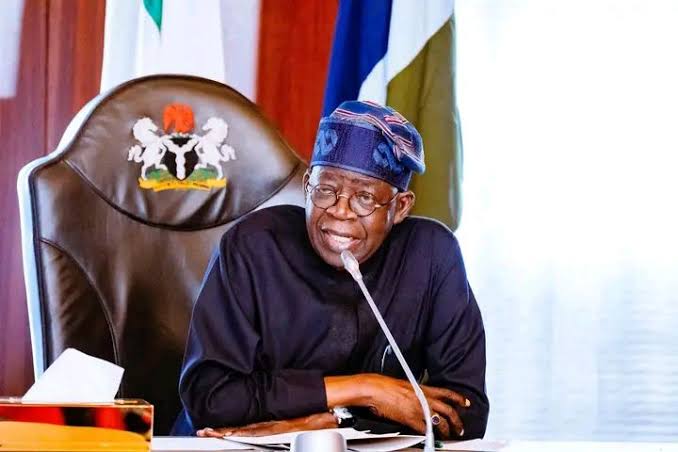
President Bola Tinubu has warned world leaders that no country can shield itself from the consequences of wars, terrorism and other global crises, urging stronger international cooperation to address threats that transcend national borders.
Tinubu issued the warning in his national statement delivered by Vice President Kashim Shettima at the General Debate of the 81st United Nations General Assembly in New York on Thursday.
The President said Nigeria’s experience with terrorism and other security threats had demonstrated the limitations of relying solely on national borders or military strength to guarantee security.

“No nation, however formidable its defences, can secure itself completely against dangers sustained beyond its borders,” he said.
Tinubu called for greater international cooperation in intelligence sharing, combating terrorist financing and curbing illicit arms flows, while stressing that military operations must be supported by measures that address the conditions that enable insecurity to persist.
He identified education, economic opportunities, accountable governance and respect for human rights as critical components of sustainable security.
The President said Nigeria had contributed personnel and resources to peace and security efforts in Liberia, Sierra Leone, Darfur, Mali and The Gambia, adding that the country remained committed to working through the Economic Community of West African States, the African Union and other regional partnerships.
He also urged urgent diplomatic action to address conflicts in Sudan and other parts of the world, with emphasis on protecting civilians and ensuring humanitarian access.
“The conflicts in Sudan and other war-torn countries demand urgent diplomacy to address their humanitarian, economic and geopolitical consequences,” Tinubu said.
He warned against a global environment where propaganda and competing narratives could obscure responsibility for violence and undermine accountability.
“We should all be afraid of a world in which we can no longer tell the victim from the aggressor,” he said.
Tinubu links global stability to development
The President argued that international security could not be separated from economic development, climate action and access to technology.
He called for reforms to the global financial system, including greater access to concessional financing and debt arrangements that allow developing countries to invest in education, healthcare and infrastructure rather than devote excessive resources to debt servicing.
Tinubu also urged developed countries to provide climate finance and technology transfer to developing nations, saying countries in Africa must be allowed to pursue industrialisation and poverty reduction while adopting lower-carbon development pathways.
He reaffirmed Nigeria’s commitment to the Paris Agreement and its target of achieving net-zero emissions by 2060 under the country’s Energy Transition Plan.
On technology, the President said Nigeria would not allow concerns about artificial intelligence to prevent the country from benefiting from its potential.
He said the government was expanding digital public infrastructure, broadband access and technology entrepreneurship to apply AI and other emerging technologies to areas including economic productivity and public services.
Tinubu also renewed Nigeria’s call for reform of the UN Security Council, demanding at least two permanent African seats with full rights, including veto power for as long as the veto exists, as well as five non-permanent seats.
He said the international system must reflect present-day realities rather than remain tied to the distribution of power established after the Second World War.
“The world of 2026 cannot remain captive to the distribution of power in 1945,” he said.
Tinubu maintained that a reformed and inclusive United Nations remained essential to addressing the interconnected security, economic and environmental challenges confronting the world.

- UNGA 81: Nigeria demands permanent African seats on Security Council - September 25, 2026
- Tinubu to world leaders: No country is safe from threats beyond its borders - September 25, 2026
- JAMB CAPS suffers technical disruption amid ongoing admission exercise - September 25, 2026