

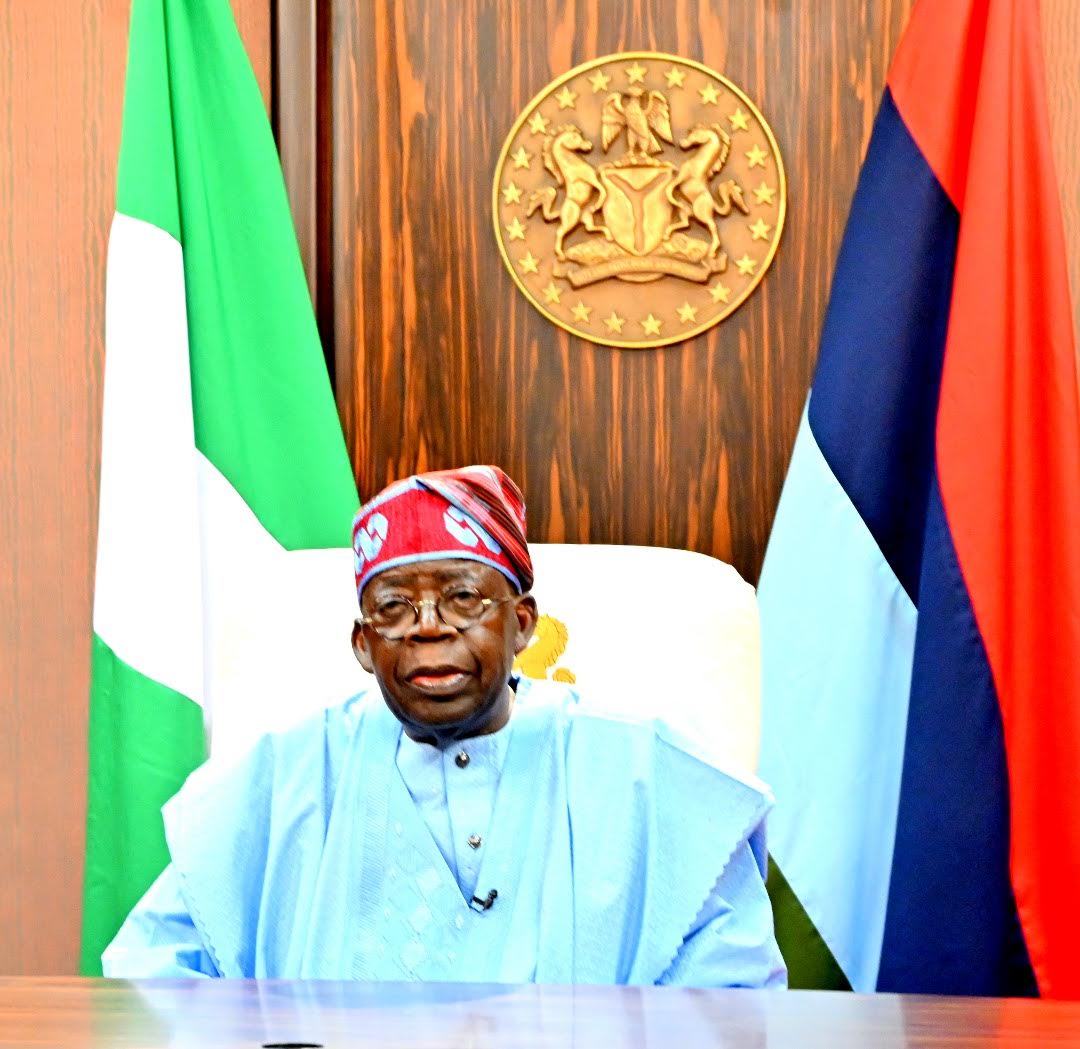
President Bola Ahmed Tinubu on Wednesday marked Nigeria’s 65th Independence Anniversary with a message of hope, declaring that his administration has achieved 12 major economic milestones in just over two years of sweeping reforms.
In a national broadcast from the Presidential Villa, Abuja, Tinubu said his government chose “the path of tomorrow over the comfort of today” by abolishing fuel subsidies and dismantling multiple exchange rate regimes that, in his words, enriched only a privileged few while leaving the majority of Nigerians with little or nothing.
Those tough decisions, he insisted, are now paying off.
According to the President, Nigeria has recorded an unprecedented boom in non-oil revenue, surpassing ₦20 trillion by August 2025, while in September alone ₦3.65 trillion was raised—more than four times the figure in May 2023.
The country’s fiscal health, he added, has also improved significantly with the debt service-to-revenue ratio reduced from 97 percent to below 50 percent, following the clearance of “Ways and Means” advances that previously destabilised the economy.
Tinubu further revealed that the nation’s external reserves had risen to $42.03 billion, the highest since 2019, while the tax-to-GDP ratio increased to 13.5 percent from below 10 percent.
He said the new tax law, coming into force in January 2026, will broaden the base while providing relief for low-income earners.
On trade, the President announced that Nigeria has now recorded five consecutive quarters of trade surplus, with exports outpacing imports and non-oil exports climbing to 48 percent of total trade.
He pointed out that manufactured exports jumped by 173 percent in the second quarter of 2025, signalling a decisive shift away from dependence on crude oil.
Oil production itself, he added, had rebounded to 1.68 million barrels per day from one million barrels in May 2023, aided by improved security in the Niger Delta and renewed investments.
Tinubu also highlighted the stabilisation of the naira, following foreign exchange reforms and increased inflows, as well as the government’s direct intervention to support vulnerable households.
He said ₦330 billion had already been disbursed to eight million poor families under the social investment programme.
The solid minerals sector, once in decline, has also been revived, with coal mining recording over 57 percent growth in the second quarter.
Major infrastructure projects—including the Lagos-Calabar Coastal Highway, Sokoto-Badagry Highway, Kano-Maradi rail and Kaduna-Kano line—are progressing, while the stock market has soared from 55,000 points in May 2023 to 142,000 points by September 2025.
International credit rating agencies, he noted, have responded by upgrading Nigeria’s outlook.
In a further boost, the Central Bank of Nigeria cut interest rates for the first time in five years, a development Tinubu described as proof of macroeconomic stability.
“The worst is over,” the President assured, adding that the real measure of success will be felt not just in statistics but in the food on families’ tables, the quality of education, the electricity in homes and the security in communities.
Calling for collective sacrifice and productivity, Tinubu urged Nigerians to embrace local enterprise.
“Let us be a nation of producers, not just consumers. Let us farm our land, build factories, and patronise Made-in-Nigeria goods. I say Nigeria first,” he declared.
He concluded with a note of optimism: “With Almighty God on our side, I can assure you that the dawn of a new, prosperous, self-reliant Nigeria is here.”

- LP rules out boycott of 2027 elections - March 15, 2026
- Parents demand end to NYSC over corps members’ safety - March 15, 2026
- Mobilisation bottlenecks leave poly graduates waiting for NYSC - March 15, 2026