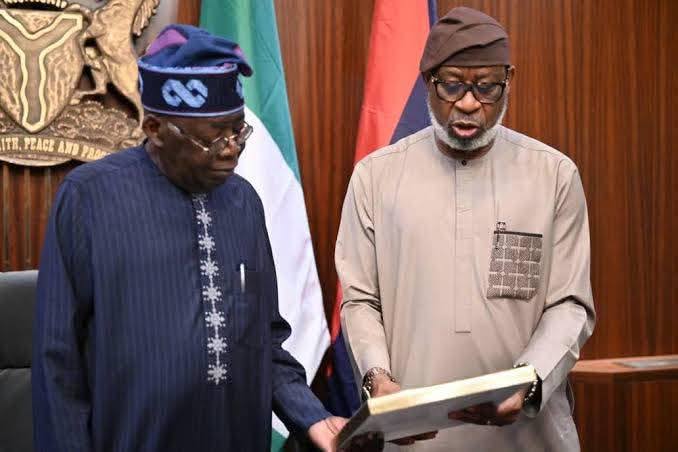
Nigeria’s solid minerals sector has recorded a dramatic turnaround under the administration of President Bola Ahmed Tinubu, with revenues increasing sixfold and foreign investments topping $800 million in 2024, according to Minister of Solid Minerals Development, Dr. Dele Alake.
Speaking in a feature interview for an upcoming State House documentary to mark President Tinubu’s second year in office, Dr. Alake credited sweeping mining sector reforms for the renewed investor confidence and economic boost.
“In 2023, the sector generated only ₦6 billion. By the end of 2024, we hit ₦38 billion in revenue—despite receiving just 18% of our ₦29 billion budgetary allocation,” Alake revealed.

He attributed the growth to new policies mandating local value addition, tightened licensing, and a crackdown on illegal mining. “The days of exporting raw minerals from pit to port are over,” he declared.
Highlighting major investments, Alake announced the imminent commissioning of a $600 million lithium processing plant near the Kaduna-Niger border and a $200 million lithium refinery near Abuja.
Two more plants in Nasarawa are scheduled to open before Q3 2025.
“These facilities reflect our insistence that no miner gets a license without a clear plan for domestic processing,” he said.
Yahaya Bello: I won’t contest against Tinubu in 2027
The first quarter of 2025 has already seen ₦13.9 billion in revenue generated by just two agencies—the Mining Cadastral Office (₦6.9 billion) and the Mines Inspectorate (₦7 billion).
Looking ahead, the Minister said a record ₦1 trillion has been earmarked for mineral exploration in the 2025 budget to produce globally certified geological data—a move designed to attract even more investment.
“Before now, Nigeria had spent only $2 million on exploration. Compare that with $40 million in Sierra Leone, $148 million in Côte d’Ivoire, and over $300 million in South Africa. Investors demand reliable data,” he explained.
Alake also reported progress in formalising artisanal miners and combating illegal mining. Over 300 illegal miners were arrested last year, with 150 prosecutions ongoing and nine convictions secured, including against foreign nationals.
Meanwhile, more than 250 mining cooperatives have been established nationwide to integrate local miners into the formal economy.
“We’re using both kinetic and non-kinetic strategies—enforcement through the Mining Marshals and empowerment through cooperatives,” he said.
Nigeria now chairs the newly created African Mineral Strategy Group, a continental alliance focused on local mineral beneficiation and fairer trade terms.
Alake said this leadership role emerged from Nigeria’s performance at the 2024 Future Minerals Conference in Riyadh.
“There’s growing international interest. The former UK Deputy Prime Minister invited me to Downing Street over lithium.
“The U.S., aiming to reduce reliance on China, also sees Nigeria as a strategic alternative,” Alake said.
He concluded by reaffirming the sector’s importance to Nigeria’s economic diversification agenda: “We’re restoring investor confidence, enforcing the law, and delivering real value to Nigerians from their mineral wealth. This sector has never seen such vitality.”
Tinubu’s mining reforms boost revenue sixfold, attract $800m investment — Minister
Nigeria’s solid minerals sector has recorded a dramatic turnaround under the administration of President Bola Ahmed Tinubu, with revenues increasing sixfold and foreign investments topping $800 million in 2024, according to Minister of Solid Minerals Development, Dr. Dele Alake.
Speaking in a feature interview for an upcoming State House documentary to mark President Tinubu’s second year in office, Dr. Alake credited sweeping mining sector reforms for the renewed investor confidence and economic boost.
“In 2023, the sector generated only ₦6 billion. By the end of 2024, we hit ₦38 billion in revenue—despite receiving just 18% of our ₦29 billion budgetary allocation,” Alake revealed.
He attributed the growth to new policies mandating local value addition, tightened licensing, and a crackdown on illegal mining. “The days of exporting raw minerals from pit to port are over,” he declared.
Highlighting major investments, Alake announced the imminent commissioning of a $600 million lithium processing plant near the Kaduna-Niger border and a $200 million lithium refinery near Abuja.
Two more plants in Nasarawa are scheduled to open before Q3 2025.
“These facilities reflect our insistence that no miner gets a license without a clear plan for domestic processing,” he said.
The first quarter of 2025 has already seen ₦13.9 billion in revenue generated by just two agencies—the Mining Cadastral Office (₦6.9 billion) and the Mines Inspectorate (₦7 billion).
Looking ahead, the Minister said a record ₦1 trillion has been earmarked for mineral exploration in the 2025 budget to produce globally certified geological data—a move designed to attract even more investment.
“Before now, Nigeria had spent only $2 million on exploration. Compare that with $40 million in Sierra Leone, $148 million in Côte d’Ivoire, and over $300 million in South Africa. Investors demand reliable data,” he explained.
Alake also reported progress in formalising artisanal miners and combating illegal mining. Over 300 illegal miners were arrested last year, with 150 prosecutions ongoing and nine convictions secured, including against foreign nationals.
Meanwhile, more than 250 mining cooperatives have been established nationwide to integrate local miners into the formal economy.
“We’re using both kinetic and non-kinetic strategies—enforcement through the Mining Marshals and empowerment through cooperatives,” he said.
Nigeria now chairs the newly created African Mineral Strategy Group, a continental alliance focused on local mineral beneficiation and fairer trade terms.
Alake said this leadership role emerged from Nigeria’s performance at the 2024 Future Minerals Conference in Riyadh.
“There’s growing international interest. The former UK Deputy Prime Minister invited me to Downing Street over lithium.
“The U.S., aiming to reduce reliance on China, also sees Nigeria as a strategic alternative,” Alake said.
He concluded by reaffirming the sector’s importance to Nigeria’s economic diversification agenda: “We’re restoring investor confidence, enforcing the law, and delivering real value to Nigerians from their mineral wealth. This sector has never seen such vitality.”

- Anambra seals shops in Ogidi, Obosi markets over Monday sit-at-home - February 17, 2026
- Defecting to APC will speed up Kano’s development — Gov Yusuf - February 17, 2026
- Police arrest father for chaining son for 17 years - February 17, 2026