


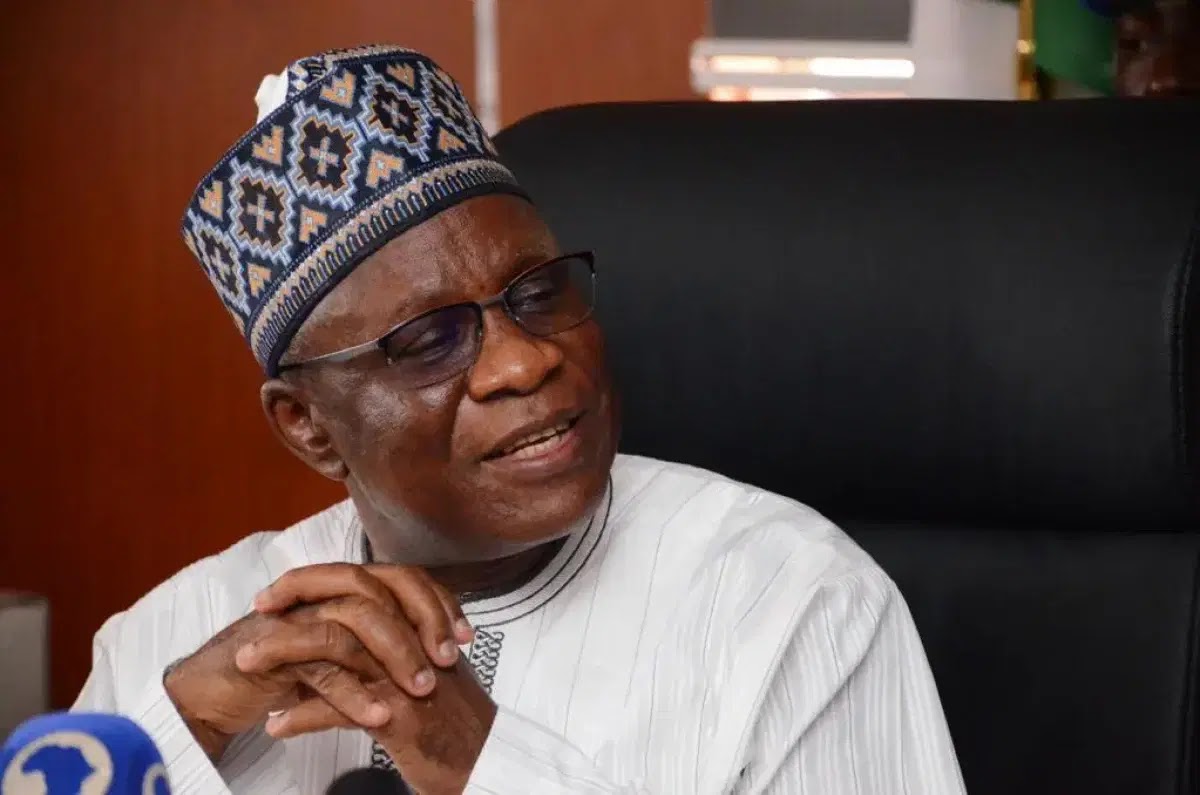
The Minister of Regional Development, Abubakar Momoh, has defended President Bola Tinubu’s economic reforms, describing them as tough but essential steps toward securing Nigeria’s long-term prosperity.
Momoh stated this on Monday while delivering the 55th Founder’s Day Lecture at the University of Benin (UNIBEN).
Speaking on the theme “Reforms for a Shared Prosperity,” the minister said many Nigerians feeling the immediate hardship may not yet appreciate why the government had to address long-standing structural problems.
He noted that President Tinubu inherited deep-rooted distortions that previous administrations avoided confronting.
According to him, the removal of petrol subsidy on the President’s first day in office was a crucial move to stop a system that encouraged corruption, smuggling, and waste.
“The absurdity of selling cheap refined products at home only for the subsidised fuel to be smuggled across borders had to end,” he said, adding that the administration chose to endure criticism now rather than delay necessary reforms.
Momoh also justified the unification of Nigeria’s exchange rate, arguing that the former system encouraged arbitrage instead of productive economic activity.
“Those who genuinely needed foreign exchange could not access it, while a few people gamed the system,” he said.
Highlighting progress in the petroleum sector, he mentioned the implementation of the Petroleum Industry Act (PIA), the Host Community Development Trust, and growing investments in local refining.
He cited the Dangote Refinery’s plan to expand capacity from 650,000 to 1.4 million barrels per day as evidence of renewed investor confidence.
He added that the government’s new 15% import duty on fuel supports its “Nigeria First” industrial policy to boost domestic production.
On energy transition, Momoh pointed to the Presidential Compressed Natural Gas Initiative (PCNGI) as a key strategy to cut transportation costs while advancing climate commitments.
He also revealed fresh interventions in the power sector, including government approval of a N4 trillion bond to clear verified debts owed to power-generation companies and gas suppliers.
Revenue collection in the sector, he noted, rose by 70% in 2024 after regulatory adjustments.
The minister further disclosed that the Federal Executive Council approved N68.7 billion for solar farms in eight universities and teaching hospitals, including UNIBEN.
While acknowledging the hardship Nigerians face, Momoh insisted the reforms are laying the groundwork for sustainable and inclusive growth.
“Nigeria stands at a difficult yet decisive moment,” he said.
Reflecting on his personal journey from his days as a UNIBEN student to various levels of public office, Momoh expressed gratitude to the university for shaping his career.
Earlier, the Vice-Chancellor, Prof. Edoba Omoregie, praised the minister as a worthy ambassador of the institution.
He linked UNIBEN’s growth to the Federal Government’s development agenda and announced new federal interventions, including seven tricycles to ease campus transportation and major TETFund allocations for agriculture and infrastructure.

- LP rules out boycott of 2027 elections - March 15, 2026
- Parents demand end to NYSC over corps members’ safety - March 15, 2026
- Mobilisation bottlenecks leave poly graduates waiting for NYSC - March 15, 2026