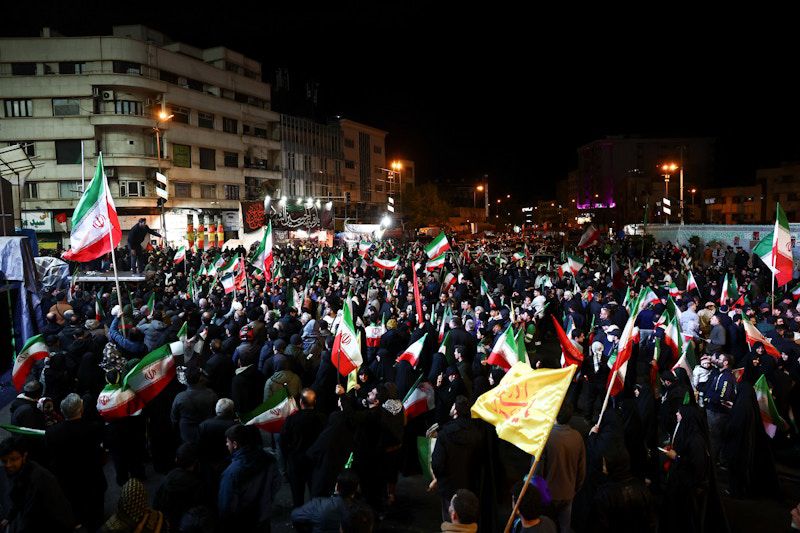

United States President Donald Trump has agreed to suspend the bombing of Iran for two weeks, under the influence of Pakistani leaders acting as mediators between the US and Iran.
The ceasefire is contingent on the opening of the Strait of Hormuz, which remains a point of contention amid increasing global fuel shortages.
Trump agreed to a two-week ceasefire with Iran in the early hours of Wednesday, April 8, 2026, less than two hours before his deadline for Tehran to reopen the Strait of Hormuz or face devastating attacks on its civilian infrastructure in which he had threatened ‘a whole civilization will die’.
Iran said talks between the U.S. and Iran would begin on Friday in Islamabad, Pakistan, whose prime minister helped mediate the ceasefire. The U.S. has not yet confirmed in-person talks but says they are being discussed.
NNPC doubles crude supply to Dangote Refinery
Trump said Iran had presented a 10-point proposal that was a “workable basis” for negotiations and he expected an agreement to be “finalized and consummated” during the two-week window.
Trump said the last-minute deal was subject to Iran’s agreement to pause its blockade of oil and gas supplies through the strait.
Iran’s Foreign Minister, Abbas Araqchi, said in a statement Tehran would stop counter-attacks and provide safe passage through the strait.
Iranian state TV said Trump had accepted Iran’s terms for ending the war, describing it as a “humiliating retreat” by the U.S. president.
In response, White House press secretary Karoline Leavitt said: “The truth is that President Trump and our powerful military got Iran to agree to reopening the Strait of Hormuz, and negotiations will continue.”

- Bayern beat Real Madrid as Arsenal steal Champions League advantage against Sporting - April 8, 2026
- Oil prices slip after Trump announces two-week ceasefire - April 8, 2026
- Naira trades N1,386/$ at official market - April 8, 2026