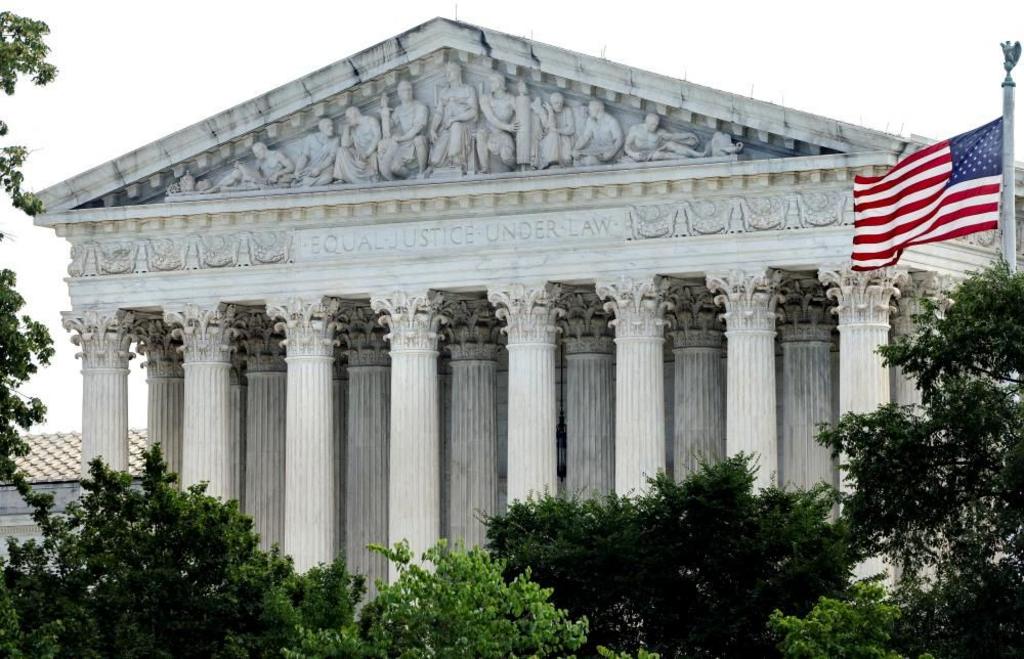

The U.S. Supreme Court has granted the Trump administration the green light to resume deporting migrants to third countries, even if those destinations are not their countries of origin, in a controversial 6–3 ruling that has drawn strong criticism from rights advocates and liberal justices.
The decision overturns a lower court order that had required the government to give migrants a meaningful opportunity to explain the risks they might face if sent to third-party nations.
The ruling affects a group of eight migrants from Myanmar, South Sudan, Cuba, Mexico, Laos, and Vietnam who were deported in May, allegedly aboard a flight bound for South Sudan.
President Donald Trump hailed the decision as a win for national security, while the Department of Homeland Security described it as “a victory for the safety and security of the American people.”
DHS spokesperson Tricia McLaughlin added, “Fire up the deportation planes.”
The administration defended the deportations by labeling the eight individuals “the worst of the worst,” citing alleged convictions for serious crimes including murder, arson, and armed robbery.
However, lawyers representing the migrants argue that many have no criminal convictions and are being unfairly targeted.
The case stemmed from an April ruling by U.S. District Judge Brian Murphy in Boston, who ordered that migrants must be given the chance to argue against removal to third countries on grounds of potential torture or execution.
That decision halted deportations temporarily and forced the U.S. to hold detainees in Djibouti, where the U.S. maintains a military base.
In dissent, Justice Sonia Sotomayor, joined by Justices Elena Kagan and Ketanji Brown Jackson, blasted the Supreme Court’s majority for what she called a “gross abuse” of judicial discretion.
She warned that the ruling effectively sacrifices constitutional protections in the name of executive power.
“Apparently, the court finds the idea that thousands will suffer violence in far-flung locales more palatable than the remote possibility that a district court exceeded its remedial powers,” she wrote.
The National Immigration Litigation Alliance, representing the migrants, condemned the ruling as “horrifying.”
Executive Director Trina Realmuto said the decision puts lives at risk and opens the door to “torture and death.”
Solicitor General John Sauer, arguing for the administration, claimed U.S. immigration agents were forced to improvise a detention site in a converted conference room abroad because many migrants could not be returned to their home countries, which refused to receive them.
This marks another key legal victory for Trump in his campaign for stricter immigration controls. In recent months, the Supreme Court has also allowed his administration to end Temporary Protected Status (TPS) for Venezuelans, affecting around 350,000 migrants; and also temporarily suspend a humanitarian parole programme for migrants from Cuba, Haiti, Nicaragua, and Venezuela, which had provided two-year protection for nearly 500,000 individuals.
Monday’s ruling underscores the intensifying debate over immigration policy ahead of the 2024 U.S. presidential election, as the Trump administration continues to pursue expansive deportation powers despite mounting legal and humanitarian concerns.

- UK silence fueled Nigeria persecution debate — Presidency - March 16, 2026
- Trump warns NATO of ‘very bad’ future if allies fail to help reopen Hormuz - March 16, 2026
- Police arrest two customs officers over killing of driver in Osun - March 16, 2026