

Thompson Emmanuel lost his sight after secondary school. He stayed at home for seven years before a pastor came across his way and insisted he must not end his career because of blindness. He went for rehabilitation, resumed his education, and today holds a PhD in Education of People with Visual Impairment from Ignatius Ajuru University of Education, in Port Harcourt, Rivers State.
As a person with visual impairment, Thompson considers the evolution of Artificial Intelligence (AI) as a big relief, in terms of how it has reduced the burden of accessing information, as a person with visual impairment.
“I use it as a chat partner, unlike before when you have to go online to search and Google will take you on a merry-go-round to several links and you have to find the useful ones by yourself. Now, with AI you also save time because it gives you whatever you want straight away which you can still refine to suit your needs. That also means it saves you data because the more time you spend searching for links on Google, the more data you burn.”
Like Thompson, Maria Kazeem is also excited by the possibilities that AI holds for all users. Maria, who lives with visual impairment, wants stakeholders to leverage on opportunities inherent in the emergence of AI to close the gap in the training needs of blind students.
“I am a person with visual impairment and I make use of AI”, she disclosed, adding the experience has made things easier for her.
“I don’t think we are being marginalised when it comes to AI because it has made life very easy for everyone unlike when we couldn’t use such things. I recently worked with the Nigerian Association for the Blind on this issue. I organised a workshop and made sure this issue of AI was discussed so that people with visual impairment would not be left behind. We had persons with visual impairment who facilitated the workshop and it was a mind blowing one. Some of them spoke about their experiences. We had a Masters student from Canada who shared his experience studying there and how challenging it has been. We also had another from the UK who shared a very pleasant experience.”
Technology for the Unseen and Unheard
More than 1.13 million individuals aged 40 years are currently blind, in Nigeria, according to a survey conducted by the National Blindness and Visual Impairment 2005 to 2007. Another 2.7 million adults aged 40 years have moderate visual impairment and an additional 400,000 adults are severely visually impaired, according to this article World Sight Day 2020.
While every visually impaired student or lecturer who spoke to this reporter celebrated the innovation brought about by AI, they nevertheless expressed concern about the readiness of universities in Nigeria to ensure inclusiveness in their AI adoption policy specific to people with visual impairment.
Article 25 of the UN Convention on the Rights of Person with Disabilities demands that persons with visual disabilities should not be ignored or left behind in achieving the highest possible healthcare and quality of life.
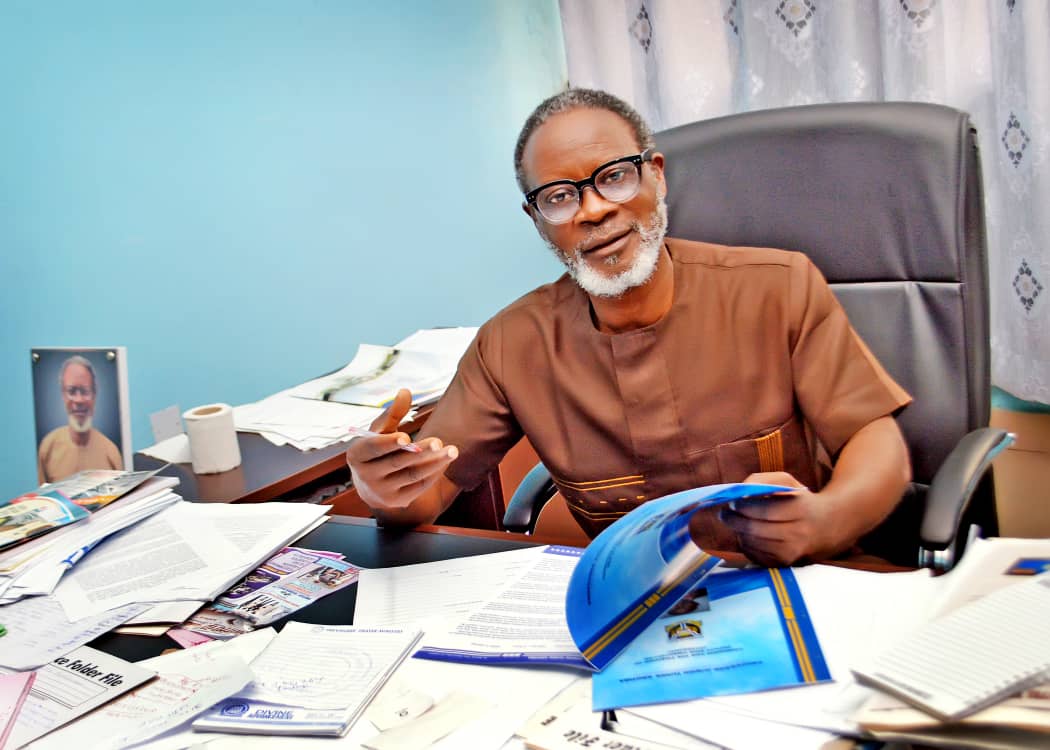
Adebayo Komolafe, Professor of Visual Impairment Education at the University of Ibadan says Nigeria must not miss the opportunity offered for better learning by AI to close the gap between students with sight and their counterparts who are without. And he linked the expected change to only a change in attitude by government and other stakeholders towards the funding of special education in the country.
Both Komolafe and Joshua Panshark, a 200-level law student at the University of Nigeria (UNN) Enugu campus, had similar experiences that demonstrate how university authorities relate with issues affecting blind students. While Joshua said his group had written to the management of UNN on the need to provide a library equipped with computers that have accessibility features for use of blind students, Komolafe has made efforts, since 2023, to no avail, to ensure the University of Ibadan sets up a Disability Support Centre. The University Senate, he lamented, has not seen such a proposal as needful, even after he had secured support of 13 relevant departments in the University whose curricula and activities deal with people with disability.
“Our universities only pay lip service to the education of people with visual impairment”, Johnson said. ‘The technologies we see are often displayed only for accreditation purposes; once that is over the lab doors are locked as there are no resource persons to handle that equipment.’
Accessibility features on technological devices, especially those used for reading, is a major inclusive factor expected to be fashioned into AI designs. Although most smartphones today have accessibility functions that allow people without sight to hear messages and read certain documents, educational materials may not be included in, or readily connected to, most of such documents.
“There should be a policy that caters for students with visual impairment in our universities because studying there is usually difficult”, Maria, a lawyer and Legal Adviser of the Society for Welfare of the Blind in Nigeria, pleaded. “Our lecturers should be gracious enough to make their lecture materials accessible. We know it is expensive but right now some of our lecturers even ask us to buy their books and materials like people with sight.”
Currently there are a number of AI tools that are useful for blind persons, many of which can provide credible learning experience, according to this article by Mohammed Alomrani.
These include NotebookLM which can transform class notes into a conversational podcast between two people for ease of understanding sometimes with real life examples. However, it can only accept PDF or TXT files. There is also Be My AI, which provides detailed AI-powered descriptions of images, and which can help students to access visual information from textbooks and classroom materials on their own. Be My AI however is seen as lacking human judgement in complex scenarios.
There is also Access AI by Aira which is able to assist blind students with various tasks such as description of images or diagrams and can even explain a concept from the perspective of a visually impaired individual. This includes, Seeing AI which is capable of narrating the world around a blind person; can read textbooks, identify classroom objects and describe images. Just like Seeing AI, Lookout also helps blind students to identify their surroundings, read educational materials and identify classroom objects. Then there is Voice Dream Reader; a text-to-speech app that reads text from various sources, including PDFs, web pages, and books and also supports multiple languages but is subscription based.
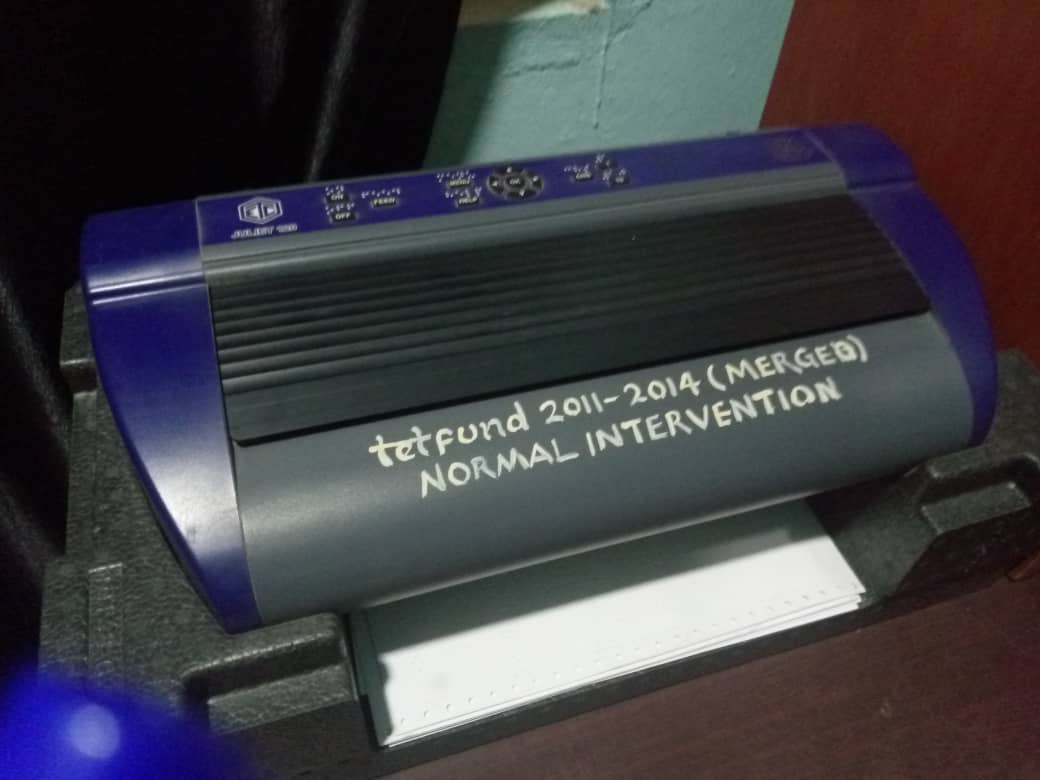
“While we now have computers with screen readers and Iphones with speech -to- text adaptation, sometimes there are limitations to our using them”, Johnson noted. “Such limitations include when a site has a lot of graphs or tables, the text-to-speech function may not work because it can’t read tables and graphs correctly. This also cuts across even to computer use. Again, your screen reader may also go off and if you are not very good with other formats of reading you are stuck”.
The limitations
A 2021 study by Suraj Singh Senjam, Souvik Manna, and Covadonga Bascaran indicates a limitation in the adoption of technologies especially in low- and middle-income countries. Komolafe himself referred to a study he did that showed over 70 percent of people with blindness in Nigeria are from low socio-economic backgrounds. “This means they can barely afford three square meals per day and you want them to access high- end facilities?”, he asked rhetorically.
In 2013, stakeholders adopted the Marrakesh Treaty which facilitates access to published works for blind and partially sighted people. The treaty, according to the World Blind Union (WBU), addresses the limited availability of published works in accessible formats such as braille, large print, or audio for people without sight. According to the Union, only 10 percent of published works are accessible to people without sight. Nigeria signed the Treaty on October 4, 2017and it became operational in the country on January 4, 2018.
While the Treaty dealt with the days of printed work, advancement in technology with the emergence of AI, has created its own challenges. According to the Union, 15 percent of the world population lives with disability, including blindness and partial sight, but only one in ten websites meet basic accessibility standards. At least, some 2.5 billion people will need one or more assistive technologies by 2050, according to the WBU.
Funding and stakeholder’s perception are two major obstacles to supporting special needs education, according to Komolafe, and the panacea is in change of attitude. “The public doesn’t feel the result of special education and that is why there is a reluctance. But even if these people are not in the majority of your population, they are still your people and they deserve your support”.
He shared a micro -level example of the challenge. “At our Postgraduate seminars I have been asking them to ensure that paper presenters include at least one copy of Braille to accommodate our students with blindness, but that is yet to be done”. That the Department of Special Education started at the University of Ibadan in 1974 and has birthed several others across the country, but is still plagued with this challenge, speaks to the limitations around stakeholder acceptance and responsibilities for training people with blindness in Nigeria.
How AI Can Be Used For Blind Students
Artificial Intelligence must support students in their diversity, without marginalizing them, according to Shana Vidal While, Director of CS Equity Initiatives, Kapor Center while addressing a UNESCO meeting on the occasion of the International Education Day on January 4, 2025. According to Shana, AI can be used to support students with disabilities by providing educational adaptations tailored to their needs. Komolafe suggested universities should be ‘disability friendly’; creative and intentional about supporting students with disabilities, recalling that he has written the Secretary to the Government of the Federation (SGF), George Akume, for support when he learnt the former Benue Governor has a soft spot for people with blindness.
But just like the Senate of his university has kept quiet over his request, his proposal to the SFG has also remained unanswered. “If my own university has not answered me, why should I expect from the government? It is the same thing.”
He would love to have JAWS software installed on the few computers in his laboratory for blind students. JAWS is the acronym for Job Access with Speech, a software developed for blind computer users. JAWS, according to its manufacturer, provides speech and braille output for the most popular computer applications on the computer. It can help users to read documents, emails, websites and apps, easily navigate with the mouse, scan and read all of documents, including PDF, fill out webforms with ease, easy to use with Daisy formatted basic training, save time with Skim Reading and Text Analyzer and can help surf the net with web browsing keystrokes. But it is expensive. A mail from the Nigerian Dealer for Freedom Scientific, manufacturers of JAWS, in response to a request by this reporter, quoted a single user licence at $1,050. Converted to the naira, that is almost two million naira.
*This report was produced with support from the Centre for Journalism Innovation and Development (CJID) and Luminate.
The Star

- Nigeria’s departing future, By FUNKE EGBEMODE - April 1, 2026
- OPINION BY TEMITOPE AJAYI: How Tinubu’s policy of naira-for-crude guarantees supply security in Nigeria - April 1, 2026
- NNPC targets $60bn investment, 600tcf gas reserves - March 27, 2026