


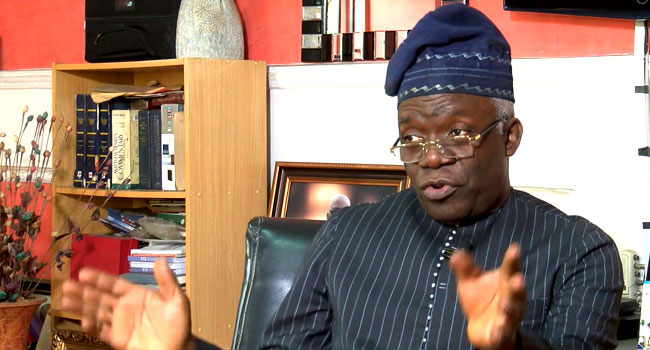
Human rights lawyer Femi Falana, SAN, has urged the Federal Government to make sure Nigeria’s wealthy citizens pay significantly more in taxes than poor Nigerians under the country’s new tax laws.
Falana also insisted that every bill passed by the National Assembly and signed by the President should be publicly available on the National Assembly’s website for transparency.
Speaking with journalists in Ilawe-Ekiti, Falana argued that the new tax laws should not take effect until concerns about their legitimacy are resolved.
He stressed that governments at all levels must be ready to justify tax payments by using revenue to tackle poverty, unemployment, insecurity and decaying infrastructure.
He noted that the government should have used the closing days of 2025 to tidy up and publish clean versions of the tax laws before the planned January 1, 2026 commencement date.
Failure to do so, he warned, could expose the government to serious legal challenges.
Falana alleged that there are claims some provisions were “smuggled” into the final document, raising questions about which version of the law is actually valid.
He criticized the National Assembly for not making passed bills easily accessible to citizens, saying transparency demands open access to legislative proceedings and laws.
The senior advocate added that Nigerians cannot be asked to shoulder heavier tax burdens when many struggle to feed, pay school fees or afford medical care.
Falana also criticized exemptions granted to companies in free trade zones, saying many of Nigeria’s richest firms operate there without paying taxes or import duties.
He described the arrangement as unjust and illegal, arguing that progressive taxation requires the rich to contribute more — not less.
He maintained that some of these exemptions date back to decrees from past military regimes and should be reviewed if they conflict with the current constitution.
Falana concluded that once the tax laws are properly passed and clarified, the government should expect court cases challenging discriminatory tax policies.

- Why Egbetokun resigned as IG – Presidency - February 24, 2026
- Police arrest suspect for ritual attempt on 10-year-old in Katsina - February 24, 2026
- JTF foils bandits’ attack in Benue, arrests two suspects - February 24, 2026